Google AI Personalization and Cross-Service Advertising Data Use
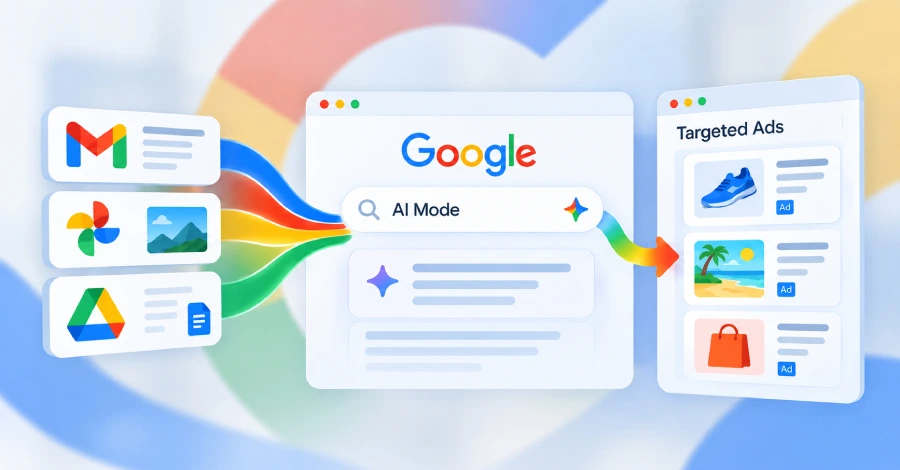
Google Policy Update Privacy Governance Cross-Service Data Use Personalized Ads No Breach Reported
Overview
Google updated its privacy policy, effective October 16, 2026, to clarify that data users choose to share from Gmail, Google Drive, and Google Photos with other Google services may contribute to personalized advertising where the receiving service supports it. The Hacker News reported the change on October 24, 2026.
Classification: this is a privacy-policy and data-governance development, not a reported cyberattack, data breach, or unauthorized disclosure. The reporting identifies no attacker, exploited vulnerability, compromised account, or confirmed data theft.
The key distinction is consent and service configuration. Google states it does not use Gmail, Drive, or Photos content to personalize ads by default, but allows an exception when users choose to make data from those services available to other Google services that support personalized ads.
Technical Details
Policy change and scope
The revised policy states that Google does not show personalized ads based on content from Drive, Gmail, or Google Photos unless users choose to make data from these services available to other Google services that support personalized ads.
It also explains that users may allow Search or Gemini Apps to access data from other Google services for personalization, subject to policies and settings of the receiving service. Search is specifically identified as a service that may process permitted data to personalize content, including advertisements.
This does not establish that every Gemini interaction produces advertising signals or that ads are displayed in every connected AI experience. The stated permission depends on the receiving service and its applicable settings.
Personal Intelligence data flow
Google's Personal Intelligence feature allows users to connect services such as Gmail, Google Photos, and YouTube to obtain more tailored AI responses by combining connected-service information with conversational context and preferences.
Privacy-relevant flow described in reporting:
- A user chooses to connect a supported Google service.
- Search or another receiving service accesses permitted information for personalization.
- Where that receiving service supports personalized ads, some permitted information may also inform ad personalization.
The reporting does not enumerate exact data fields, model-input treatment, retention periods, or campaign-level targeting decisions.
Availability and eligibility
According to the report, Personal Intelligence is rolling out in beta to eligible users over age 18 globally, excluding the EEA, Switzerland, the United Kingdom, and Nigeria. This is eligibility reporting, not confirmation every eligible account has the feature enabled.
Security and disclosure status
No CVE, exploit chain, malicious infrastructure, or indicators of compromise are associated with this item. The report describes potential authorized cross-service processing under a revised policy, not evidence that advertisers receive users' raw emails, documents, or photos.
Technical Specifications
| Attribute | Details |
|---|---|
| Category | Privacy-policy and data-governance change |
| Effective Date | October 16, 2026 |
| Source Report Date | October 24, 2026 (The Hacker News) |
| Origin Services Mentioned | Gmail, Google Drive, Google Photos |
| Receiving Services Mentioned | Search and Gemini Apps (policy/settings dependent) |
| Ad Personalization Condition | User-enabled cross-service sharing plus receiving service supports personalized ads |
| Security Incident Status | No reported breach, exploit, or confirmed unauthorized data theft |
Affected Products
- Google Search and Gemini-related personalization experiences.
- Gmail, Google Drive, and Google Photos when users connect these services for personalization workflows.
- Consumer and organizational governance programs evaluating cross-service data-use boundaries.
Attack Scenario
This is a policy-use scenario, not a malicious attack chain:
- User enables Personal Intelligence and connects Gmail, Photos, Drive, or another supported service.
- Receiving service processes permitted information according to its own settings and policies.
- Connected data contributes to tailored responses or Search experiences.
- If the receiving service supports personalized ads, the policy allows some permitted information to contribute to ad personalization.
- User can disconnect selected apps or disable Personalized Recommendations through Search Services Personalization settings, as reported.
Impact Assessment
Confirmed findings
- Google's revised policy took effect on October 16, 2026.
- The policy clarifies a conditional exception to default exclusion of Gmail/Drive/Photos content from ad personalization.
- Cross-service access is user-enabled and governed by receiving-service policies and settings.
- No breach, stolen-record count, outage, or victim-loss reporting is provided.
Potential privacy and business impact
Primary concern is purpose expansion: information shared to improve AI responses may also become relevant to advertising personalization within receiving services that support it.
For organizations, the governance question is whether connected account data could be processed beyond the originally intended AI task. The report does not establish identical handling across all Google Workspace editions or enterprise agreements.
Sector and ecosystem relevance
Relevant services include Search, Gemini, Gmail, Drive, Photos, and connected personalization features. Exposure depends on eligibility, enabled connections, and active settings.
Mitigation Strategies
- Review connected applications and disconnect unnecessary services from Personal Intelligence.
- Review Search personalization settings and disable Personalized Recommendations if undesired.
- Check receiving-service policies and settings rather than assuming originating-service defaults apply end-to-end.
- Validate managed-account terms separately across Workspace agreements, admin controls, and official product documentation.
- Minimize sensitive data connections unless reviewed and approved under governance requirements.
- Do not assume disconnection equals deletion of previously processed data or derived signals; verify retention and deletion terms separately.
Resources and References
Public Reporting
Last Updated: October 25, 2026