Unpatched Cursor IDE Local Git Executable Vulnerability
Cursor IDE Local Executable Hijack Arbitrary Code Execution Windows Developers Supply Chain Risk
Overview
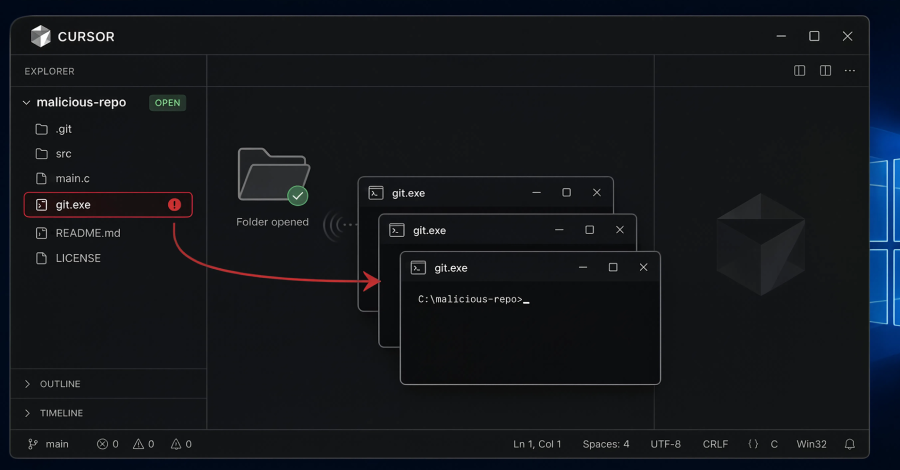
A vulnerability in Cursor IDE on Windows allows arbitrary code execution when a user opens a malicious Git repository. Cursor may execute a repository-supplied local git.exe from the project directory instead of the trusted system Git binary.
Because this behavior occurs during normal Git operations, opening an untrusted repository can trigger attacker-controlled code execution under the current user's context. At disclosure time, public reporting indicated no official vendor patch was yet available.
Technical Specifications
| Attribute | Details |
|---|---|
| Vulnerability Type | Insecure executable resolution / local binary hijacking |
| Primary Affected Platform | Windows |
| Affected Product | Cursor AI-powered IDE (Windows workflows using Git operations) |
| Trigger Condition | Project contains malicious git.exe in repository root (or executable search path precedence) |
| Attack Vector | User opens/clones/downloads malicious repository and opens it in Cursor |
| Privileges Required (attacker) | None on victim host prior to lure success |
| User Interaction | Required (open repository in Cursor) |
| Execution Context | Logged-in developer user privileges |
| Patch Status at Disclosure | No official patch publicly available at initial disclosure |
Affected Products
- Cursor IDE on Windows systems
- Developer workstations opening untrusted repositories
- Environments where project-directory executables are not constrained by application control
Attack Scenario
- An attacker prepares a malicious repository containing a trojanized
git.exe. - The repository is distributed via Git hosting services, archive files, or direct sharing.
- A developer clones/downloads the project and opens it in Cursor on Windows.
- Cursor resolves and executes the attacker-controlled local
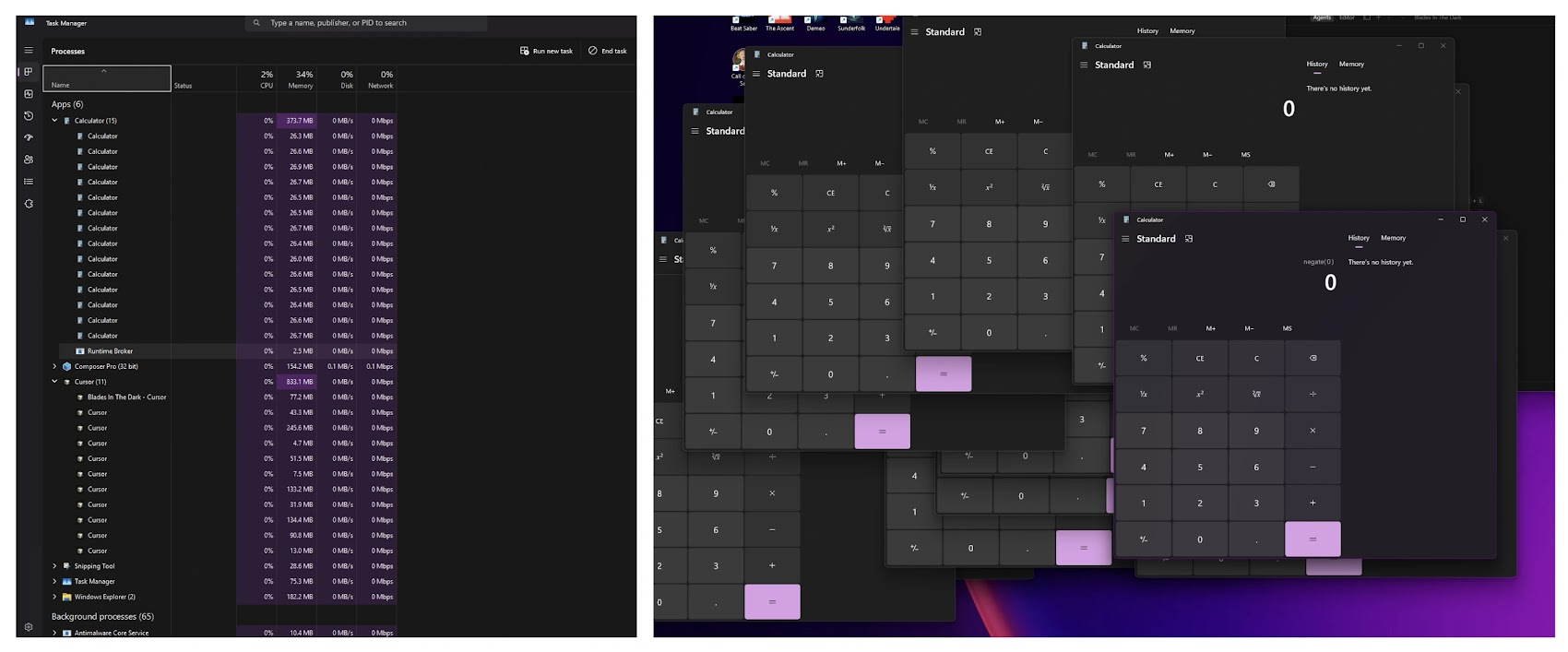
git.exeinstead of the trusted system Git binary. - Malicious code executes with developer user privileges.
- Attackers may steal source code and credentials, establish persistence, and attempt broader enterprise compromise.
Impact Assessment
- Arbitrary code execution on developer endpoints can alter local projects and build artifacts
- Attackers may inject malicious code into repositories and CI/CD workflows
- High potential for software supply-chain compromise through trusted developer environments
- Theft of source code, SSH keys, Git credentials, API tokens, cloud credentials, and signing material
- Exposure of proprietary software and internal architecture details
- Compromised developer identities can be reused for broader access abuse
- Endpoint compromise can disrupt developer operations and incident response workflows
- Enterprise-wide containment actions may require temporary workstation isolation and credential rotation
- Downstream release delays may occur while integrity of code and signing pipelines is verified
Mitigation Strategies
Immediate Actions
- Do not open unknown or untrusted repositories in Cursor until patched guidance is validated
- Inspect repositories for unexpected executables such as
git.exe,ssh.exe, and other suspicious binaries - Use isolated VMs/sandboxes for high-risk repository review
Short-term Measures
- Keep endpoint protection and behavioral detection enabled for executable launch anomalies
- Restrict execution of unsigned/untrusted binaries via WDAC or AppLocker where operationally feasible
- Enforce least privilege on developer endpoints and reduce local admin usage
Monitoring & Detection
- Monitor for process execution originating from project directories (especially
git.exeunder repo paths) - Alert on unusual child-process chains spawned by IDE processes
- Hunt for credential-access behavior and suspicious file access on developer systems
Long-term Solutions
- Standardize secure development workstation baselines with application control and repo hygiene checks
- Integrate repository pre-open scanning into developer tooling and onboarding workflows
- Rapidly apply vendor security updates when patch guidance is released
Resources and References
Public Reporting
Last Updated: July 16, 2026