Student Hacked Taiwan High-Speed Rail to Trigger Emergency Brakes
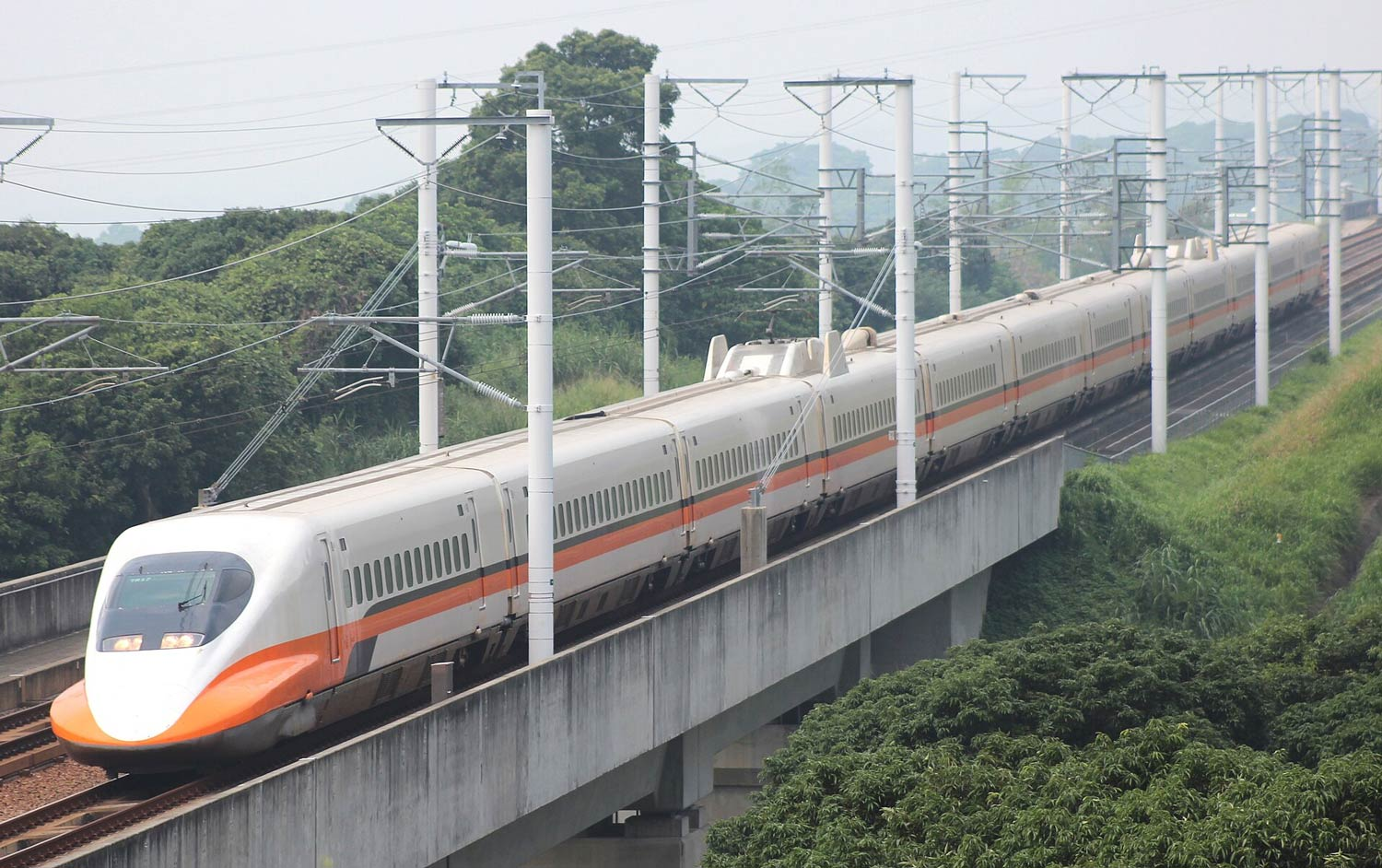
OT Security TETRA Radio Spoofing Rail Infrastructure SDR Attack
Overview
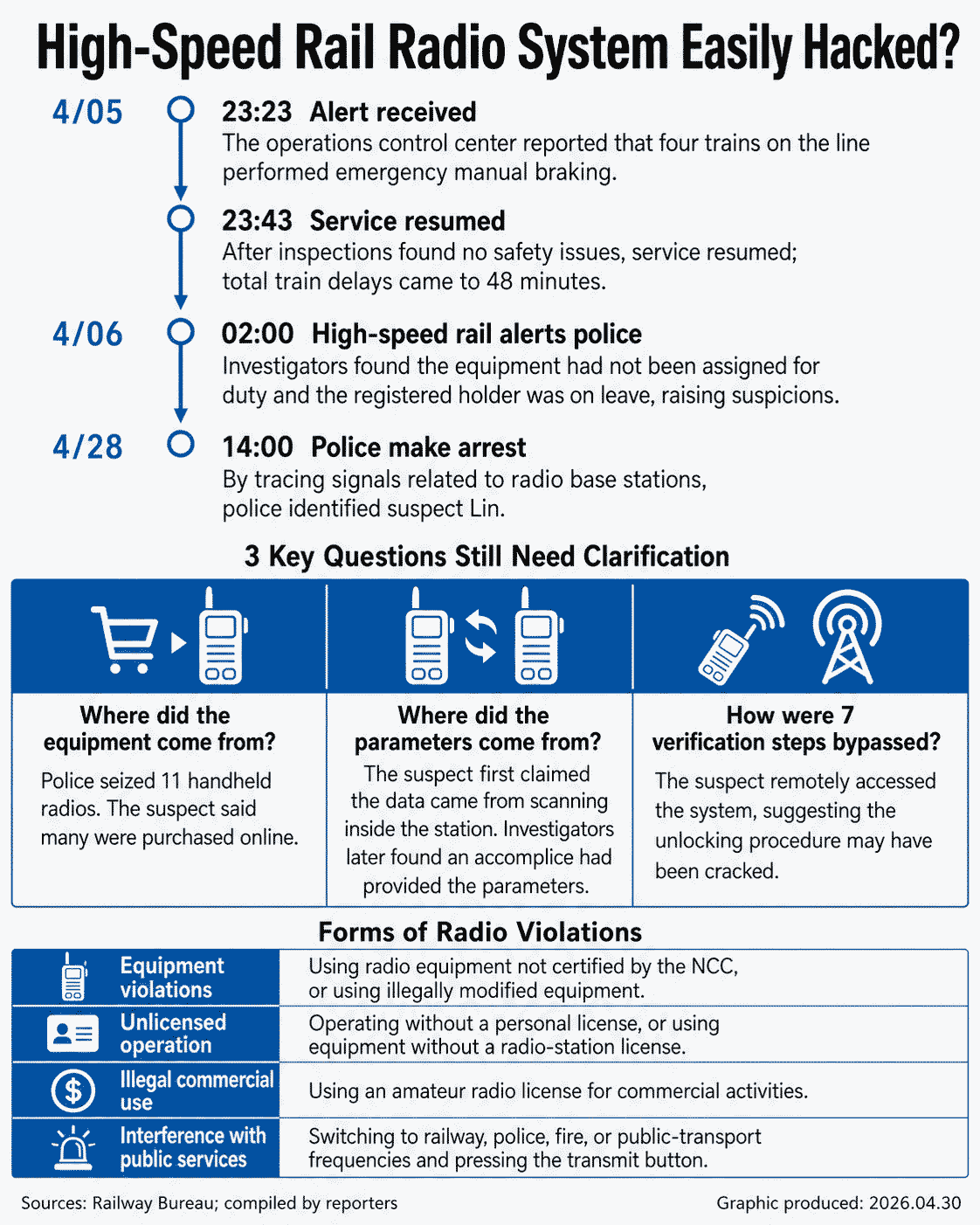
On April 5, 2026, a 23-year-old Taiwanese student used software-defined radio (SDR) equipment and cloned handheld radios to transmit a forged "General Alarm" signal on Taiwan High Speed Rail's (THSR) TETRA radio network, triggering emergency braking on four high-speed trains for approximately 48 minutes. There is no software CVE — the attack exploited a critical OT design failure: the TETRA network's parameters and keys had not been rotated in 19 years, allowing the attacker to clone a legitimate radio beacon using off-the-shelf equipment and a set of decoded static parameters. The student (surname Lin) was arrested on April 28 and faces up to 10 years imprisonment under Taiwan's Criminal Law.
Technical Specifications
| Attribute | Details |
|---|---|
| Target System | THSR TETRA radio network (in service 19 years; 350 km line) |
| Attack Method | SDR interception → parameter decoding → beacon cloning → forged signal injection |
| Tools Used | SDR equipment + 11 handheld radios purchased online |
| Signal Injected | High-priority "General Alarm" — triggers automatic emergency braking |
| Key Weakness | Static TETRA parameters / keys unchanged for 19 years; no robust cryptographic beacon authentication |
| Verification Layers Bypassed | 7 (by using decoded static parameters) |
| Disruption | 4 trains halted; ~48 minutes disruption |
| CVE | None — configuration and key management failure, not a software vulnerability |
| Legal Outcome | Arrested April 28; charged under Article 184 Taiwan Criminal Law (up to 10 years) |
Affected Products
- THSR TETRA radio network — rail signaling and communications infrastructure
- Any TETRA deployment globally that relies on static parameters, unrotated keys, or lacks cryptographic beacon authentication
Attack Scenario
- Using SDR, the student passively monitored THSR TETRA frequencies, capturing beacon traffic, control messages, and signaling parameters over time
- With help from a 21-year-old accomplice who provided critical THSR-specific parameters, the student decoded the static network configuration — including frequencies, talk groups, and authentication parameters that had not changed in 19 years
- The decoded parameters were programmed into 11 handheld radios, effectively cloning a legitimate TETRA beacon authorized on the THSR network
- On April 5, the student transmitted a forged high-priority "General Alarm" signal from his cloned device on the TETRA network
- THSR's systems treated the alarm as legitimate, pushing the emergency brake command to four trains, which automatically halted for ~48 minutes
- THSR operators noticed the alarm originated from a beacon ID not scheduled for duty; after confirming the real device was still present, they suspected unauthorized cloning and contacted police
- Investigators correlated TETRA logs with CCTV footage to identify the student's location; SDR equipment, 11 radios, and a laptop were seized
Impact
- Four high-speed trains halted via emergency braking for approximately 48 minutes
- Meaningful disruption to a national critical transport system carrying ~81.8 million passengers annually
- No injuries reported; however, emergency braking at high speed creates passenger and infrastructure stress risk
- Demonstrated that an attacker with ~$500 in off-the-shelf hardware can trigger safety-critical responses on national rail infrastructure
- Emergency braking at speeds up to 300 km/h poses real risk of passenger injuries and rolling-stock damage in less controlled scenarios
- Exposes the global risk of legacy radio systems (TETRA, trunked radio) with static keys, no encryption, or weak beacon authentication
- A single decoded parameter set — valid for 19 years — bypassed 7 verification layers
- Similar OT design weaknesses exist in rail, utility, and emergency communications infrastructure worldwide
Mitigations
For Rail and OT Radio Operators
- Rotate TETRA keys and parameters regularly — 19 years without rotation is a critical control failure; establish mandatory rotation schedules and procedures for suspected compromise
- Implement strong cryptographic authentication and encryption on all TETRA channels so only devices with valid keys and certificates can issue high-priority signals such as General Alarm
- Multi-source validation for safety-critical commands — require corroboration from multiple independent sources or control-center confirmation before propagating global emergency brake commands
- Whitelist and geofen authorized beacon IDs — strictly limit which devices can originate General Alarm signals; flag any alarm from a non-duty beacon for immediate investigation
- Deploy RF intrusion detection — monitor for rogue transmitters near critical track sections using signal strength anomalies and direction-of-arrival analysis
- Continuously monitor TETRA logs for alarms from unexpected beacon IDs or unusual patterns of high-priority command traffic
Governance and Security Reviews
- Treat TETRA and all OT radio/signaling systems as critical assets subject to regular penetration testing, red-team exercises, and threat modeling
- Align with rail and OT security frameworks (IEC 62443) and national rail security guidelines
- Inventory all legacy wireless control channels across OT environments for encryption and authentication gaps; prioritize re-engineering where systems rely on static IDs or obscurity
Resources
Open-Source Reporting
Last Updated: May 6, 2026