Internet-Exposed VNC/RDP Servers in ICS/OT Infrastructure
ICS/OT Security Exposed Remote Access Critical Infrastructure Unauthenticated Access
Overview
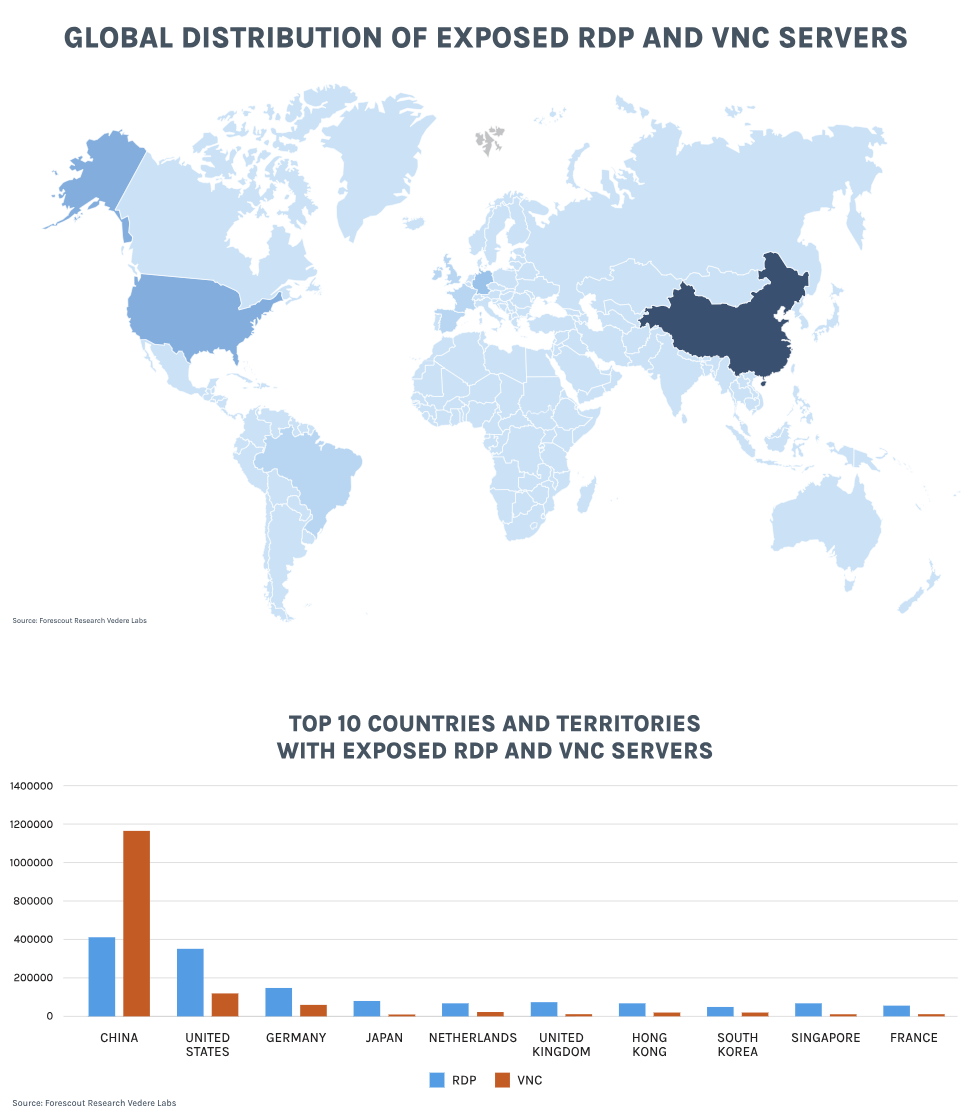
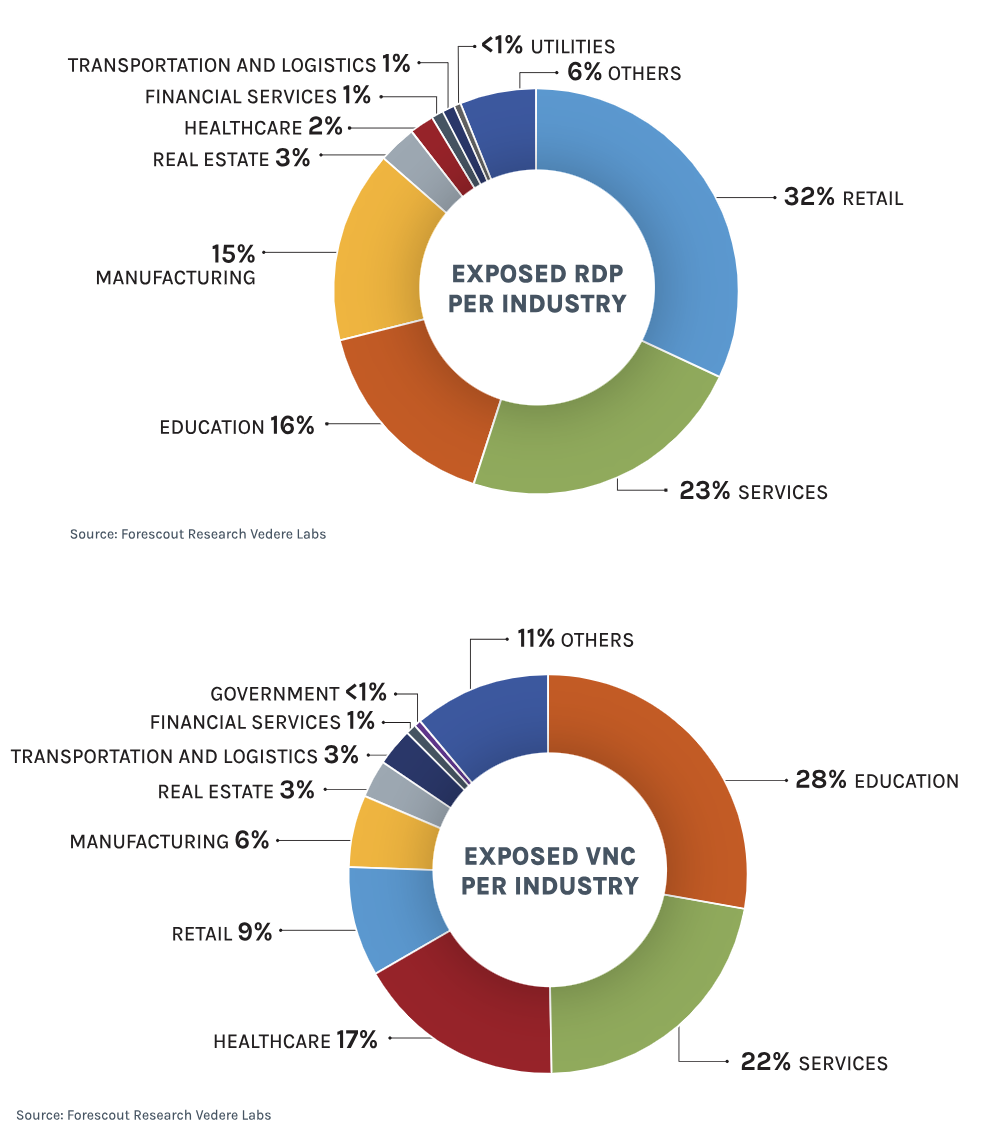
Research reveals that hundreds of internet-facing VNC servers and tens of thousands of RDP systems are exposed globally, with a significant subset directly connected to ICS/OT environments including SCADA and HMI systems. Approximately 60,000 VNC servers require no authentication at all, and ~670 are directly linked to industrial control infrastructure. Many affected systems run legacy operating systems with unpatched vulnerabilities, providing attackers a direct path into critical industrial environments without needing to exploit any software flaw — just an open port.
Technical Specifications
| Attribute | Details |
|---|---|
| Exposed RDP Servers | ~1.8 million internet-facing |
| Exposed VNC Servers | ~1.6 million internet-facing |
| Unauthenticated VNC | ~60,000 servers (no login required) |
| VNC Linked to ICS/OT | ~670 servers directly connected to industrial systems |
| Key Ports | RDP: 3389 / VNC: 5900 |
| Common Weaknesses | No authentication, weak credentials, unpatched legacy OS, missing network segmentation |
| Known Exploits | BlueKeep (CVE-2019-0708) RCE for unpatched RDP; direct no-auth VNC access |
| Affected Environments | SCADA systems, HMI panels, factories, utilities, critical infrastructure |
Affected Products
- VNC server software — all vendors where servers are internet-exposed with no or weak authentication
- Microsoft RDP — unpatched Windows systems exposed on port 3389 (including BlueKeep-vulnerable hosts)
- ICS/OT systems — SCADA and HMI interfaces reachable via exposed remote desktop services
- Legacy operating systems — unpatched Windows and Linux hosts in OT environments
Attack Scenario
- Attacker uses internet scanning tools (e.g., Shodan, Censys) to enumerate publicly exposed RDP and VNC services
- Identifies targets with no authentication (VNC) or weak/default credentials
- Connects directly to unauthenticated VNC servers or performs brute-force / credential stuffing against RDP/VNC login prompts
- Gains full remote desktop access to the exposed system
- Navigates the desktop environment to locate SCADA dashboards, HMI panels, or engineering workstations
- Executes malicious actions: deploys ransomware, manipulates industrial process parameters, or exfiltrates sensitive configuration data
- Establishes persistence for long-term access or hands off to further exploitation stages
Impact
- Direct unauthorized control of industrial systems — SCADA, HMI, and engineering workstations reachable with no exploitation required
- Disruption or shutdown of factory, utility, or critical infrastructure operations
- Physical damage to equipment through manipulation of control parameters
- Safety risks to human operators from altered process conditions
- Data exfiltration of process designs, configurations, and operational data
- Ransomware deployment encrypting OT-adjacent systems and halting operations
- Persistent covert access enabling long-term espionage or pre-positioning for future attacks
- Unauthenticated access means no credentials are needed — exploitation is trivial and scalable
- Scale of exposure (60,000 unauthenticated VNC servers) indicates systemic misconfiguration across many sectors
- ICS/OT systems with direct internet exposure violate fundamental OT security architecture principles
- Demonstrates continued failure to air-gap or properly segment operational technology from the public internet
Mitigations
Immediate Actions
- Do not expose RDP or VNC directly to the internet — remove firewall rules or cloud security group entries permitting inbound access on ports 3389 and 5900 from public IPs
- Disable unauthenticated VNC access immediately on all identified servers
- Conduct an asset inventory and internet exposure scan to identify all externally reachable remote access services
Secure Remote Access
- Replace direct RDP/VNC exposure with secure remote access solutions: Zero Trust Network Access (ZTNA) or authenticated jump servers / bastion hosts
- Enforce Multi-Factor Authentication (MFA) on all remote access paths into ICS/OT environments
- Apply strong password policies and eliminate default or weak credentials on all remote access services
Hardening and Segmentation
- Patch all internet-facing Windows systems; prioritize BlueKeep-vulnerable RDP hosts (CVE-2019-0708)
- Implement strict IT/OT network segmentation — OT systems should not be reachable from the internet under any circumstances
- Deploy continuous monitoring and logging on all remote access sessions for anomaly detection
- Maintain an up-to-date asset inventory with regular exposure management scans
Resources
Open-Source Reporting
Last Updated: April 30, 2026