Google vs. Lighthouse Phishing-as-a-Service Operation
Overview
In November 2025, Google filed a major lawsuit in the U.S. District Court for the Southern District of New York against 25 unidentified individuals allegedly operating a large-scale phishing-as-a-service (PhaaS) platform known as Lighthouse. The platform, believed to be run from China, enabled global SMS-based phishing (“smishing”) attacks that impersonated over 400 trusted brands — including Google, USPS, and E-ZPass — to steal personal and financial information from victims worldwide.
Technical Details
| Attribute | Details |
|---|---|
| Incident | Google vs. Lighthouse Phishing-as-a-Service Operation |
| Vulnerability Type | Phishing-as-a-Service (PhaaS), Smishing (SMS phishing) |
| Attack Vector | SMS text messages with malicious links to fake websites |
| Impersonated Brands | Google, Gmail, YouTube, USPS, E-ZPass, and 400+ others |
| Infrastructure | ~200,000 phishing sites in 20 days, hosted on rotating domains |
| Scope | Victims in 120+ countries; operators allegedly based in China |
| Victims | Over 1 million individuals; millions of compromised cards |
| Duration | Ongoing campaigns through 2024–2025 |
Attack Scenario
- Victim receives an SMS or RCS message appearing from a trusted service (e.g., toll system or delivery company).
- The message includes a malicious link to a cloned phishing website.
- The site requests personal or payment details, imitating legitimate pages.
- Entered data is exfiltrated to Lighthouse’s backend servers.
- Criminals reuse or sell credentials and financial data on dark-web markets.
Platform Features
- Ready-to-use phishing templates (600+ designs for 400+ brands).
- Subscription-based access model (weekly/monthly/yearly).
- Dashboard for victim tracking and stolen data management.
- Evasion via domain rotation, IP filters, and time-limited links.
- Distributed via Telegram channels, private forums, and YouTube ads.
Impact Assessment
- Over 1 million victims in 120+ countries.
- Estimated 12.7 million – 115 million payment cards compromised.
- Massive brand abuse across global companies.
- Major reputation damage for impersonated organizations.
- Increases difficulty in distinguishing legitimate communication channels.
- Pressure on registrars and telecom providers to enhance takedown speed.
- Demonstrates industrialization of phishing: criminals rent toolkits instead of coding.
- Expands reach of low-skill attackers through turnkey infrastructure.
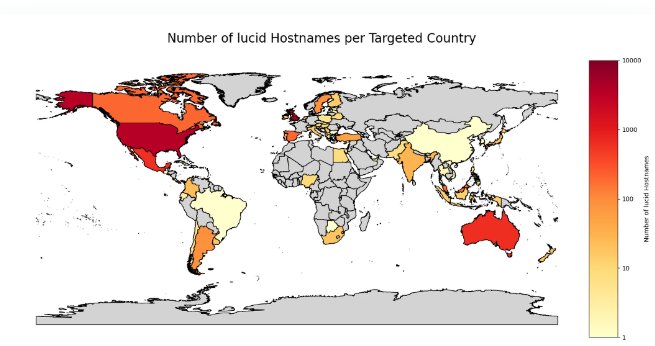
- Serves as a model for emerging PhaaS ecosystems (e.g., Darcula, Lucid).
Mitigation Strategies
Legal and Corporate Response
- Lawsuit: Google invoked the RICO Act, CFAA, and Lanham Act to dismantle the operation.
- Injunctions: Requests to seize domains and hosting infrastructure linked to Lighthouse.
- Coordination: Collaboration with ISPs, domain registrars, and global law enforcement.
Technical Countermeasures
- Domain monitoring for typosquatted and brand-abuse sites.
- Implement DMARC, SPF, and DKIM for brand email protection.
- SMS filtering and detection via mobile network providers.
- Threat-intel sharing to identify reused phishing templates.
User and Enterprise Awareness
- Avoid clicking links in unsolicited SMS messages.
- Verify messages through official apps or websites only.
- Conduct simulated phishing awareness training in organizations.
- Report suspicious messages to telecom or CERT teams.
Long-Term Measures
- Support cross-border cybercrime enforcement collaboration.
- Encourage telecom regulators to deploy anti-smishing frameworks.
- Invest in AI-driven phishing detection and rapid domain takedown systems.
Technical Recommendations
Immediate
- Identify and block domains linked to Lighthouse campaigns.
- Monitor brand impersonation via external threat intelligence feeds.
- Report smishing incidents through government cybercrime channels.
Short-Term
- Automate phishing detection using content fingerprinting.
- Conduct internal awareness and tabletop response exercises.
- Engage with telecom providers for SMS source verification.
Long-Term
- Collaborate with industry groups (M3AAWG, APWG) for threat takedown coordination.
- Strengthen international digital crime treaties and cooperation mechanisms.
- Adopt AI-based anti-phishing and message anomaly detection systems.
Resources and References
Official & Media Reports
- Google sues in New York to break up text phishing scheme – Reuters
- The Platform Behind a 'Staggering' Scam Text Operation – Wired
- Google sues Chinese group selling software behind text scams – Financial Times
- Google Sues China-Based Hackers Behind Lighthouse – The Hacker News
Critical Warning
Phishing-as-a-Service platforms like Lighthouse industrialize cybercrime and make large-scale attacks easy for low-skill criminals. Immediate collaboration between ISPs, regulators, and security teams is essential to curb these ecosystems.
User Protection Tips
- Be cautious of any SMS requesting payment or login actions.
- Always access services directly via official websites or apps.
- Enable two-factor authentication wherever possible.
- Report fake messages to your local CERT or telecom authority.