Zyxel GS1900 CVE-2026-7273 & Veeam Agent for Windows CVE-2026-32996
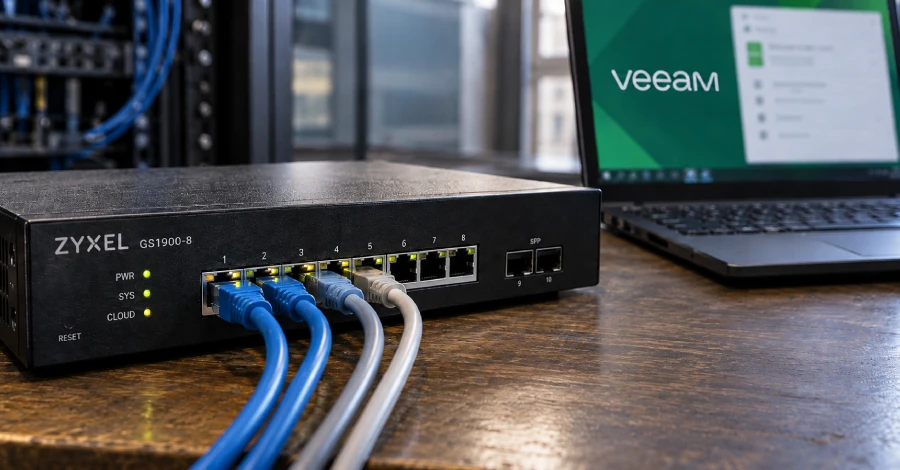
Zyxel GS1900 CVE-2026-7273 Veeam Agent for Windows CVE-2026-32996 Active Exploitation
Overview
Attackers are actively exploiting two separate vulnerabilities affecting different technologies:
- CVE-2026-7273: stack-based buffer overflow in a CGI component of Zyxel GS1900 switches.
- CVE-2026-32996: local privilege-escalation flaw in Veeam Agent for Microsoft Windows.
The Zyxel issue can reportedly allow unauthenticated attackers on the LAN to execute operating-system commands via crafted HTTP requests. The Veeam issue can allow a local low-privileged user to escalate to SYSTEM privileges.
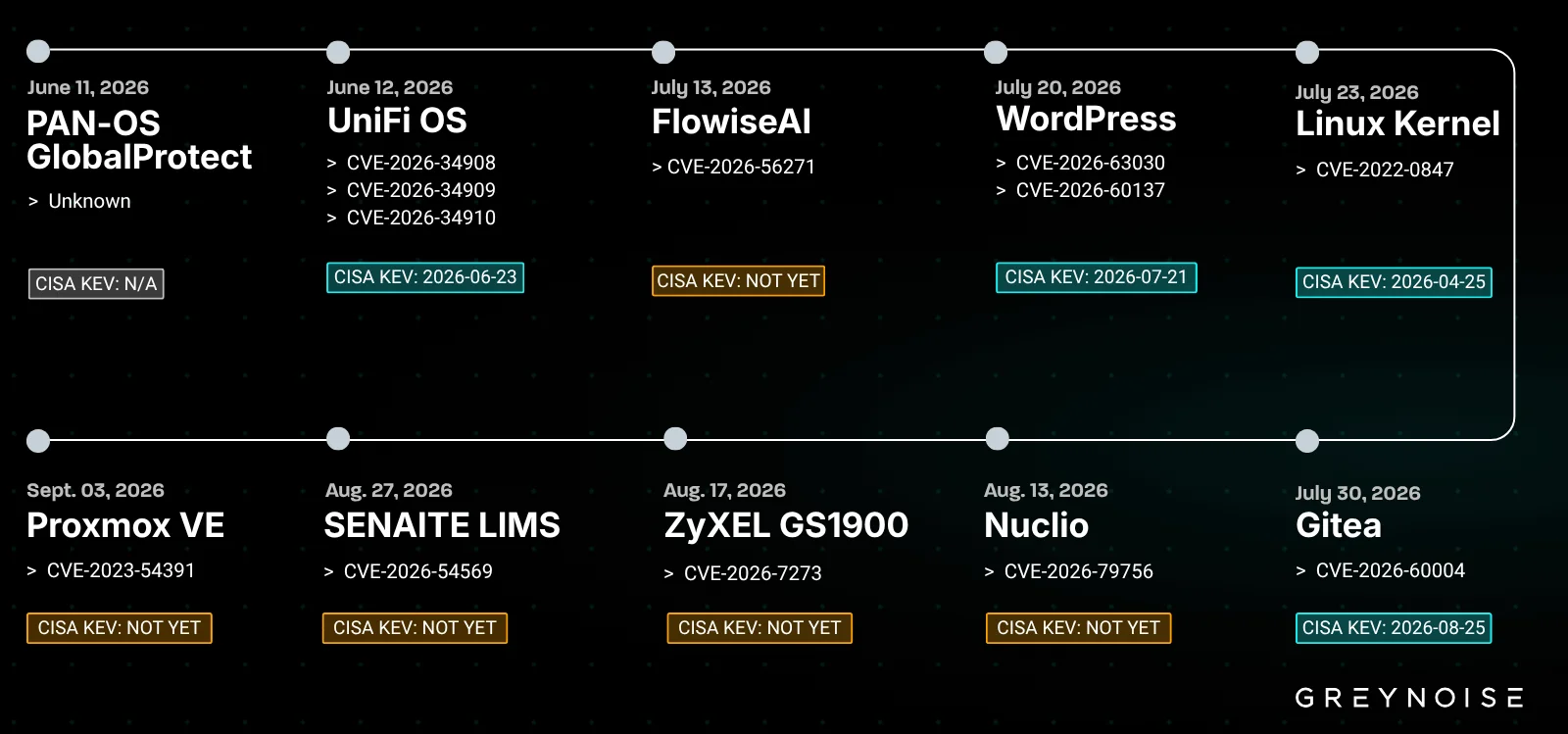
Technical Details
Zyxel - CVE-2026-7273
- Type: stack-based buffer overflow.
- Affected product line: Zyxel GS1900 series.
- Attack vector: LAN.
- Authentication required: no.
- Exploitation path: crafted HTTP requests to vulnerable CGI component.
- Result: arbitrary OS command execution.
- Affected firmware context: GS1900 firmware 2.90(XXXX.1)C0 and earlier.
- Reported campaign behavior: use of TFTP to fetch custom data-collection scripts.
- Reported collection target set: switch configs, network details, and hashed root credentials.
Veeam - CVE-2026-32996
- Type: local privilege escalation.
- Severity context: CVSS 7.3.
- Vulnerable component: Veeam Endpoint Backup service.
- Relevant IPC surface:
\\.\pipe\Veeam\VAW\ServiceConnectionPipe - Reported flaw pattern: elevated session UID tied to client-controlled value.
- Additional issue: UID appears in log data readable by standard users.
- Abuse path: attacker obtains UID and reuses elevated session context to execute commands as SYSTEM.
Technical Specifications
| Attribute | Details |
|---|---|
| Vulnerability Set | CVE-2026-7273 (Zyxel), CVE-2026-32996 (Veeam) |
| Primary Affected Technologies | Zyxel GS1900 switches; Veeam Agent for Microsoft Windows |
| Primary Risk Type | Unauthenticated LAN command execution (Zyxel), local SYSTEM escalation (Veeam) |
| Attack Prerequisites | LAN reachability to switch management path; local user access on Windows host |
| Observed Exploitation Context | Active exploitation reported publicly |
| Potential Follow-On | Reconnaissance, lateral movement, persistence, infrastructure abuse |
Affected Products
- Zyxel GS1900 switch deployments using vulnerable firmware builds.
- Veeam Agent for Microsoft Windows instances lacking fixed versions.
- Environments where attackers can reach switch management services or gain low-privileged local Windows access.
Attack Scenario
Zyxel Path
- Attacker gains LAN-level reachability to vulnerable GS1900 switch management interface.
- Crafted HTTP request triggers CVE-2026-7273 overflow condition.
- Command execution is achieved on the switch OS.
- Attacker collects config/network data and may stage further network operations.
Veeam Path
- Attacker obtains local low-privileged access to a Windows host.
- Session UID is retrieved from readable logs / related service context.
- Attacker abuses service interaction through vulnerable named-pipe path.
- Commands execute with SYSTEM privileges.
Impact Assessment
- Compromise of vulnerable Zyxel switches
- Exposure of switch configuration and network metadata
- Possible disclosure of hashed root credentials
- Privilege escalation from local user to SYSTEM on affected Windows systems
- Elevated risk for systems with backup software trust and broad administrative reach
- Increased reconnaissance, lateral movement, and persistence opportunities
- Potential use of compromised infrastructure as staging points for broader attacks
- High due to active exploitation, unauthenticated command execution on network gear, and SYSTEM-level escalation on endpoint/backup infrastructure
Mitigation Strategies
Zyxel Remediation
- Patch GS1900 switches immediately.
- Upgrade vulnerable GS1900 models to fixed 2.90(XXXX.2)C0 firmware branches.
- Restrict switch management-plane access to trusted management networks only.
- Monitor for anomalous HTTP requests and unexpected TFTP activity.
- Audit switch configuration, credentials, and account state for unauthorized changes.
Veeam Remediation
- Upgrade Veeam components to fixed versions.
- Public reporting states fixes include Veeam Agent for Microsoft Windows 13.0.3.1220 and broader remediation in Veeam Backup & Replication 13.0.2.29.
- Prioritize patching on shared systems, admin workstations, and servers with local-user exposure.
- Review Veeam/service logs for suspicious access patterns and unexpected SYSTEM-level process creation.
Incident Response
- Investigate indicators aligned with known exploitation behavior.
- Isolate suspected compromised assets where needed.
- Preserve forensic evidence before aggressive remediation.
- Rotate credentials/secrets tied to impacted systems after containment.
Resources and References
Public Reporting
Last Updated: September 24, 2026