WinRAR Path Traversal Vulnerability
CVE-2025-8088 Path Traversal Arbitrary Code Execution
Overview
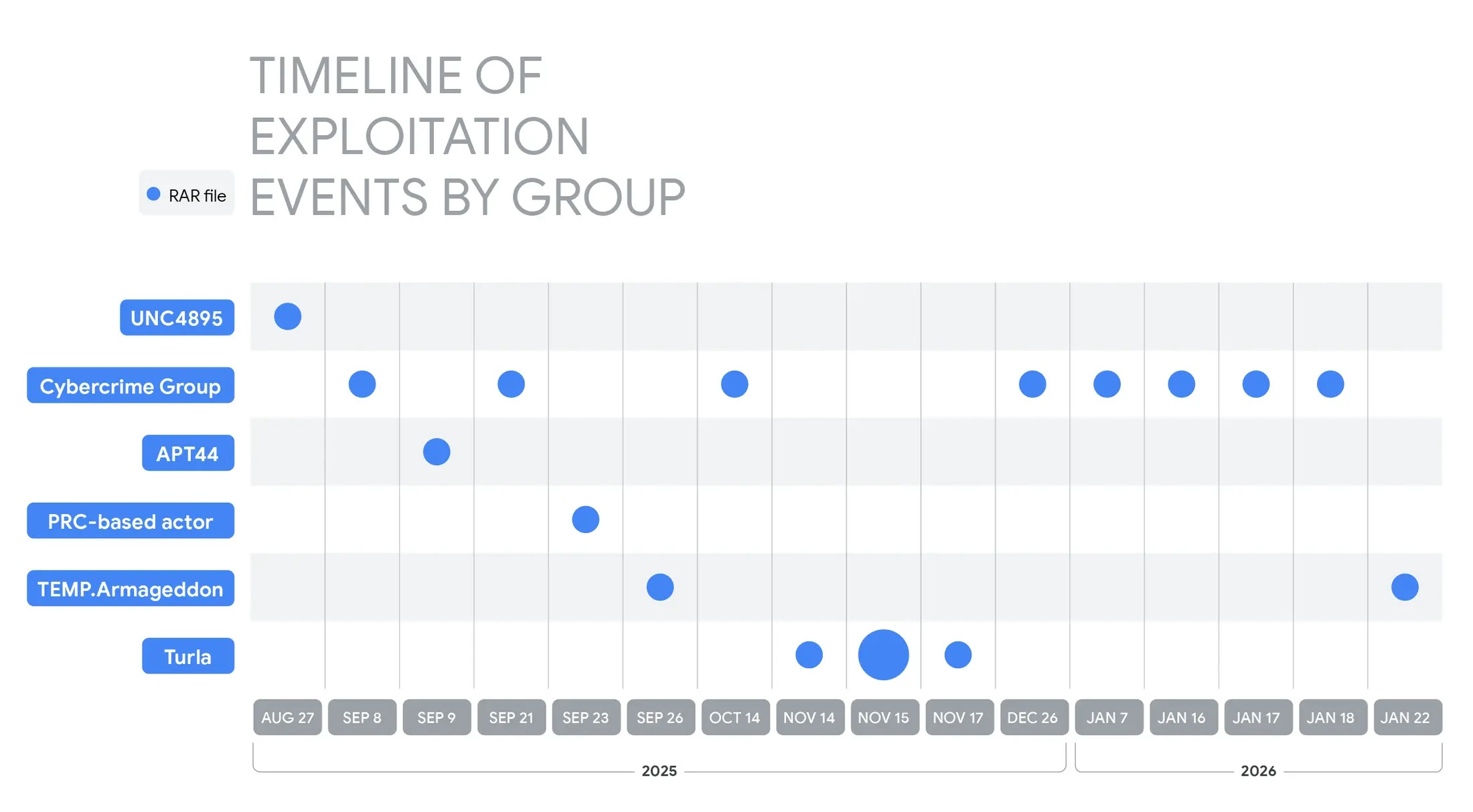
CVE-2025-8088 is a critical path traversal security flaw in the Windows version of WinRAR that allows attackers to craft archive files that extract malicious content—including executable payloads—to arbitrary paths on a victim's file system, such as startup folders, resulting in automatic execution. The vulnerability is actively being exploited by both state-aligned threat actors and cybercriminals, with exploitation campaigns targeting sensitive sectors through spear-phishing operations.
Technical Specifications
| Attribute | Details |
|---|---|
| CVE ID | CVE-2025-8088 |
| Vulnerability Type | Path Traversal (CWE-22) - Improper Handling of Alternate Data Streams |
| CVSS Score | 8.4 (High) |
| Attack Vector | Local (requires user interaction) |
| Authentication | None |
| Complexity | Low |
| User Interaction | Required |
| Affected Versions | WinRAR versions up to 7.12 |
Affected Products
- WinRAR for Windows versions up to 7.12
- All Windows systems running vulnerable WinRAR installations
- Status: Active exploitation / Patch available (version 7.13+)
Technical Details
The vulnerability stems from improper handling of alternate data streams (ADS) and crafted paths in WinRAR's extraction logic. Malicious archives include specially crafted path entries that bypass normal extraction boundaries, allowing files to be written outside the intended extraction directory.
The flaw enables attackers to:
- Write arbitrary files to sensitive directories (e.g., Windows Startup folder)
- Achieve arbitrary code execution without additional user interaction after extraction
- Bypass security boundaries through NTFS Alternate Data Streams manipulation
Attack Scenario
- Attacker crafts a malicious RAR archive with specially constructed path entries using NTFS Alternate Data Streams
- Victim receives the malicious RAR file via spear-phishing emails, often with decoy content to appear legitimate
- When opened in a vulnerable version of WinRAR, the crafted archive writes malware outside the intended extraction folder
- Malicious executables are placed in sensitive directories like the Windows Startup folder
- Malware executes automatically at system startup or user login without further interaction, establishing persistence
Impact Assessment
- Credential theft through deployed malware
- Data exfiltration via remote access trojans
- Espionage activities by state-aligned threat actors
- Sensitive information exposure in targeted sectors
- Arbitrary file writes to system directories
- Malware deployment on compromised systems
- System configuration modifications
- Backdoor installation enabling further compromise
- Persistent unauthorized access through backdoors
- Potential ransomware deployment capabilities
- System performance degradation from malware
- Resource consumption by malicious processes
Mitigation Strategies
Immediate Actions
- Update WinRAR to version 7.13 or later immediately to patch CVE-2025-8088
- Scan systems for indicators of compromise related to RomCom and similar RAT variants
- Review startup folders and scheduled tasks for unauthorized entries
- Quarantine and analyze any suspicious RAR files received recently
Short-term Measures
- Avoid opening archive files from untrusted or unknown sources
- Implement email filtering and gateway security to scan attachments
- Deploy endpoint protection solutions with advanced threat detection
- Configure application allowlisting to prevent unauthorized executables
- Disable auto-extraction features in archive utilities
Monitoring & Detection
- Configure EDR tooling to detect unusual extraction behavior and file writes to startup folders
- Monitor for execution of processes from temporary or unusual directories
- Alert on modifications to Windows Startup folders and registry run keys
- Track network connections from recently extracted executables
- Monitor for suspicious parent-child process relationships involving WinRAR
Long-term Solutions
- Establish a patch management process for third-party applications including WinRAR
- Implement user training programs to recognize suspicious attachments and phishing attempts
- Deploy advanced email security solutions with behavioral analysis
- Use application control policies to restrict archive extraction behavior
- Consider alternative archive utilities with stronger security controls
- Maintain comprehensive logging and monitoring for archive extraction activities
Resources and References
Incident Reports
- Google Warns of WinRAR Vulnerability Exploited to Gain Control Over Windows System
- WinRAR Flaw Becomes Hacker Gold Mine: State Spies and Cybercriminals Still Exploiting Six-Month-Old Bug - Cyber Kendra
- Diverse Threat Actors Exploiting Critical WinRAR Vulnerability CVE-2025-8088 | Google Cloud Blog
- Cybercriminals and nation-state groups are exploiting a six-month old WinRAR defect | CyberScoop
- CVE-2025-8088 - Exploits & Severity - Feedly