Asin Android Spyware Campaign
Android Spyware Mobile Threat Social Engineering Arabic-Speaking Targets
Overview
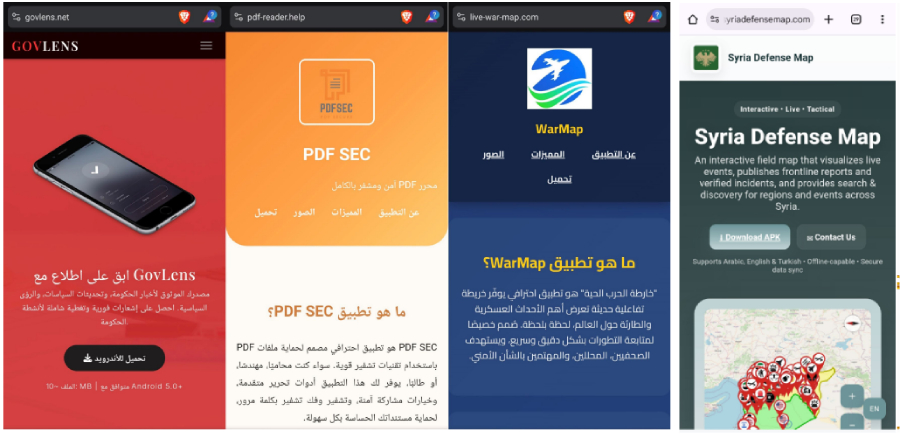
Researchers discovered a new Android spyware family named "Asin" targeting Arabic-speaking users through fake Android applications and malicious websites. The spyware is distributed via APK sideloading and disguises itself as PDF tools, war map applications, and news-related apps.
Technical Specifications
| Attribute | Details |
|---|---|
| Threat Family | Asin Android spyware |
| Target Profile | Primarily Arabic-speaking users |
| Delivery Method | Malicious APK sideloading from fake websites and social channels |
| Lure Themes | PDF readers/tools, war map apps, and news-related applications |
| Observed Malicious Domains | govlens[.]net, pdf-reader[.]help, live-war-map[.]com |
| Infection Prerequisite | User enables installation from unknown sources and installs APK manually |
| Post-Install Behavior | Requests excessive permissions and maintains background persistence |
| Data Collection Capabilities | SMS messages, contacts, device information, and local files |
| Distribution Channels | Fake websites, Telegram, and social media links |
| CVE IDs | Not specified for this campaign |
Affected Products
- Android devices where users sideload APK files from unofficial sources
- Users exposed to malicious links via Telegram and social media
- Devices with permissive unknown-source installation settings
- Individuals at higher risk of targeted surveillance, including journalists, activists, and researchers
Attack Scenario
- Victim receives a malicious link through Telegram or social media.
- The user visits a fake website impersonating a trusted service.
- The victim downloads and installs a malicious APK.
- Android displays unknown-source installation warnings.
- The user manually grants requested permissions.
- The spyware activates, persists in the background, and exfiltrates collected data to attacker-controlled infrastructure.
Impact
- Unauthorized app behavior and misuse of granted device permissions
- Potential tampering with normal device trust and security posture
- Increased opportunity for long-term mobile compromise through persistent spyware activity
- Theft of sensitive mobile data including SMS, contacts, and files
- Exposure of private communications and social graph information
- Elevated espionage risk against journalists, activists, researchers, and region-specific targets
- Potential device performance degradation from persistent background surveillance
- Possible disruption of normal mobile operations due to malicious activity
- Increased incident response burden for organizations managing affected endpoints
Mitigations
Immediate Actions
- Avoid sideloading APK files from unofficial sources
- Use only trusted app stores such as Google Play
- Enable Google Play Protect
- Disable "Install unknown apps" where possible
Short-term Measures
- Keep Android devices updated with the latest security patches
- Deploy Mobile Device Management (MDM) controls in organizations
- Restrict app installation policies and enforce least-privilege app permissions
Monitoring & Detection
- Monitor suspicious domains and network traffic linked to mobile endpoints
- Detect unusual permission requests and suspicious background app behavior
- Track indicators tied to fake application lures and malicious APK distribution paths
Resources
Open-Source Reporting
Last Updated: June 7, 2026