Hidden Backdoor in Tenda Router Firmware (CVE-2026-11405)
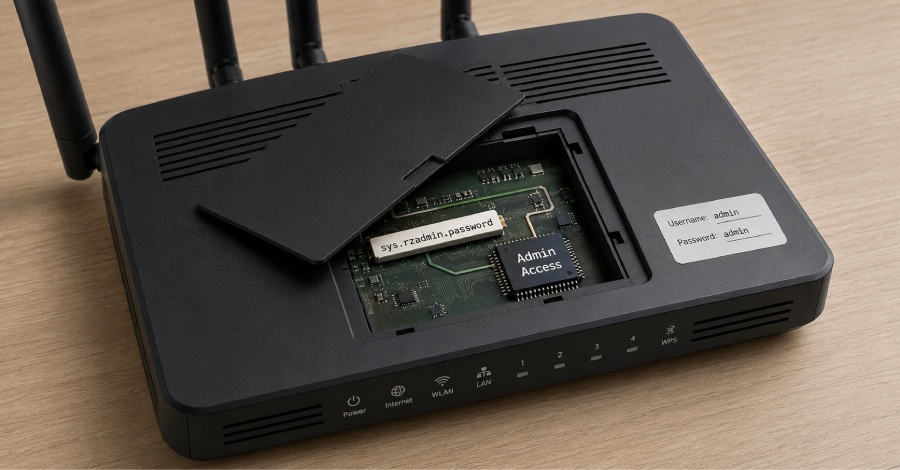
CVE-2026-11405 Authentication Bypass Hardcoded Secret Router Backdoor No Patch at Disclosure
Overview
Researchers identified a hidden authentication backdoor in multiple Tenda router firmware versions. The undocumented mechanism allows anyone with a hardcoded secret password to bypass normal administrator authentication and gain full administrative access to the web management interface. The issue is tracked as CVE-2026-11405. At disclosure time, no official vendor patch was available due to unsuccessful coordinated disclosure.
Technical Specifications
| Attribute | Details |
|---|---|
| CVE ID | CVE-2026-11405 |
| Vulnerability Type | Hidden authentication backdoor / authentication bypass |
| Affected Component | Embedded HTTP server (/bin/httpd) in Tenda firmware |
| Root Cause | Undocumented auth routine accepts hardcoded secret password independent of configured admin credentials |
| Authentication Required | Knowledge of hardcoded secret only |
| Access Vector | Web management interface (local or remote if exposed) |
| Known Affected Product Lines | FH1201, W15E, AC10, AC5, AC6 series |
| Patch Status at Disclosure | No official firmware patch available |
| Disclosure Source | CERT/CC VU#213560 |
Affected Products
- Tenda routers running vulnerable firmware with hidden backdoor logic
- Products reported as affected include FH1201, W15E, AC10, AC5, and AC6 series
- Deployments with remote management enabled or internet-exposed management interfaces are at highest risk
Attack Scenario
- Attacker identifies a vulnerable Tenda router model/firmware.
- Attacker reaches the router management interface locally or remotely (if exposed).
- Attacker submits the hidden hardcoded secret password.
- Firmware creates an administrator session without validating the configured admin password.
- Attacker gains full administrative control and can alter settings, create persistence, hijack DNS, weaken firewall/NAT, monitor traffic, and pivot into internal systems.
Impact
- Full unauthorized administrative control of the router configuration
- Security control tampering, including firewall/NAT policy manipulation
- Persistent unauthorized access through admin/session persistence changes
- DNS hijacking can redirect users to phishing and credential theft pages
- Traffic interception and monitoring risks exposure of sensitive data
- Router compromise can expose internal network topology for lateral movement
- Service disruption via malicious configuration changes or traffic rerouting
- Router destabilization or abuse in botnet operations and downstream attacks
- Increased operational risk for homes/SMBs relying on affected edge devices
Mitigations
Immediate Actions
- Disable remote management unless strictly required
- Restrict router administrative access to trusted internal addresses only
- Block internet access to management interfaces using upstream/firewall ACLs
Short-term Measures
- Place management interfaces on a dedicated management VLAN where possible
- Audit admin accounts and monitor for unauthorized configuration changes
- Regularly verify DNS settings and restore known-good resolver configuration if altered
Monitoring & Detection
- Alert on unexpected login/session creation events to router admin interfaces
- Monitor configuration drift, especially firewall/NAT and DNS parameters
- Track CERT/CC and Tenda advisories for IOC and remediation updates
Long-term Solutions
- Replace affected devices if secure isolation cannot be guaranteed
- Apply official firmware updates immediately when released
- Adopt lifecycle management to retire unsupported/EoL network edge equipment proactively
Resources
Open-Source Reporting
Last Updated: July 8, 2026