Rhysida Ransomware Group Targets Berlin Government Ahead of Vote
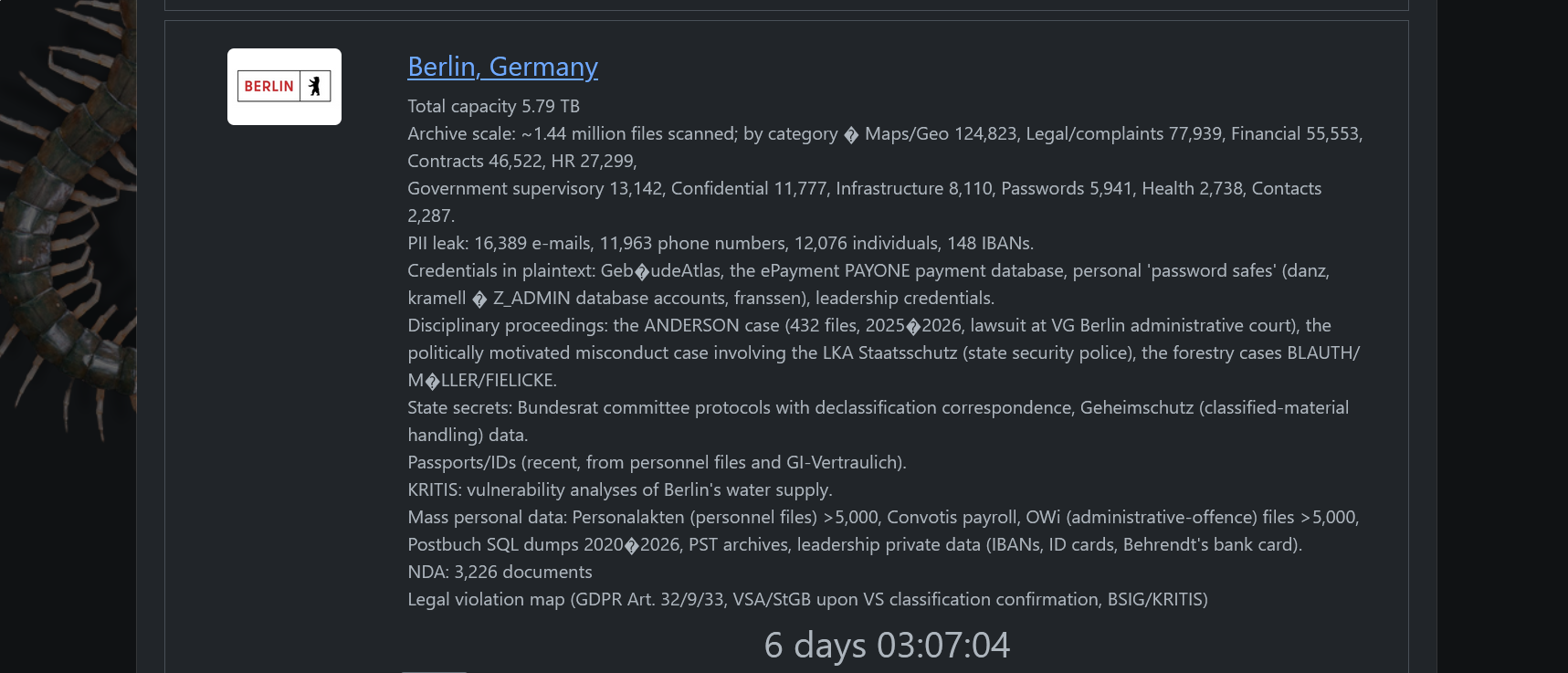
Rhysida Ransomware Government Targeting Pre-Election Pressure Data Extortion Attribution Unconfirmed
Overview
The Rhysida ransomware group claimed responsibility for a cyberattack against Berlin's state government administrative network. Attackers allegedly stole 5.79 TB of data and attempted extortion, while officials publicly stated they would not pay.
The incident occurred weeks before Berlin's September 20 election, increasing political and reputational sensitivity. Authorities reported that election infrastructure was not affected based on current assessments.
Technical Details
Rhysida claimed exfiltration of approximately 5.79 TB across roughly 1.44 million files, allegedly including personal information for 12,076 individuals.
Reuters reporting described alleged stolen material as including contracts, emails, phone numbers, passwords, and potentially classified information, while noting these attacker claims were still under official assessment.
Historically, Rhysida activity has been associated with compromised credentials, phishing, exploitation of public-facing services, and remote-access abuse (including VPN pathways), especially where MFA is weak or absent.
Technical Specifications
| Attribute | Details |
|---|---|
| Threat Actor (Claimed) | Rhysida ransomware operation |
| Target Environment | Berlin state government administrative network |
| Claimed Exfiltration Volume | 5.79 TB |
| Claimed File Count | ~1.44 million files |
| Claimed Personal Records | 12,076 individuals |
| Ransom Pressure Mechanism | Public leak/auction threat with reported 30 BTC starting bid |
| Election Context | Incident occurred prior to September 20 Berlin election |
| Current Official Assessment Note | Election infrastructure reportedly unaffected |
Affected Products
- Specific exploited product or CVE in this incident has not been publicly confirmed.
- Administrative government network systems handling contracts, communications, and contact data are within reported impact scope.
- Public-facing services, remote-access systems, and identity surfaces remain relevant likely exposure pathways based on known Rhysida tradecraft.
Attack Scenario
- Attacker gains initial access through an unconfirmed path such as compromised credentials, phishing, exposed service exploitation, or remote-access abuse.
- Intruder establishes foothold and expands access through the government network.
- Sensitive files are collected and exfiltrated from administrative systems.
- Rhysida claims responsibility and issues extortion pressure through leak or sale threats.
- Attackers reportedly list data for auction with a 30 BTC starting price.
The exact initial access vector used in the Berlin incident has not been publicly confirmed.
Impact Assessment
- Cyber extortion event affected Berlin state government administrative network
- Authorities publicly refused ransom payment
- Official statements indicate election infrastructure was not affected at current assessment stage
- Attackers claim 5.79 TB and ~1.44 million files exfiltrated
- Alleged material includes sensitive communications, credentials, and administrative records
- Full authenticity and completeness of attacker claims remained under assessment
- Exposure of personal/government information can enable identity theft, fraud, phishing, and follow-on targeting
- Operational and reputational pressure may increase due to election timing
- Credential exposure could support additional unauthorized access attempts if not rapidly mitigated
Mitigation Strategies
Identity and Access Protection
- Enforce MFA for VPN, webmail, privileged access, and other high-value entry points.
- Rotate credentials for exposed, shared, and administrative accounts.
- Enforce strong password hygiene and remove dormant or unnecessary accounts.
Exposure and Vulnerability Reduction
- Patch known exploited vulnerabilities and prioritize internet-facing services.
- Harden externally reachable systems and reduce unnecessary remote-access exposure.
- Validate security controls on third-party and externally connected service paths.
Detection and Containment
- Monitor for unusual authentication behavior and impossible-travel/sign-in anomalies.
- Detect large or abnormal outbound data transfer patterns indicating possible exfiltration.
- Deploy and tune EDR controls for lateral movement, privilege escalation, and ransomware behaviors.
Recovery and Resilience
- Maintain offline/immutable backups and test restoration regularly.
- Apply least privilege across identity and system administration.
- Exercise incident-response and crisis-communications plans, especially for politically sensitive periods.
Resources and References
Public Reporting
Last Updated: August 31, 2026