Fuyao Android TV Box Malware Campaign
Supply-Chain Malware Android TV Boxes Ad Fraud SOCKS5 Proxy Abuse Residential IP Exploitation
Overview
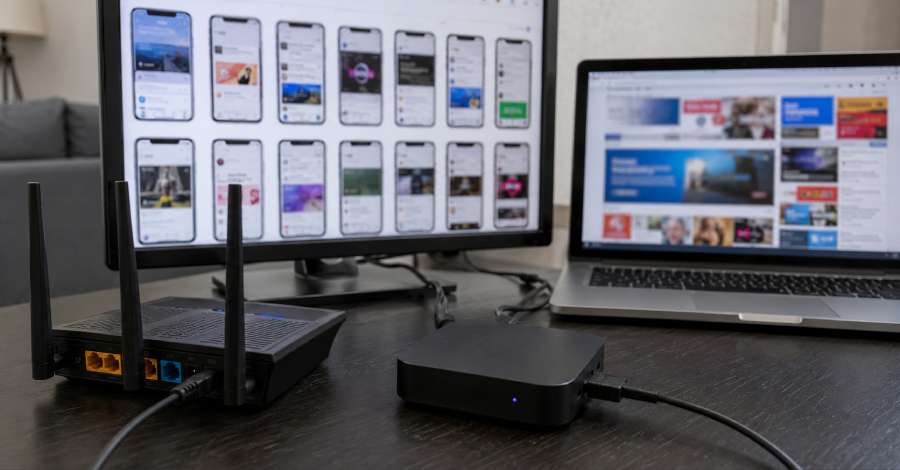
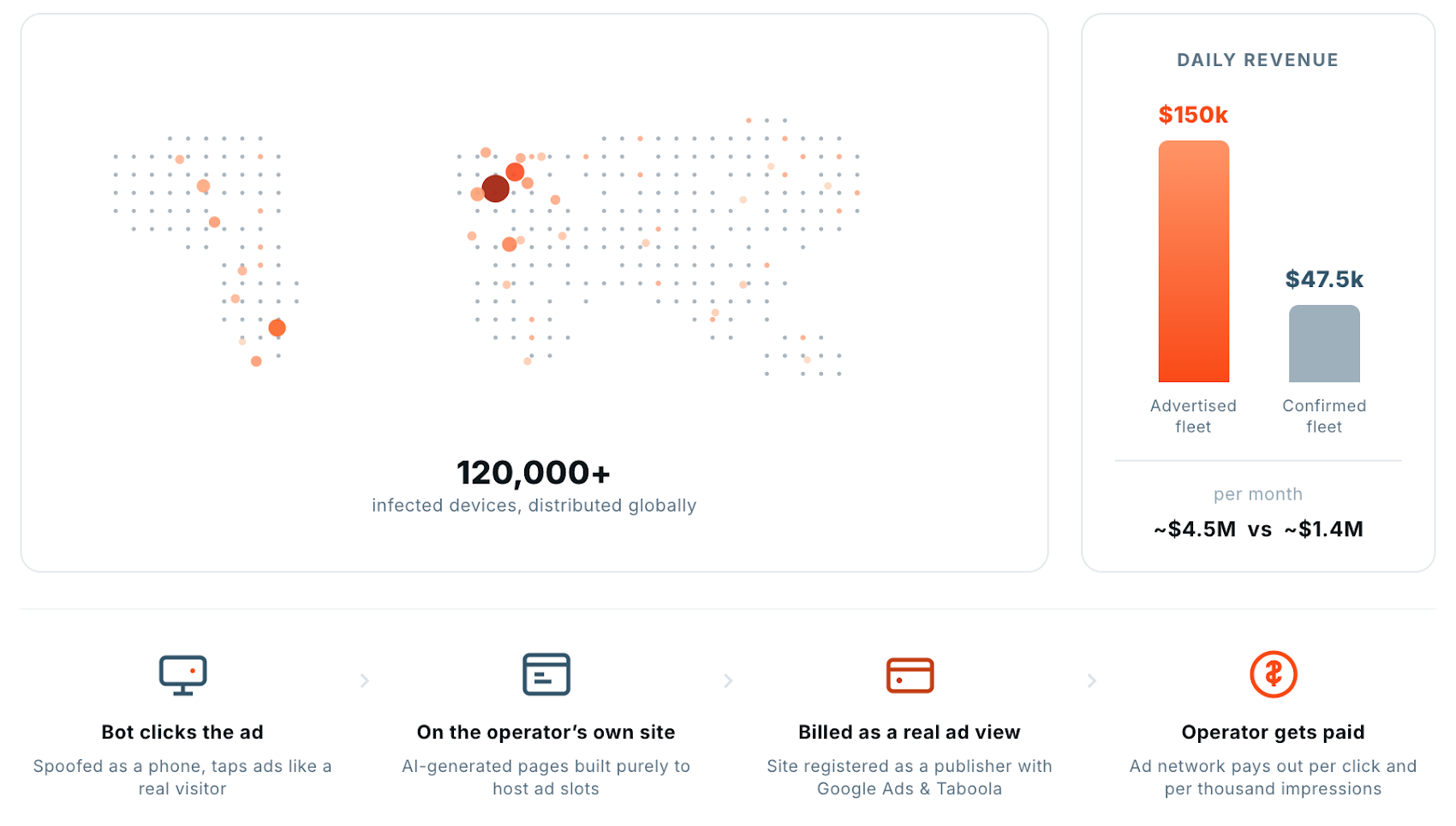
Bitsight researchers uncovered a large-scale malware campaign known as Fuyao involving low-cost Android TV boxes infected before reaching end users. The malware disguises affected devices as legitimate Android smartphones, executes ad-fraud operations, and converts victim internet connections into residential SOCKS5 proxy infrastructure used by cybercriminals.
Because infection occurs in the manufacturing or supply-chain stage, users may be compromised immediately after connecting the device online.
Technical Specifications
| Attribute | Details |
|---|---|
| Campaign Name | Fuyao |
| Infection Stage | Pre-installed during manufacturing/supply chain |
| Primary Device Class | Low-cost Android TV boxes |
| Identity Spoofing Method | System property tampering (including build.prop and related properties) |
| Impersonated Brands | Samsung, Huawei, Xiaomi, Vivo (and similar smartphone profiles) |
| C2 Behavior | Connects to remote command-and-control infrastructure for tasking |
| Malicious Functions | Automated ad requests, fake impressions, click fraud, SOCKS5 proxy exposure |
| Stealth Technique | Monitors HDMI connection state and adapts behavior to reduce suspicion |
| Operational Advantage for Attackers | Uses residential victim IPs to evade IP-based detection and blocking |
Affected Products
- Inexpensive Android TV boxes distributed through untrusted or weakly vetted supply chains
- Home and small-office networks where infected TV devices operate continuously
- Ad ecosystems impacted by fraudulent traffic generated from spoofed device identities
- Organizations exposed to abuse originating from compromised residential proxy endpoints
Attack Scenario
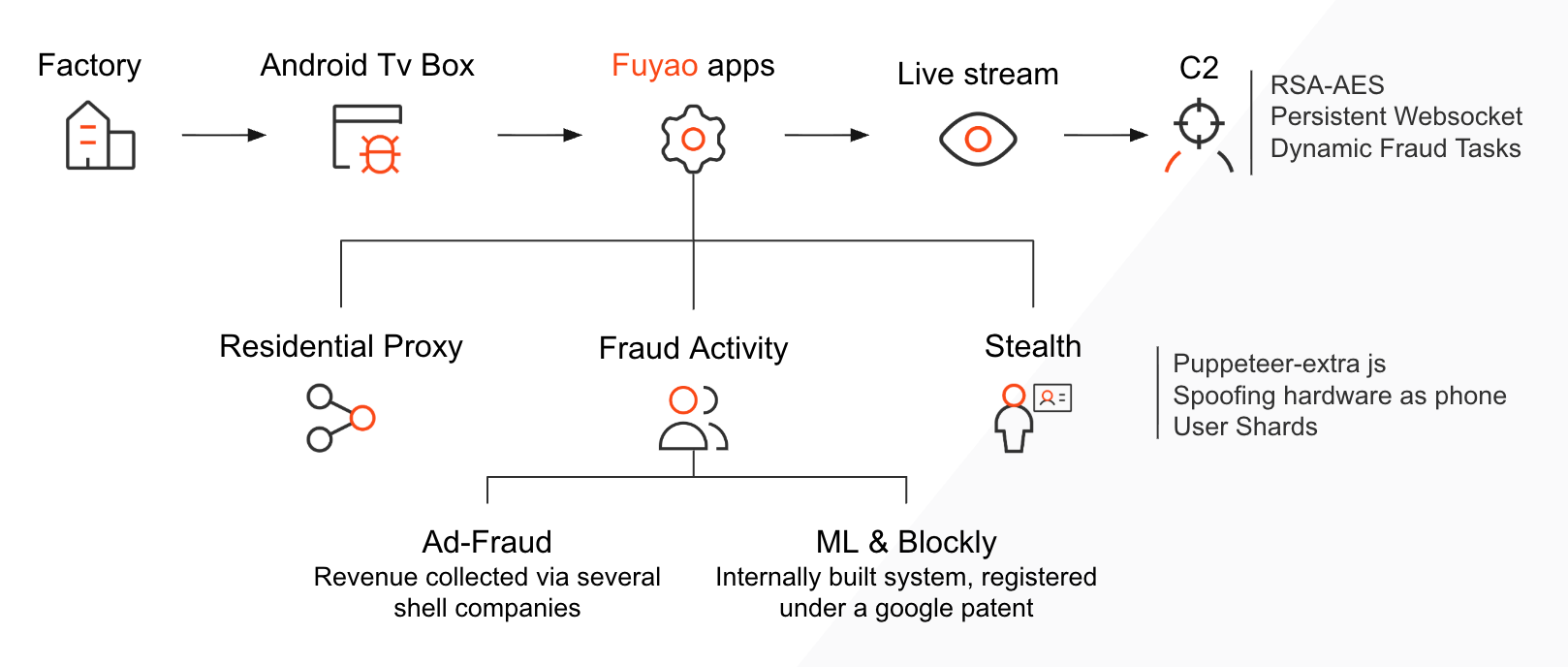
- A user purchases a low-cost Android TV box.
- The device is already infected before shipment.
- Once connected to the internet, malware contacts C2 infrastructure.
- The malware spoofs the device identity to appear as a mainstream smartphone.
- It performs ad fraud and/or exposes a SOCKS5 proxy service.
- Attackers route malicious traffic through the victim's public IP while the victim remains unaware.
Impact Assessment
- Device identity spoofing undermines trust in endpoint attribution and telemetry
- Persistent malware control enables continued misuse without user awareness
- Compromised IoT supply chains reduce confidence in firmware/device provenance
- Victim network metadata may be exposed through proxy and C2 operations
- Residential proxy abuse can support credential attacks, phishing, scraping, and account takeover campaigns
- Traffic relay can indirectly expose household network usage patterns
- Increased bandwidth usage can degrade home/office network performance
- Abuse can lead to IP reputation damage, throttling, or service blocks
- Network congestion and persistent background activity reduce quality of service
Mitigation Strategies
Immediate Actions
- Purchase Android TV devices only from reputable vendors and authorized distributors
- Avoid uncertified or unusually inexpensive Android TV box models
- Replace devices suspected of factory pre-infection when trustworthy remediation is not possible
Short-term Measures
- Keep firmware updated using official vendor channels only
- Segment IoT devices to isolated VLANs or guest networks
- Block known malicious C2 destinations and suspicious proxy traffic patterns
Monitoring & Detection
- Monitor outbound traffic for unexpected persistent connections and SOCKS5 activity
- Use DNS filtering and network intrusion detection to detect suspicious behavior
- Track unusual ad-traffic patterns and high-volume background communications
Long-term Solutions
- Enforce supply-chain security validation for IoT procurement and onboarding
- Maintain asset inventories and baseline behavior profiles for connected devices
- Integrate threat intelligence on botnet/proxy infrastructure linked to preloaded malware campaigns
Resources and References
Last Updated: August 2, 2026