Apple Multiple Products Use-After-Free WebKit Vulnerability

CVE-2025-43529 Use-After-Free Remote Code Execution
Overview
Apple iOS, iPadOS, macOS, Safari, and other products using WebKit contain a critical use-after-free vulnerability in the HTML parsing and rendering components. Processing maliciously crafted web content can lead to memory corruption, potentially allowing attackers to execute arbitrary code in the browser context. The vulnerability affects not only Apple products but also non-Apple applications that rely on WebKit. This flaw has been actively exploited in sophisticated attacks and added to CISA's Known Exploited Vulnerabilities catalog, indicating in-the-wild exploitation targeting Apple users.
Technical Specifications
| Attribute | Details |
|---|---|
| CVE ID | CVE-2025-43529 |
| Vulnerability Type | Use-After-Free (CWE-416) |
| Attack Vector | Network (malicious web content) |
| Authentication | None required |
| Complexity | Medium |
| User Interaction | Required (visiting malicious webpage) |
| Affected Component | WebKit HTML parser and rendering engine |
| Exploitation Status | Actively exploited in the wild |
Affected Products
- Apple iOS (mobile devices - iPhone)
- Apple iPadOS (tablet devices - iPad)
- Apple macOS (desktop/laptop computers)
- Apple Safari browser (all platforms)
- Third-party applications using WebKit for embedded web rendering
- Non-Apple products that rely on WebKit engine
Patched Versions
- Safari 26.2 and later
- iOS (latest security update)
- iPadOS (latest security update)
- macOS (latest security update)
Vulnerability Details
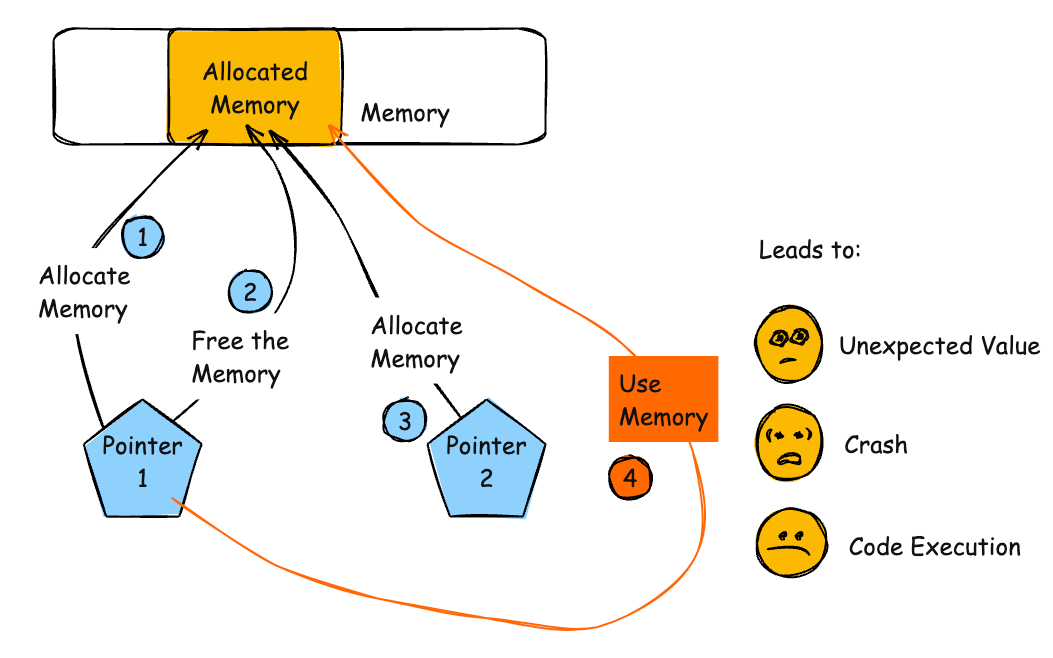
Use-After-Free (CWE-416)
A use-after-free vulnerability occurs when a program continues to use a memory pointer after the memory has been freed. This creates a dangerous condition where:
- An object is allocated in memory
- The object is freed/deallocated
- The program later attempts to access the freed memory
- An attacker can control what data occupies that freed memory space
- When accessed, the attacker-controlled data is processed, leading to exploitation
Root Cause
Improper memory lifecycle management in WebKit's HTML parser and rendering engine. The vulnerability stems from inadequate tracking of object references during complex HTML/JavaScript processing, allowing freed objects to be accessed after deallocation.
Exploitation Mechanism
Attackers craft specific HTML and JavaScript that triggers the use-after-free condition. By controlling the contents of the freed memory region, they can redirect program execution flow and achieve arbitrary code execution within the WebKit rendering process.
Attack Scenario
- Malicious Content Creation: Attacker crafts a malicious webpage or embeds malicious HTML content containing specially designed HTML/JavaScript payloads
- Victim Interaction: Victim opens the malicious page using Safari or an application that uses WebKit for rendering web content
- Memory Corruption Trigger: WebKit processes the content, frees a memory object during parsing/rendering, but later attempts to access that freed object
- Memory Exploitation: Attacker-controlled data occupies the freed memory region through heap manipulation techniques
- Code Execution: Memory corruption occurs when the freed object is accessed, allowing the attacker to execute arbitrary code in the browser process
- Escalation (Optional): Attacker may chain with additional exploits to escape the browser sandbox or compromise the entire device
Impact Assessment
- Arbitrary code execution in WebKit process
- Modification of browser state and session data
- Alteration of rendered web content
- Potential system-level compromise when chained with sandbox escape
- Access to browsing history and session data
- Exposure of credentials stored in browsers
- Leakage of cookies and authentication tokens
- Access to clipboard and pasteboard data
- Potential access to camera, microphone, and location data
- Exfiltration of personal and corporate data
- Application crashes and denial of service
- Browser or app termination
- Loss of unsaved data
- Device instability or crashes
- Remote Code Execution: Full control of browser rendering process
- Spyware/Malware Installation: Deployment of persistent malware on devices
- Unauthorized Access: Access to device data, photos, contacts, messages
- Privilege Escalation: When chained with other vulnerabilities, can lead to full device compromise
- Surveillance: Installation of monitoring software for ongoing data collection
Mitigation Strategies
🔄 Immediate Actions
- Apply Security Updates: Install Apple security updates for iOS, iPadOS, macOS, and Safari immediately
- Update Safari: Upgrade to Safari 26.2 or later on all devices
- Mobile Updates: Update all iOS and iPadOS devices to latest versions
- Desktop Updates: Update all macOS systems to latest security patches
- Automatic Updates: Enable automatic updates on all Apple devices
🛡️ Device Management
- MDM Deployment: Push security updates via Mobile Device Management systems
- Update Verification: Verify all enterprise devices have applied patches
- Inventory Check: Identify all devices running vulnerable versions
- Compliance Monitoring: Track update compliance across device fleet
- Third-Party Apps: Identify applications using WebKit and verify updates
🔍 Monitoring & Detection
- Exploit Detection: Monitor for signs of WebKit exploitation attempts
- Crash Analytics: Review crash reports for use-after-free indicators
- Network Monitoring: Detect connections to known malicious domains
- EDR Solutions: Deploy endpoint detection for iOS/macOS environments
- Log Analysis: Review system and browser logs for suspicious activity
📊 Preventive Controls
- Web Filtering: Implement DNS filtering and content security policies
- Browsing Restrictions: Limit access to untrusted websites in enterprise environments
- User Education: Train users on safe browsing practices and phishing recognition
- Email Security: Block suspicious links and attachments
- Application Whitelisting: Control which applications can be installed
Resources and References
Official Documentation
- Known Exploited Vulnerabilities Catalog | CISA
- About the security content of Safari 26.2 - Apple Support
- CWE - CWE-416: Use After Free (4.19)
- CVE-2025-43529 Apple fixes two zero-day flaws exploited in the wild
- Zero‑Day Vulnerabilities in Apple WebKit | Cyber Security Agency of Singapore
- Apple Issues Security Updates After Two WebKit Flaws Found Exploited in the Wild
- Apple Patches Two WebKit Zero Days Actively Exploited in Sophisticated Attacks - Cybersecurity | COE Security
Active Exploitation Warning
This vulnerability is being actively exploited in sophisticated attacks. Immediate patching of all Apple devices and WebKit-dependent applications is critical. The use-after-free nature allows for reliable exploitation and potential sandbox escape when chained with other vulnerabilities.
Security Best Practice
For Apple device security:
- Enable automatic updates on all iOS, iPadOS, and macOS devices
- Regularly verify devices are running latest security updates
- Implement Mobile Device Management (MDM) for enterprise devices
- Educate users on risks of visiting untrusted websites
- Deploy web filtering and content security policies
- Audit third-party applications using WebKit components