NetScaler Memory Disclosure Vulnerability - CVE-2026-3055
Citrix NetScaler Memory Disclosure Active Probing
Overview
A critical vulnerability in Citrix NetScaler ADC and Gateway, tracked as CVE-2026-3055, can allow unauthenticated attackers to trigger a memory overread and extract sensitive information from vulnerable systems.
Security reporting indicates active reconnaissance and probing activity, increasing the risk of rapid weaponization and real-world exploitation.
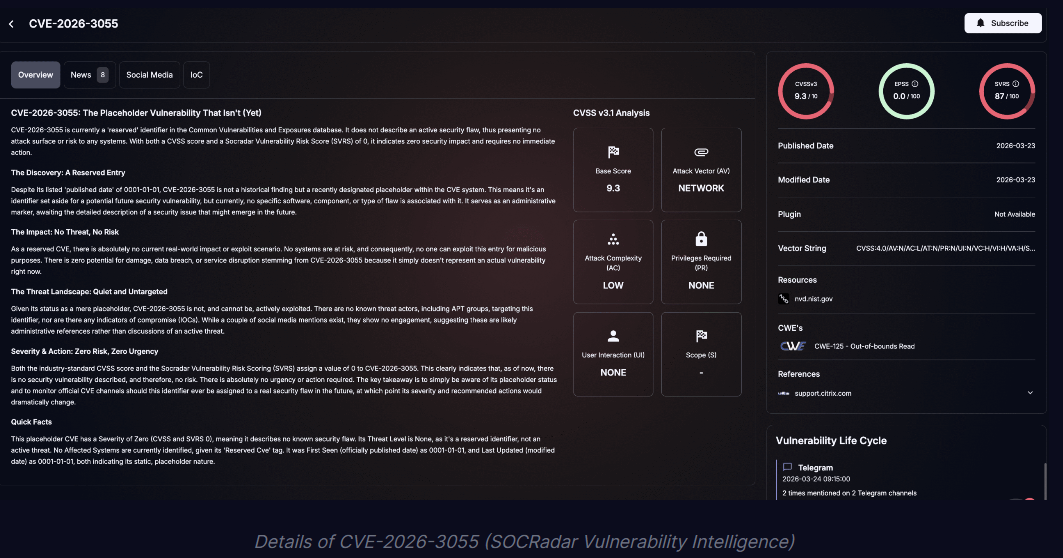
Technical Specifications
| Field | Details |
|---|---|
| Identifier | CVE-2026-3055 |
| Vulnerability Type | Out-of-bounds memory read (memory overread) |
| Root Cause | Improper input validation in SAML authentication handling |
| Attack Vector | Crafted HTTP requests (including /cgi/GetAuthMethods) |
| Exploitable Condition | NetScaler configured as SAML Identity Provider (IdP) |
| Potential Data Exposure | Session tokens, credentials, internal configuration data |
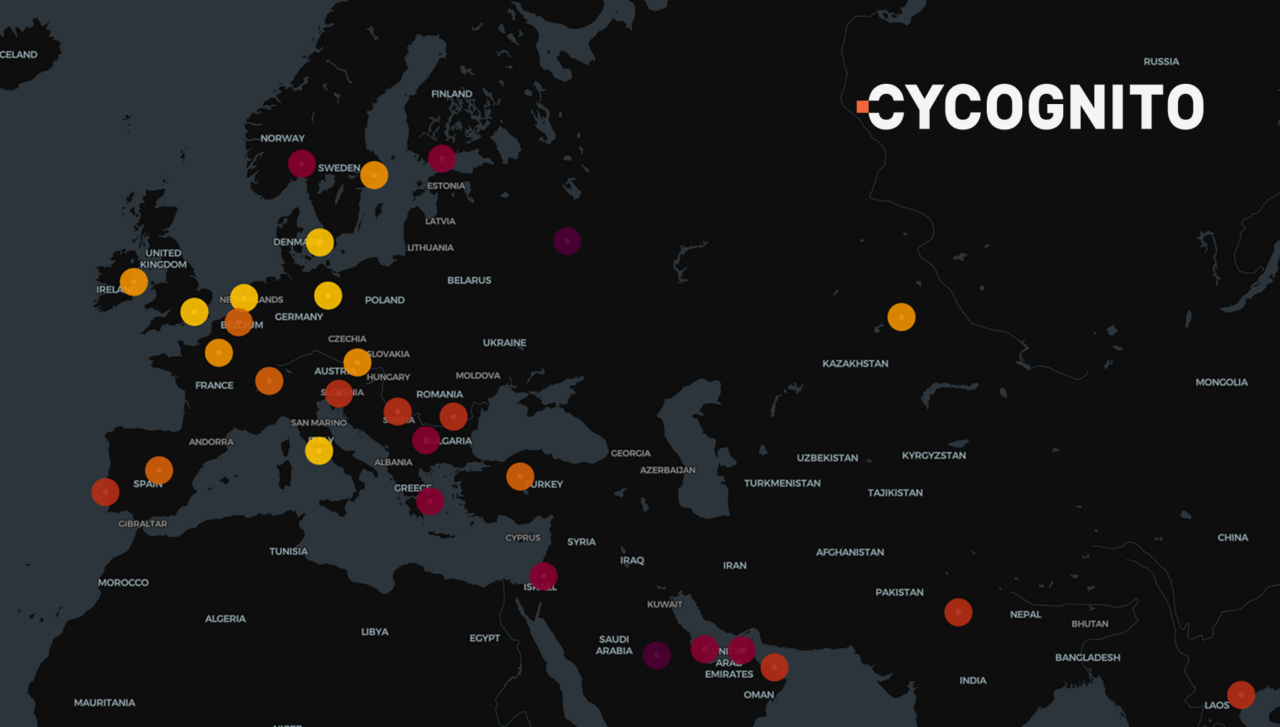
Affected Products
- Citrix NetScaler ADC deployments in vulnerable versions.
- Citrix NetScaler Gateway deployments in vulnerable versions.
- Edge systems exposed to untrusted networks while operating SAML IdP functionality.
Technical Details
- The flaw is a memory disclosure issue caused by out-of-bounds reads during SAML-related request handling.
- Attackers can send crafted HTTP requests to trigger memory overread behavior.
- Public reporting highlights
/cgi/GetAuthMethodsas a suspicious probing path. - Leaked memory content may include authentication tokens, credentials, and internal service information.
- Exposure can facilitate follow-on session hijacking and broader compromise of remote access workflows.
Attack Scenario
- Attacker scans internet-facing assets for reachable NetScaler instances.
- Systems configured as SAML IdP are identified as higher-value targets.
- Crafted requests are sent to trigger memory overread behavior.
- Sensitive memory-resident data is extracted from responses.
- Stolen tokens/credentials are used for session hijacking and unauthorized access.
- Adversary uses access footholds for lateral movement and deeper network intrusion.
Impact Assessment
Disclosure of tokens and credential material can enable unauthorized access to VPN and remote-access services.
Compromise of edge authentication systems raises risk of broader enterprise intrusion and downstream service compromise.
Successful exploitation can contribute to data-breach risk, incident-response burden, and service reliability concerns.
Mitigation Strategies
- Apply Citrix patches immediately:
- NetScaler ADC/Gateway
14.1-66.59+ - NetScaler ADC/Gateway
13.1-62.23+
- NetScaler ADC/Gateway
- Disable SAML IdP mode where not operationally required.
- Restrict external exposure of NetScaler management and authentication interfaces.
- Monitor logs for anomalous requests, especially probes targeting
/cgi/GetAuthMethods. - Enforce network segmentation and strong authentication controls around edge access services.
Resources
Open-Source Reporting
- Urgent Alert: NetScaler bug CVE-2026-3055 probed by attackers could leak sensitive data
- Citrix NetScaler Under Active Recon for CVE-2026-3055 (CVSS 9.3) Memory Overread Bug
- CVE-2026-3055: NetScaler Memory Disclosure Puts SAML-Enabled Edge Devices at Risk
- Citrix NetScaler ADC and Gateway Vulnerabilities (CVE-2026-3055 & CVE-2026-4368) | CyCognito Blog
- NetScaler ADC and NetScaler Gateway Security Bulletin for CVE-2026-3055 and CVE-2026-4368
Last Updated: March 30, 2026