Meta Ads Push StreamRat Android Trojan That Can Gain Near-Complete Device Control
Android Trojan Malvertising StreamRat Accessibility Abuse Remote Device Control
Overview
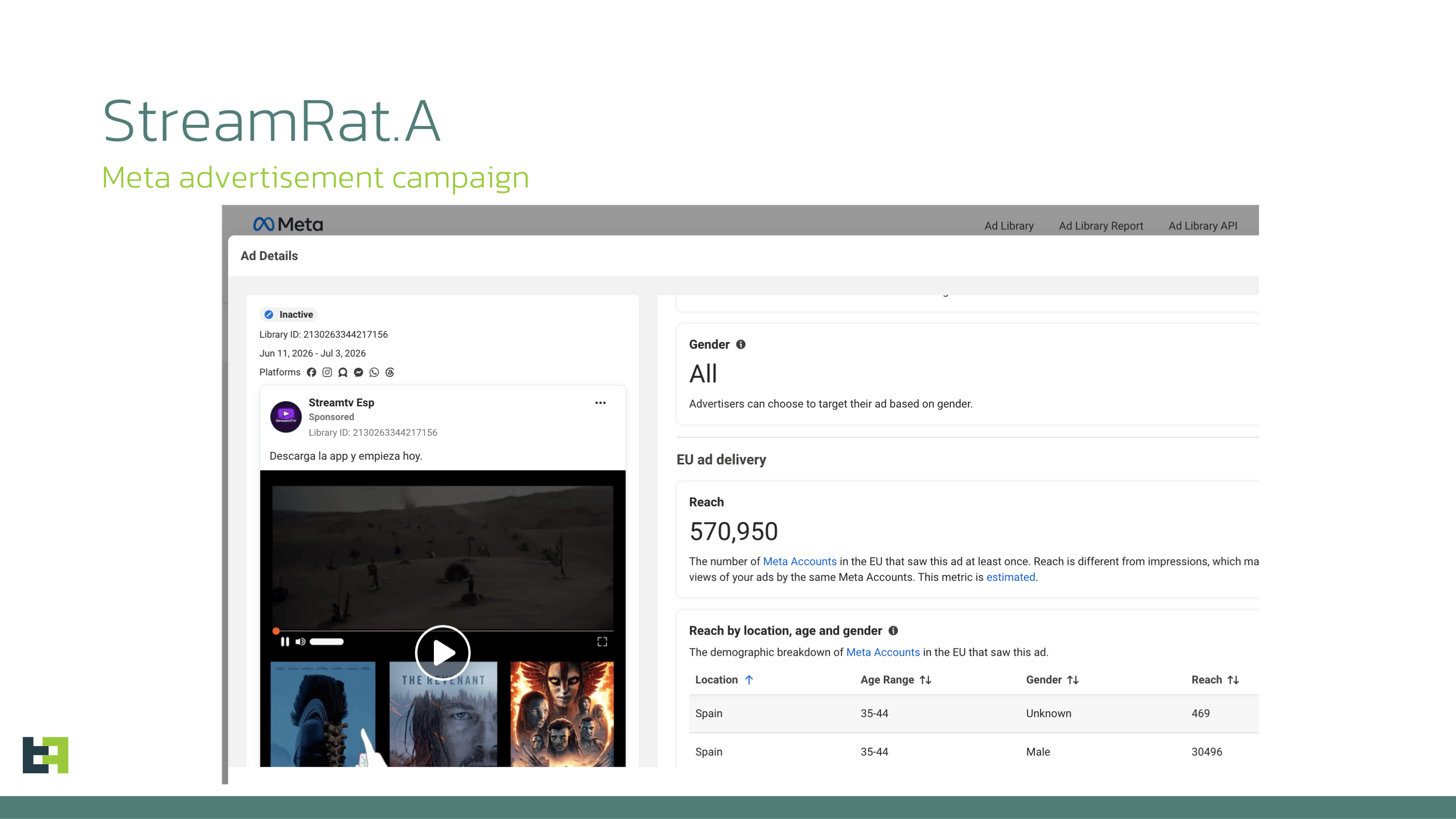
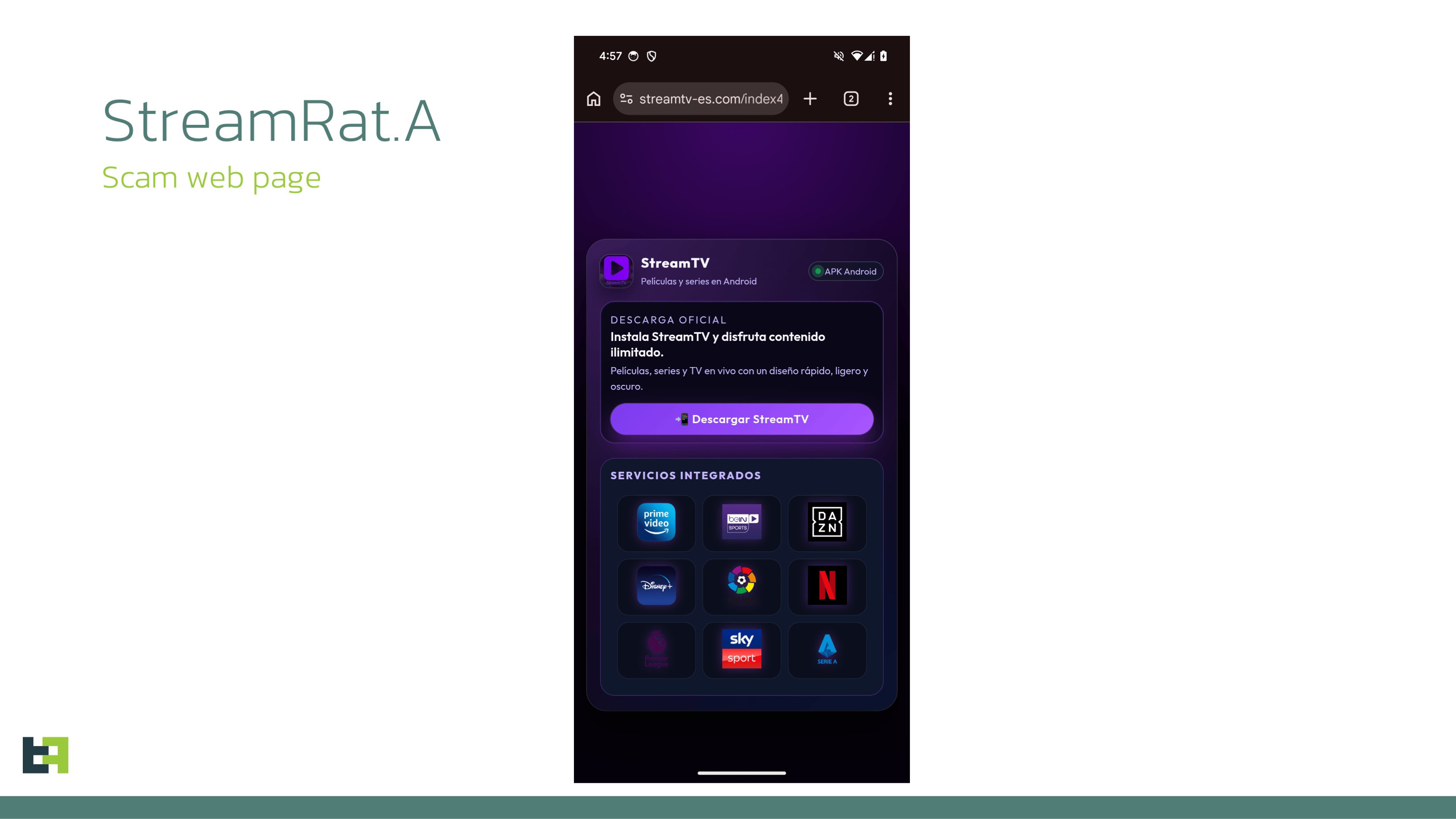
StreamRat is a sophisticated Android banking trojan distributed via malicious advertisements promoting a fake TV-streaming service. Victims are redirected to a malicious website and tricked into sideloading an APK.
After high-risk permissions are granted, especially Accessibility Services, attackers can gain broad remote control capabilities including activity monitoring, keystroke capture, credential theft, overlay abuse, and unauthorized on-device actions.
Technical Details
The campaign follows a multi-stage infection chain using a phishing website, an Android dropper, and the final StreamRat payload.
Infection Chain Behavior
- Malicious ads direct targets to an attacker-controlled website.
- The website fingerprints visitors and prioritizes Android devices for APK delivery.
- Victims download an initial dropper package, commonly referenced as app.apk in reporting.
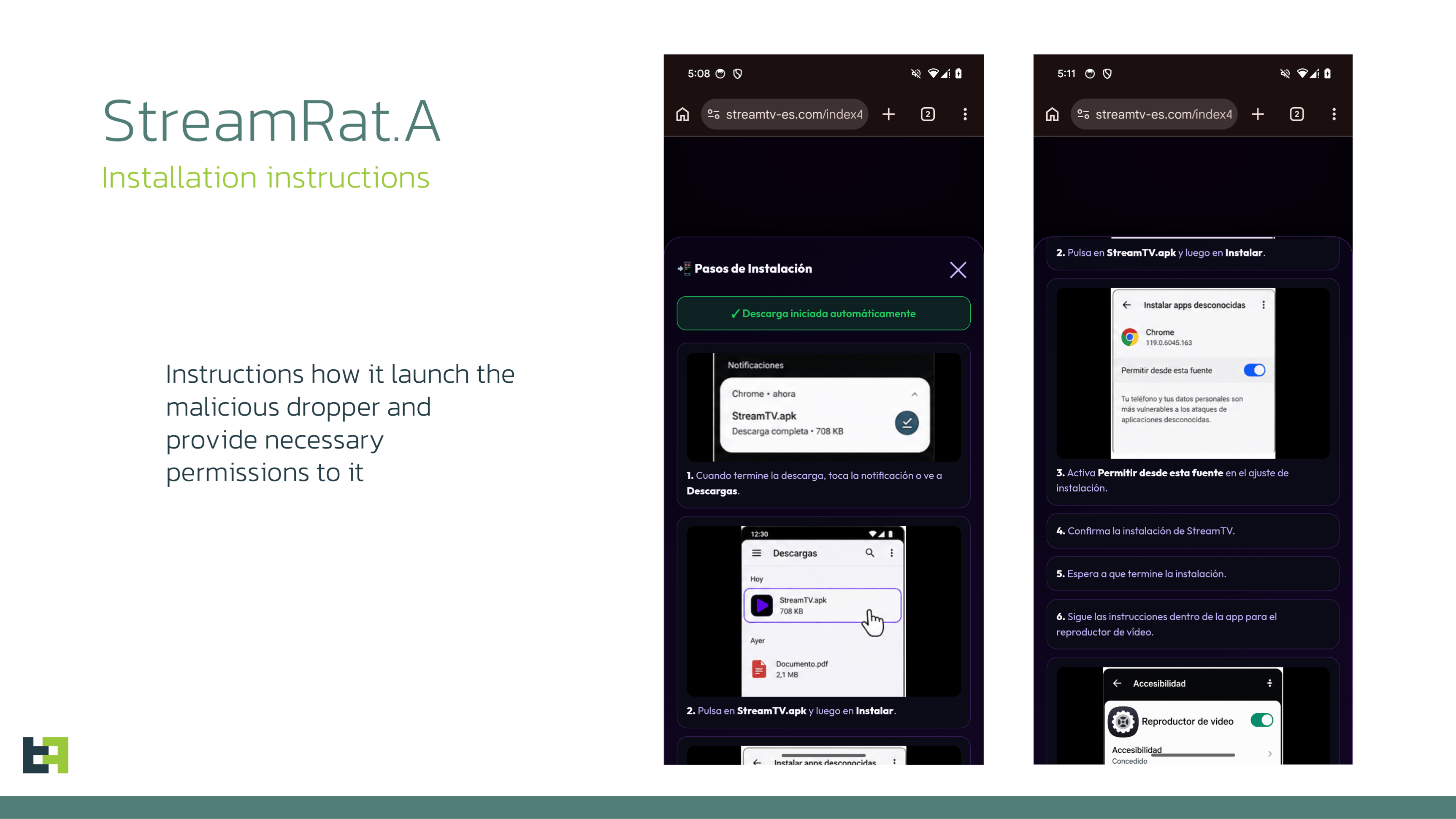
- The dropper may request default launcher privileges and installation from unknown sources.
- The dropper may create a deliberately non-functional VPN profile to disrupt other app connectivity.
- The final StreamRat payload is downloaded and installed.
- Victims are prompted to grant Accessibility permissions, enabling deep interaction control.
StreamRat Capabilities
- Accessibility-service abuse for broad UI interaction and interaction automation.
- WebSocket-based C2 communications.
- Foreground app monitoring and installed-app enumeration.
- Keystroke capture and credential theft support.
- Overlay attacks that imitate legitimate apps or system prompts.
- Remote interaction features and screen-capture capability.
Technical Specifications
| Attribute | Details |
|---|---|
| Malware Family | StreamRat (Android banking trojan) |
| Initial Access Vector | Malicious social-media ads leading to phishing/sideload flow |
| Primary Target Platform | Android devices |
| Infection Stages | Malicious site -> dropper APK -> StreamRat payload |
| Privilege Mechanisms | Accessibility abuse, launcher privileges, unknown-sources install path |
| C2 Method | WebSocket-based communications |
| Post-Install Functions | App monitoring, keylogging behavior, overlay abuse, screen capture, remote control |
| Deception Theme | Fake TV-streaming app promotion |
Affected Products
- Android devices where users install malicious APKs from untrusted sources.
- Environments where users grant Accessibility permissions to untrusted apps.
- Accounts and services accessed from compromised mobile endpoints, especially finance-related apps.
Attack Scenario
- Victim encounters a malicious streaming-themed advertisement on Meta platforms.
- Ad click redirects to a phishing-style website.
- The website detects Android and delivers a malicious APK flow.
- Victim installs a dropper app outside trusted app stores.
- Dropper requests risky permissions and may configure a non-functional VPN profile.
- StreamRat payload is downloaded and installed.
- Victim grants Accessibility permission.
- Malware establishes C2 communications over WebSocket.
- Attacker conducts monitoring, credential theft, overlays, screen capture, and remote control actions.
Impact Assessment
- Theft of banking credentials and session-linked information
- Account takeover and unauthorized transactions
- Financial fraud via attacker-driven device interactions
- Keystroke and screen monitoring
- Theft of sensitive personal or enterprise information accessed on device
- Unauthorized actions executed in victim context
- Overlay prompts can impersonate trusted apps or system updates
- Victims may disclose credentials or approve malicious actions unknowingly
Mitigation Strategies
Reduce Sideloading Risk
- Install apps only from trusted sources such as official app stores.
- Avoid APKs delivered through social-media ads or unknown websites.
Restrict High-Risk Permissions
- Do not grant Accessibility Services to untrusted applications.
- Audit existing Accessibility-enabled apps and remove suspicious entries.
Strengthen Mobile Security Controls
- Keep Google Play Protect enabled.
- Investigate unknown or suspicious VPN profiles/configurations on devices.
- Use mobile threat defense tooling to detect malicious APK behavior and suspicious C2 traffic.
Detection and Response
- Block validated malicious indicators in monitoring and enforcement systems.
- Hunt for signs of overlay abuse, unauthorized Accessibility activation, and unexpected remote-interaction behavior.
Resources and References
Public Reporting
Last Updated: September 08, 2026