Cyber Toufan – Maya Engineering Surveillance Breach
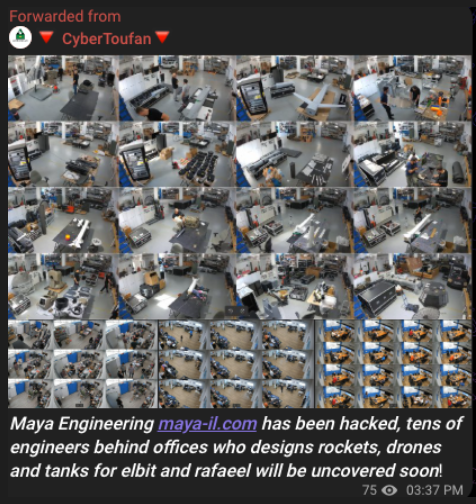
Espionage Operation Data Exfiltration Surveillance Compromise
Overview
An Iran-linked threat group known as Cyber Toufan claimed responsibility for breaching Israeli defense contractor Maya Engineering.
The attackers allegedly gained access to internal surveillance cameras, QNAP network archives, and other IoT-connected systems.
They released over 117 videos showing internal meetings and employees working on missile and drone projects.
While the authenticity of the leaked data remains unverified, the operation appears aligned with state-sponsored espionage and psychological warfare.
Technical Specifications
| Attribute | Details |
|---|---|
| Threat Actor | Cyber Toufan (Iran-linked) |
| Attack Type | Network Intrusion & Surveillance Breach |
| Initial Vector | Unknown (possible credential theft or network exploit) |
| Target | Maya Engineering (Israeli defense contractor) |
| Attack Duration | Approx. 18 months (claimed persistent access) |
| Authentication | Not applicable |
| Complexity | Medium |
| User Interaction | None required |
| Disclosure | Claimed leak on Telegram, X (Twitter), and hack-and-leak sites |
Attack Scenario
- Long-term infiltration of Maya’s internal corporate network via an unknown entry vector
(possible credential compromise, remote exploit, or supply-chain intrusion). - Lateral movement into internal IoT and surveillance infrastructure.
- Persistent monitoring and exfiltration of surveillance video from compromised cameras for up to 18 months.
- Leak of 117 internal videos and potential design documents through social platforms and dark web channels.
- Operation likely aimed at psychological impact and reputation damage to Israel’s defense industry.
Potential Access Points
- QNAP NAS/NVR systems (possible exploitation of known QTS vulnerabilities)
- IP cameras and networked printers
- Internal routers or VoIP devices
- Unpatched or default-configured IoT endpoints
Impact Assessment
- Potential exposure of proprietary defense data and employee footage
- Unauthorized access to internal meetings and R&D environments
- Disclosure of information related to missile and drone development
- Possible alteration or manipulation of surveillance footage
- Risk of falsified leaks for propaganda purposes
- Breach of internal trust and data handling integrity
- Potential need to shut down or replace compromised systems
- Temporary service disruptions during investigation
- Increased cost of network and physical security overhauls
- Embarrassment and loss of trust among partners (Elbit, Rafael mentioned in claims)
- Propaganda impact reinforcing adversarial narratives
- Heightened tension in cyber-espionage domain
Mitigation Strategies
Network & Asset Security
- Segmentation: Isolate IoT, camera, and printer networks from core systems
- Firmware Management: Apply patches to NAS/NVR and IoT devices regularly
- Zero-Trust Architecture: Enforce least-privilege access to internal devices
- Asset Inventory: Identify all connected devices and their network exposure
Monitoring & Detection
- Anomaly Detection: Track outbound traffic from IoT segments
- Network Logging: Enable logs for surveillance and storage systems
- Behavioral Analysis: Watch for unusual data transfer or login activity
- Threat Intelligence Integration: Correlate with known Iranian APT tactics
Organizational Measures
- Incident Response Playbook: Include IoT device compromise scenarios
- Supply Chain Security: Vet vendors and require hardened configurations
- User Awareness: Educate staff on default password risks
- Red Team Exercises: Simulate IoT breach scenarios to test readiness
Resources and References
Related Coverage
- Threat Group Claims Breach Of Israeli Defense Contractor
- Iran-linked Hackers Leak Data from Israeli Defense Contractor
- Pro-Gaza Hackers “Cyber Toufan” Claim Breach of Israeli Defense Firm Maya – TheHackerWire
- Israeli Defense Contractor Maya Suffers Devastating Breach: 18 Months of Surveillance Exposed
Critical Note
The claims of breach remain unverified. However, the operation aligns with broader Iranian cyber espionage trends targeting Israeli defense industries and dual-use technology firms.
Immediate Actions
- Review all IoT and camera device access logs.
- Disconnect compromised or suspicious devices from the network.
- Patch and reset QNAP/NAS credentials.
- Conduct forensic analysis on any leaked footage or metadata.
- Enhance network segmentation for future protection.