LG Smart TV Data Collection
Smart TV Privacy webOS ACR Telemetry IoT Exposure Standby Concerns
Overview
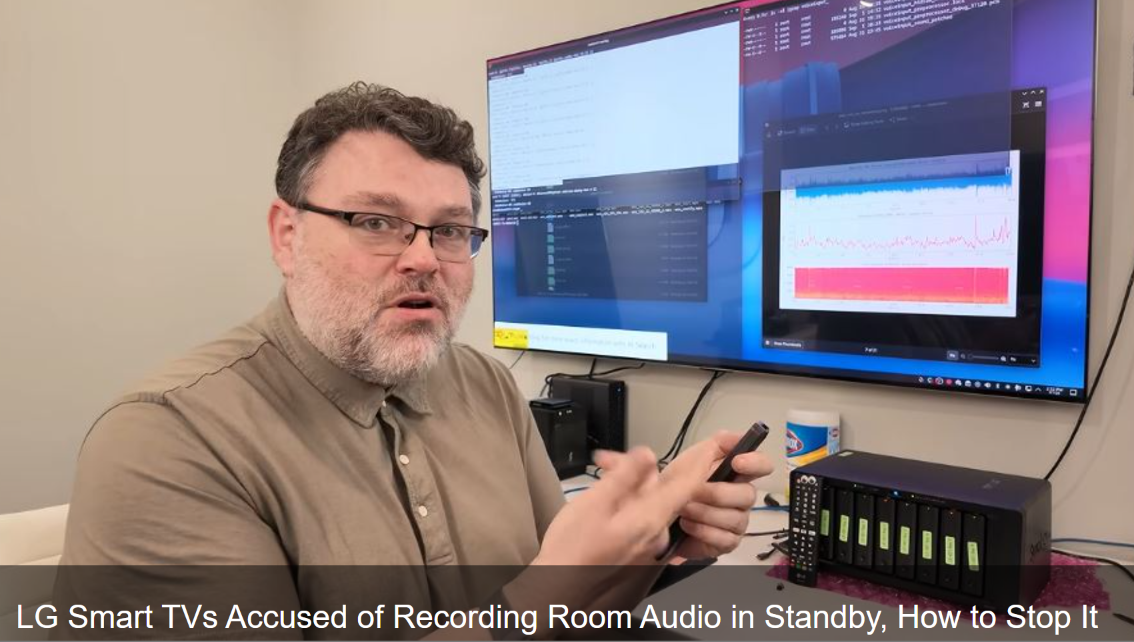
Researchers raised privacy concerns about data-collection capabilities in LG Smart TVs running webOS, focusing on Automatic Content Recognition (ACR), telemetry behavior, local-network discovery, and claims regarding possible ambient audio handling while devices appear in standby.
LG publicly rejected characterization that its TVs secretly record users and stated voice processing is local and governed by user controls and consent settings. The incident therefore centers on disputed privacy and data-practice concerns rather than a confirmed specific malware campaign.
Technical Details
LG Smart TVs are network-connected IoT systems that communicate with cloud services and local network resources.
Reported/Discussed Capability Areas
- ACR functions that can identify viewed content, including content delivered through HDMI inputs.
- Telemetry and advertising-related usage data collection.
- Local network and device discovery behavior.
- Microphone/voice feature behavior and user-expectation concerns around standby state.
Standby Technical Context
- Standby mode may not equal full power-off.
- Portions of webOS and network-connected components can remain active depending on configuration and enabled features.
- Privacy/security risk posture depends on enabled features, firmware state, network exposure, and account settings.
Evidence and Dispute Context
- Public reporting contains allegations and interpretations of observed behavior.
- LG disputes claims of secret room-audio recording and emphasizes user-controlled settings and consent pathways.
- Classification: privacy-risk and telemetry-governance controversy with security implications if compromise occurs.
Technical Specifications
| Attribute | Details |
|---|---|
| Product Family | LG Smart TVs (webOS) |
| Primary Concern Type | Privacy and data-collection practices |
| Reported Features in Scope | ACR/Live Plus, telemetry, ad-related profiling, local network discovery |
| Voice/Audio Concern | Allegations of ambient-audio handling in standby context (disputed by vendor) |
| Operational State Nuance | Standby may retain active OS/network components |
| Confirmed Malware Exploit in This Case | Not established in cited reporting |
Affected Products
- LG Smart TVs running webOS with ACR/telemetry/voice-related features enabled.
- Home and enterprise environments where TVs remain internet-connected.
- Organizations integrating Smart TVs into business or sensitive network zones.
Attack Scenario
Privacy/Data-Collection Scenario
- TV remains connected to internet/cloud services.
- Viewing/activity metadata is collected through enabled ACR/telemetry features.
- Data may be associated with device and account/profile contexts.
- Data can be transmitted to backend systems for analytics, advertising, or related functions.
Security Abuse Scenario (Potential)
- Attacker compromises TV or vulnerable webOS component.
- Device network position, storage, and enabled sensors/features are abused.
- TV could be used for surveillance, reconnaissance, or exfiltration.
The second path is a potential risk model, not evidence of a confirmed attack in this incident.
Impact Assessment
- Potential loss of user privacy and informed-consent confidence
- Detailed viewing and behavioral profiling concerns
- Reputational and trust impact for consumer and institutional deployments
- Potential visibility into local-network device patterns
- Increased concern where Smart TVs share networks with sensitive assets
- If compromised, TV features could support surveillance, reconnaissance, and data exfiltration
- This is a contingent risk path rather than a confirmed observed outcome in this incident
Mitigation Strategies
Reduce Data Collection Surface
- Disable ACR/Live Plus and unnecessary viewing-information features.
- Disable personalized advertising and non-essential telemetry where available.
- Disable voice/voice-recognition features if not required.
Strengthen Device and Account Controls
- Review LG privacy settings, consent options, and account permissions.
- Keep webOS and TV firmware fully updated.
- Review active app permissions and remove unneeded applications/services.
Network Hardening
- Place Smart TVs on isolated IoT/VLAN network segments.
- Restrict unnecessary outbound traffic at router/firewall level.
- Monitor unusual DNS/HTTPS patterns originating from TV devices.
- Avoid placing Smart TVs on sensitive corporate/production networks.
Enterprise Governance
- Maintain asset inventory and baseline expected TV network behavior.
- Include IoT endpoints such as Smart TVs in security monitoring and incident-response workflows.
Resources and References
Public Reporting
Last Updated: September 14, 2026