Everest Ransomware Leaks AT&T and Aviation Records
Data Breach Ransomware Group 2.1M+ Records Identity Theft Risk
Description
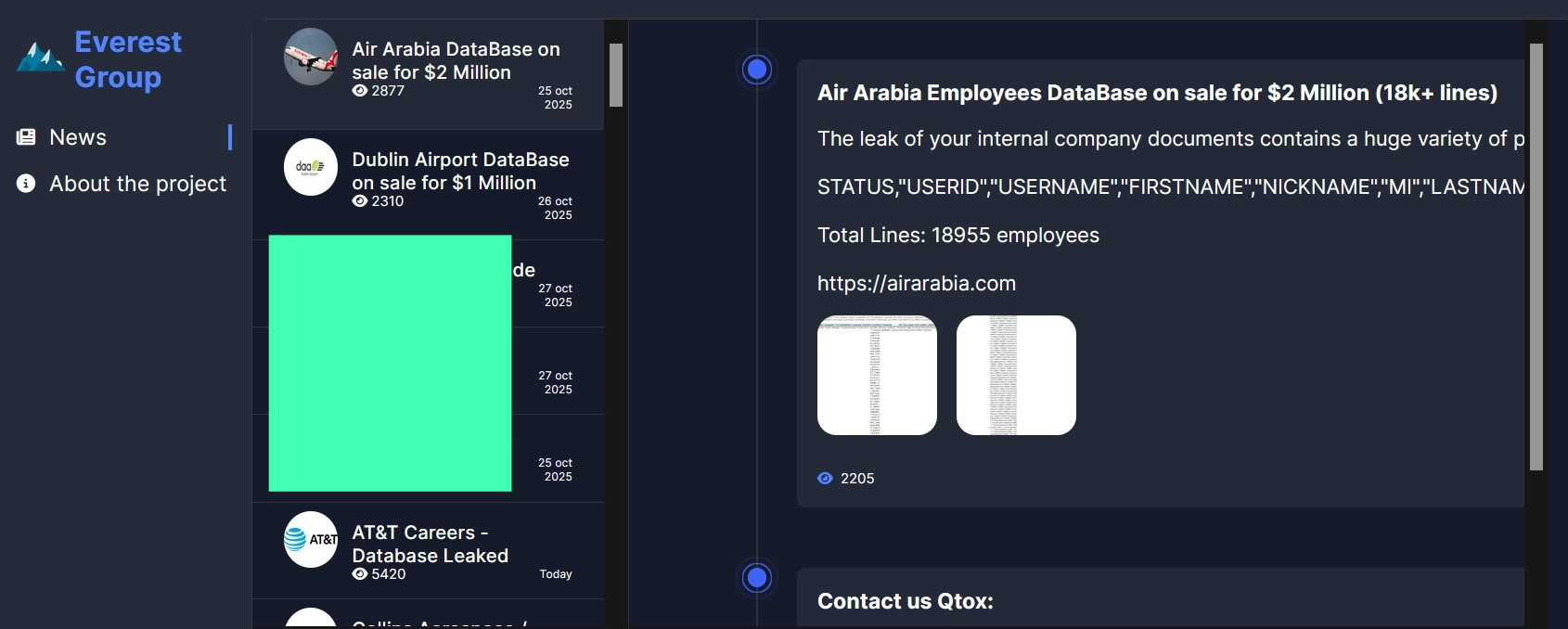
Between October 21–28, 2025, the Everest ransomware group leaked sensitive databases from three major organizations: AT&T Careers (US telecom), Dublin Airport (Ireland), and Air Arabia (UAE airline), and offered the stolen datasets for sale via dark web extortion posts. This campaign primarily involved unverified data exfiltration and extortion rather than confirmed ransomware encryption but involved high-profile targets and personal information at risk.
Technical Details
Attack Method
- Primary Method: Data theft and extortion, no technical evidence of system encryption yet
- Attack Vectors: Credentials/recruitment platform compromise suspected
- AT&T Compromise: Jobs portal reportedly compromised
- Aviation Targets: Leaks appear to center around backend operational databases
Evasion Techniques
Everest often relies on: - Credential theft - Remote desktop compromise - Third-party supplier weakness (according to NCC Group and Cybernews)
Nature of Exfiltrated Data
AT&T Careers
- 576,000 records including:
- Names, phone numbers, emails
- Possibly resumes/applicant data
Dublin Airport
- 1.5M passenger records including:
- Names, IDs, flight details, seat numbers
- Frequent flyer status, travel class
- Device info, baggage data
- Security/boarding flags
Air Arabia
- 18,000 employee records including:
- Employment status, HR and manager data
- Contact info, login methods
- Desk location, address, review dates
- Assignment codes
Attack Scenario
Data Exposure Timeline
- Data leaks posted on Everest's dark web site after ransom deadlines passed
- Threats to expose further details if negotiations fail
Dark Web Sales
- AT&T: No posted price (already leaked)
- Dublin Airport: $1M asking price
- Air Arabia: $2M asking price
Secondary Risks
- No confirmation from victim organizations on authenticity or direct system compromise
- Airline passenger and employee data can be used for:
- Identity theft
- Phishing campaigns
- Insider fraud
- Supply-chain risks
Impact
Identity & Privacy Risk
- Exposed traveler and staff data enables targeted attacks
- HR/HRMS compromise potential
- Tailored phishing, fraud, or impersonation schemes at scale
Operational Risk
- Airports and Airlines: Leaks may reveal travelers' movements and airline processes
- Internal operational details suitable for further attacks
Corporate Reputation
- AT&T and Air Arabia: HR, recruitment, and staff account-based impersonation risks
Critical Exposure
- Aviation security
- Telecom infrastructure
- Public infrastructure
- Supply-chain security
- Risk of secondary/follow-on attacks given sensitivity and granularity of leaked information
Mitigations
Immediate Incident Response
- All affected organizations should publicly engage
- Offer password resets and inform affected users
- Initiate forensic investigations and monitoring for misuse
Credential Security
- Urgent: Rotate passwords/user IDs
- Increase MFA and access controls
- Monitor for credential leaks
Legal/Communications
- Coordinate with CERT and law enforcement for breach reporting
- Takedown of dark web sale posts
Supplier Chain Review
- Audit partners for remote access
- Segment backend platforms for HR, travel, and recruitment data
Customer Defense
- Implement fraud monitoring
- Exercise caution around unsolicited requests and suspicious login prompts