Johnson Controls FX80 / FX90 Vulnerability (CVE-2025-43867)
Configuration File Compromise
Building Automation
ICS/OT Systems
Overview
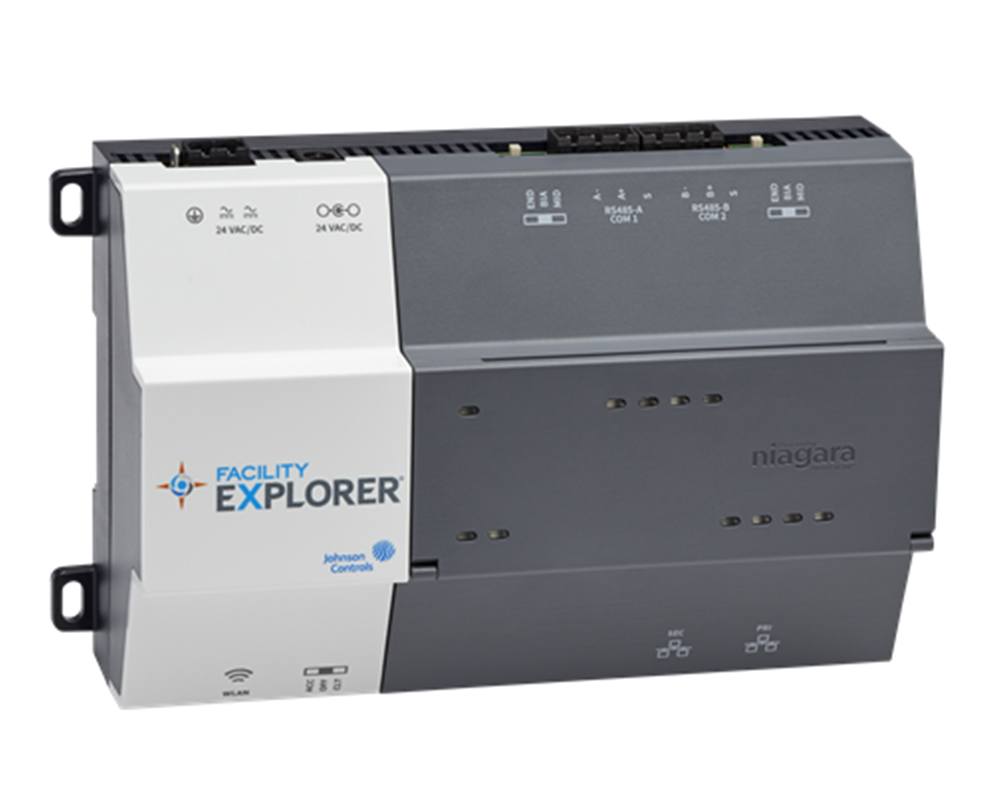
A vulnerability in Johnson Controls FX80 and FX90 building-automation controllers (when running certain versions of their "Facility Explorer" software). Under some conditions, an attacker could compromise the device's configuration files — meaning the attacker could read/write or tamper with device configs.
Technical Specifications
| Attribute | Details |
|---|---|
| CVE ID | CVE-2025-43867 |
| Affected Products | Johnson Controls FX80, FX90 building-automation controllers |
| Affected Versions | FX14.10.10, FX14.14.1 |
| Vulnerability Type | Dependency on vulnerable third-party component (CWE-1395) |
| Attack Vector | Network or Local |
| Attack Complexity | Not specified |
| Authentication | Required (network or local access to building-automation system) |
| Affected Environment | Building Automation Systems / ICS/OT |
| Additional CVEs | May trigger CVE-2025-3936 through CVE-2025-3945 |
Technical Details
Affected Versions
- FX80 or FX90 running:
- FX14.10.10
- FX14.14.1
- (These correspond to certain builds of the underlying automation platform)
Root Cause
- Vulnerability due to dependency on a vulnerable third-party component
- Classified under CWE-1395 (Dependency on Vulnerable Third-Party Component)
Exploitation Impact
- Successful exploitation could allow compromise (read/modify) of device configuration files
- According to the vendor, exploitation could trigger additional CVEs:
- CVE-2025-3936 through CVE-2025-3945
- This vulnerability may serve as a foothold for further attack vectors
Attack Scenario
While the vendor advisory doesn't describe a public "exploit in the wild," the general risk scenario is:
-
Initial Access: A malicious actor with access (network or local) to the building-automation system could exploit the vulnerability.
-
Configuration Compromise: Attacker gains unauthorized ability to read or modify controller configuration files.
-
System Manipulation: This could lead to:
- Misconfiguration
- Unauthorized control
- Persistent compromise of the building's automation system
-
Impact on Building Systems: Because building-automation systems often manage:
- HVAC
- Climate control
- Access control
- Other critical building services
This could result in disruption or misuse of those systems.
-
Broader Infrastructure Risk: This aligns with broader industry warnings about ICS vulnerabilities giving attackers "latent kill switches" over building/facility infrastructure.
Impact Assessment
- Unauthorized modification of building-automation controller configuration
- Control over HVAC, environmental control
- Possibly security or access control systems
- Possible service disruptions
- Mis-configuration
- Loss of operational integrity of building systems
- If controllers are networked or integrated with other systems
- Potential lateral movement or further compromise within facility operations
- Risk to critical infrastructure
- Especially in commercial buildings, industrial facilities
- Any facility relying on building automation
Exploitation Status
As of the advisory, there are no public reports of active exploitation / breaches leveraging this specific vulnerability.
Mitigations
🔄 Upgrade Affected Systems
-
For FX80/FX90 running version 14.10.10:
- Update to 14.10.11
-
For FX80/FX90 running version 14.14.1:
- Update to 14.14.2
🛡️ Hardening & Best Practices
- Follow the vendor's "Hardening Guide" / cybersecurity best practices for building-automation systems:
- Network segmentation
- Access control
- Limiting exposure
- Least-privilege
- Secure configurations
🌐 Network Isolation
- Limit network exposure of ICS devices
- Avoid exposing them to internet or untrusted networks
- Isolate ICS/OT networks from general enterprise/business networks
🔒 Access Control
- Restrict access to building-automation systems
- Implement strong authentication
- Monitor for unauthorized access attempts
📊 Monitoring
- Log and monitor access to building-automation controllers
- Watch for unexpected configuration changes
- Alert on anomalous behavior
Resources & References
Official Advisory