WhatsApp Fake App Spyware Campaign

WhatsApp Impersonation Mobile Spyware Social Engineering Italy Targeting
Overview
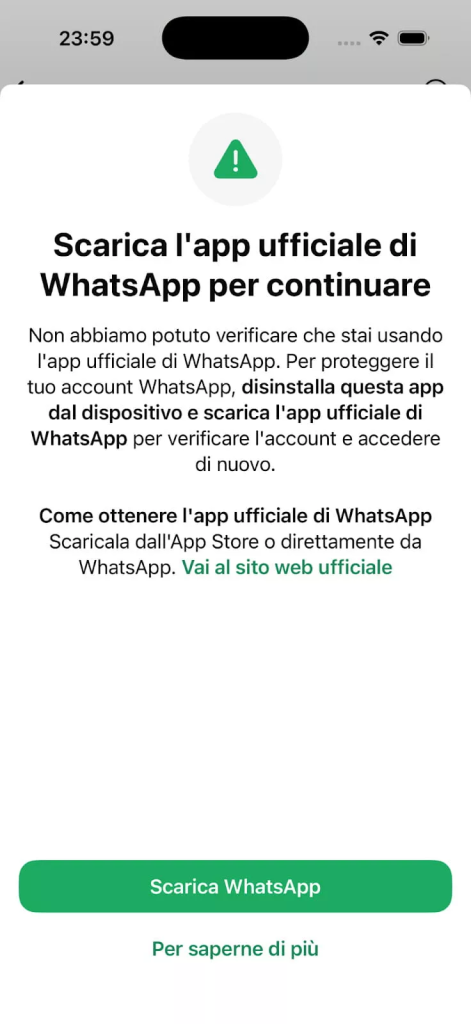
Around 200 WhatsApp users in Italy were reportedly tricked into installing a fake WhatsApp application embedded with spyware. The operation relied on social-engineering delivery outside official app-store channels rather than cryptographic compromise of WhatsApp itself.
WhatsApp's end-to-end encryption model was not broken in this incident, but compromised devices enabled attackers to monitor user data through malicious local app behavior.
Technical Specifications
| Attribute | Details |
|---|---|
| Incident Type | Mobile spyware distribution via trojanized application |
| Target Platform | iOS users (reported) |
| Delivery Method | Social engineering and off-store installation prompts |
| Malicious Technique | Fake WhatsApp app masquerading as legitimate client |
| Data Collection Behavior | Covert background collection of device data, contacts, and messages |
| Encryption Status | WhatsApp end-to-end encryption remained intact |
| Response Action | WhatsApp reportedly logged out affected users and sent security alerts |
| Estimated Scope | Approximately 200 users affected |
Affected Products
- Users who installed unofficial WhatsApp builds outside trusted stores
- iOS devices exposed to sideloading/social engineering lures
- High-risk individuals potentially targeted for focused surveillance
- Organizations relying on personal mobile devices for sensitive communication
Attack Scenario
-
Lure Delivery: Target receives a message urging installation of a "special" or "updated" WhatsApp version.
-
Malicious Installation: User sideloads the fake app from an unverified source.
-
Stealth Operation: Spyware executes in the background and begins collecting sensitive device information.
-
Detection and Notification: WhatsApp identifies compromise indicators, logs out affected accounts, and sends user alerts.
Impact Assessment
- Device and messaging trust is undermined by malicious app impersonation
- Potential manipulation of local mobile environment through covert spyware behavior
- Increased risk of follow-on account abuse after device compromise
- Exposure of personal data, contacts, and message-related information
- Focused surveillance risk against selected individuals
- Intelligence collection potential despite intact transport-level encryption
- Account interruptions due to forced logout and remediation workflow
- User disruption while removing malware and restoring trusted app state
- Ongoing operational burden for monitoring and incident handling
Mitigation Strategies
Immediate Actions
- Remove any unofficial/fake WhatsApp application immediately.
- Reinstall only official WhatsApp builds from App Store or Play Store.
- Review and revoke suspicious app permissions.
Short-term Measures
- Enable WhatsApp two-step verification.
- Audit installed apps for unknown publishers or abnormal permissions.
Monitoring & Detection
- Watch for unusual battery, network, or background process behavior on mobile devices.
- Alert on suspicious installation prompts and off-store app-delivery messages.
- Track account-security alerts and anomalous login/session events.
Long-term Solutions
- Deliver ongoing user awareness training on fake app and phishing lures.
- Strengthen mobile endpoint security controls for high-risk user populations.
Resources and References
Open-Source Reporting
- WhatsApp Alerts 200 Users After Fake iOS App Installed Spyware; Italian Firm Faces Action
- Italian spyware vendor creates Fake WhatsApp app, targeting 200 users
- WhatsApp notifies 200 users who installed fake app built by Italian spyware maker SIO
- WhatsApp warns users of fake app used to distribute spyware | The Record from Recorded Future News
- WhatsApp says Italian surveillance company tricked around 200 users into downloading spyware | Reuters
Last Updated: April 5, 2026