Axios npm Supply Chain Attack (Linked to UNC1069 / North Korea)
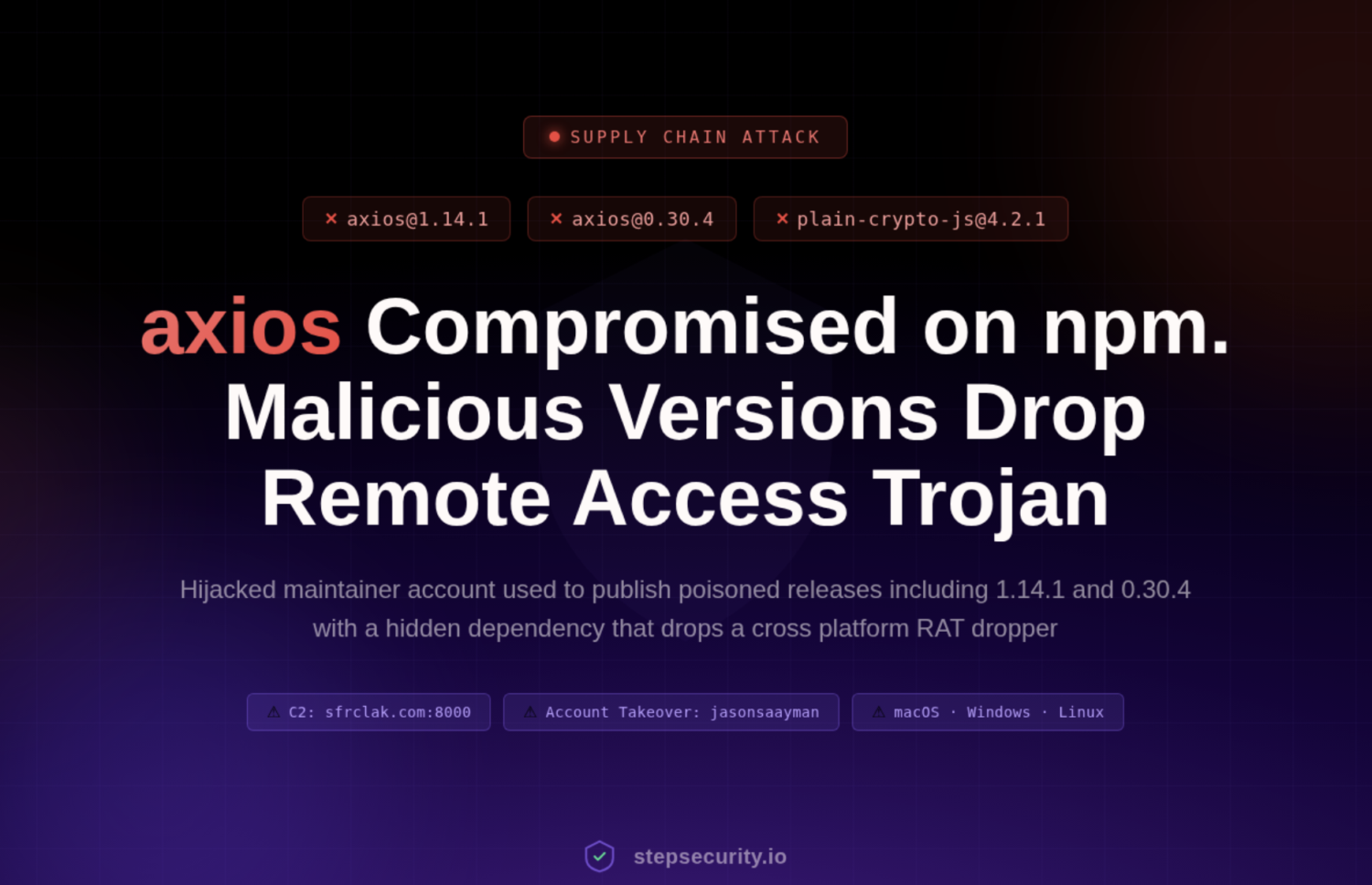
Supply Chain Attack npm Ecosystem RAT Deployment
Overview
Attackers compromised an Axios maintainer npm account and published malicious package versions that introduced a hidden dependency and post-install malware behavior.
Public reporting and attribution linked the campaign to North Korea-associated activity tracked as UNC1069. The compromise exposed developer environments to remote access malware across major operating systems.
Technical Specifications
| Field | Details |
|---|---|
| Targeted Package | Axios (npm) |
| Malicious Versions | 1.14.1 and 0.30.4 |
| Malicious Dependency | plain-crypto-js@4.2.1 |
| Execution Mechanism | Post-install scripts downloading/executing payloads |
| Platform Impact | Windows, Linux, macOS |
| Reported Attribution | UNC1069 (North Korea-linked reporting) |
Affected Products
- Projects that installed compromised Axios versions directly or transitively.
- Developer workstations and build/CI environments where install scripts executed.
- Internal repositories and credentials reachable from compromised developer systems.
Technical Details
- Attackers reportedly used social engineering to compromise maintainer account access.
- Malicious Axios releases included a hidden dependency chain to deliver additional payload logic.
- Post-install execution behavior enabled silent malware delivery during normal package installation.
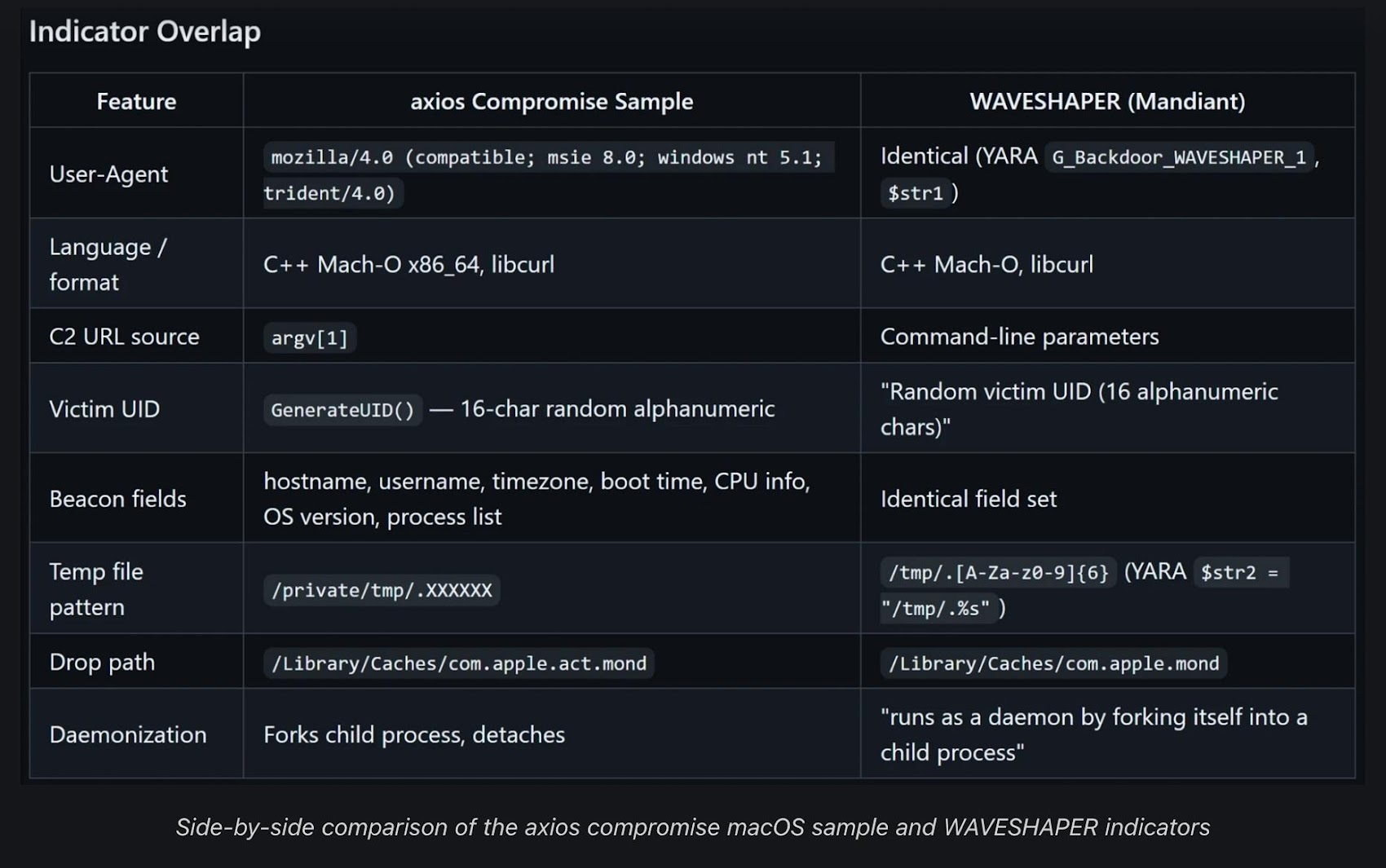
- Payload capabilities were consistent with remote-access tooling for command execution and persistence.
- Threat intelligence linked infrastructure and behavior to activity previously associated with UNC1069.
Attack Scenario
- Threat actors compromise maintainer credentials via social engineering.
- Malicious package versions are published to npm under trusted package identity.
- Developers and CI systems install affected versions through direct or transitive dependency resolution.
- Post-install scripts run automatically and fetch additional malware components.
- RAT establishes outbound C2 communications and enables remote attacker control.
Impact Assessment
Developer endpoints and CI/CD systems may be compromised, enabling code tampering and credential theft.
Because Axios is widely used transitively, short-lived malicious releases can affect large portions of the software ecosystem.
Exposure may include source code, secrets, and internal infrastructure access, increasing downstream breach and operational risk.
Mitigation Strategies
- Pin and audit Axios dependencies to known-safe versions.
- Remove malicious versions from dependency trees and regenerate lockfiles.
- Rotate credentials, tokens, and signing secrets on potentially affected systems.
- Hunt for indicators of compromise, including suspicious connections (for example
sfrclak.com). - Harden maintainer and developer accounts with MFA, hardware keys, and social-engineering-resistant workflows.
- Enforce package integrity checks and controlled dependency update pipelines.
Resources
Open-Source Reporting
- Google links Axios npm supply chain attack to North Korea-linked APT UNC1069
- North Korean hackers linked to Axios npm supply chain compromise - Help Net Security
- Google Attributes Axios npm Supply Chain Attack to North Korean Group UNC1069
- North Korea behind social engineering attack on Axios project - Techzine Global
- Top npm package backdoored to drop dirty RAT on dev machines | The Register
- UNC1069 Social Engineering of Axios Maintainer Led to npm Supply Chain Attack
Last Updated: April 6, 2026