Microsoft Patch Tuesday — April 2026 (165 Vulnerabilities, SharePoint Zero-Day)
Patch Tuesday Zero-Day Remote Code Execution SharePoint Server
Overview
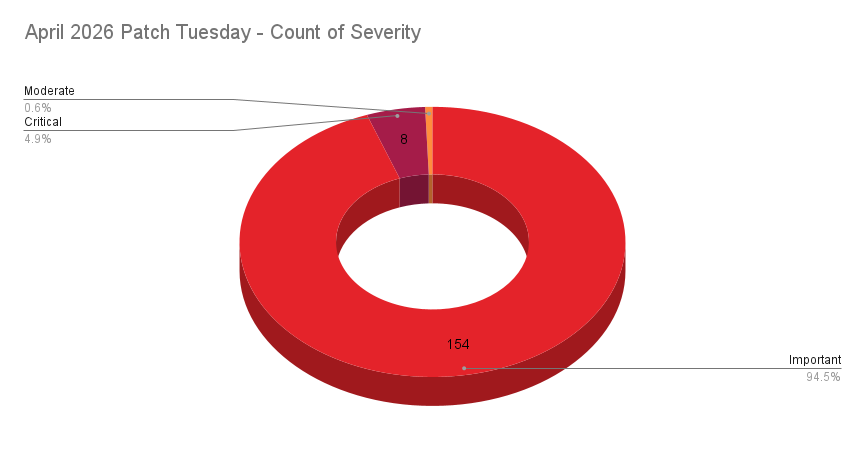
Microsoft's April 2026 Patch Tuesday addressed 165 vulnerabilities across its product portfolio, making it one of the largest single-month update releases in recent years. Among the fixes was a critical zero-day vulnerability in on-premises SharePoint Server that had been actively exploited in the wild before a patch was available. Zero-days are particularly dangerous because defenders have no advance warning — attackers can leverage them freely until a fix is issued and widely deployed.
Technical Specifications
| Attribute | Details |
|---|---|
| Update Cycle | April 2026 Patch Tuesday |
| Total CVEs Fixed | 165 |
| Zero-Days | At least 1 actively exploited (SharePoint Server RCE) |
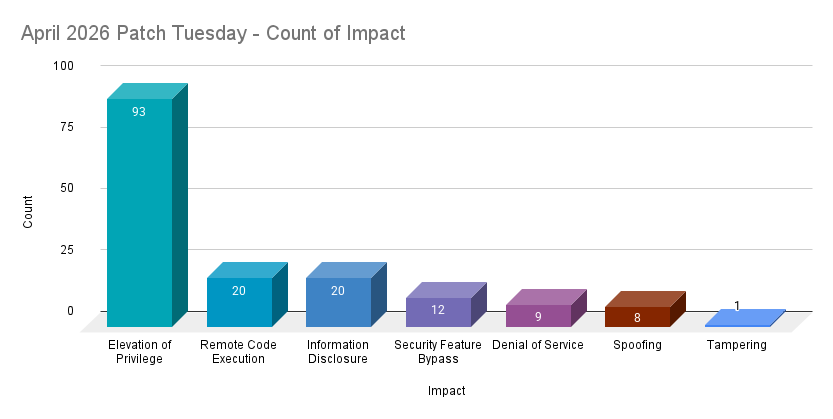
| Vulnerability Type | Remote Code Execution (RCE) |
| Affected Product | On-premises SharePoint Server (SharePoint Online not affected) |
| Attack Vector | Network (internet-accessible SharePoint deployments) |
| Known Exploitation | Active in the wild prior to patch release |
| Related Techniques | Deserialization attacks, authentication bypass, low-privilege abuse |
Affected Products
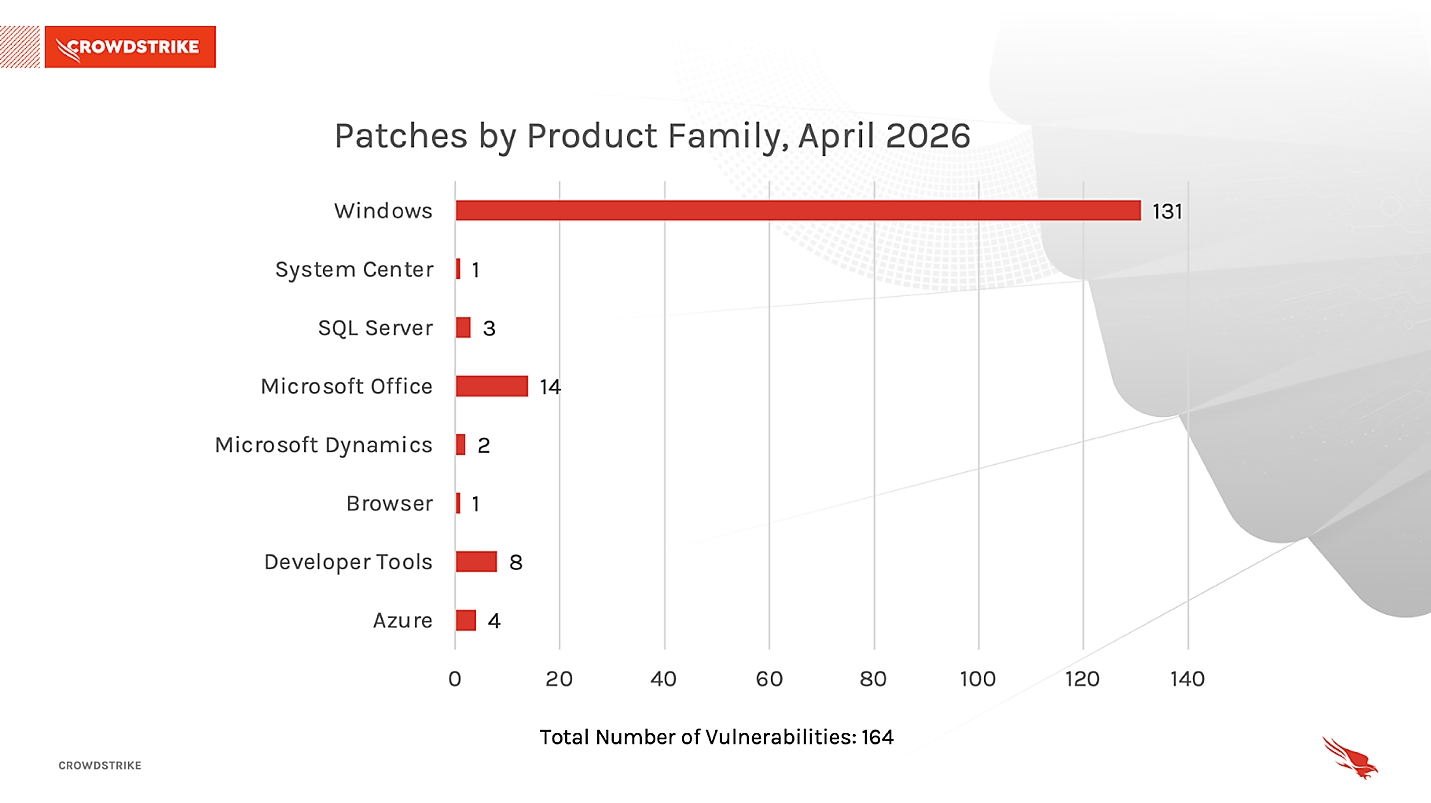
- Microsoft SharePoint Server (on-premises) — actively exploited zero-day RCE
- Microsoft 365 / Office suite — additional CVEs addressed
- Windows — multiple privilege escalation and RCE fixes included in the update bundle
- Other Microsoft services — 165 total CVEs span Azure, Edge, and developer tools
Attack Scenario
- Attacker scans the internet for on-premises SharePoint Server instances exposed on standard ports
- Identifies unpatched targets vulnerable to the April 2026 zero-day RCE
- Exploits the vulnerability — likely requiring minimal or no elevated authentication — to submit a malicious request
- Server-side code deserialization or improper input handling triggers arbitrary code execution
- Attacker gains an initial foothold on the SharePoint server with server-level privileges
- Establishes persistence and begins lateral movement into the internal network using the SharePoint server as a pivot point
- Enumerates and exfiltrates documents, internal files, and credentials stored or accessible via SharePoint
- Optionally deploys ransomware or additional malware payloads across the compromised environment
Impact
- Full remote code execution on unpatched SharePoint Server instances
- Server-level compromise enabling persistent access and command execution
- Lateral movement potential across the internal network from the compromised server
- Access to all documents, lists, and data stored in or accessible via SharePoint
- Risk of credential harvesting from SharePoint-integrated identity systems
- Pre-patch window of unknown duration during which exploitation was actively occurring
- Exfiltration of sensitive business documents and internal communications
- Potential ransomware deployment causing operational downtime
- Regulatory and legal exposure if confidential or personal data is accessed
- Business continuity risk from disrupted SharePoint-dependent workflows
- Incident response and forensic costs for organizations that were exploited before patching
- Highlights persistent risk of on-premises SharePoint deployments that fall behind patch cadence
- Reinforces attacker interest in SharePoint as a high-value pivot point inside enterprise networks
- Organizations slow to apply Patch Tuesday updates remain exposed for extended periods
- Demonstrates continued exploitation of SharePoint RCE vulnerabilities, consistent with historical patterns (e.g., CVE-2024-38094, CVE-2023-29357)
Mitigations
Immediate Actions
- Apply the April 2026 Patch Tuesday updates immediately — prioritize SharePoint Server patches
- Restrict public internet access to SharePoint Server deployments that do not require external exposure
- Enable Microsoft Defender for Endpoint on SharePoint server hosts for behavioral threat detection
- Enable AMSI (Antimalware Scan Interface) integration to intercept malicious script execution server-side
- Review logs for suspicious incoming requests, unusual authentication events, or unexpected process spawning on SharePoint servers
Best Practices
- Implement network segmentation to limit lateral movement potential from compromised servers
- Enforce least-privilege access controls on SharePoint service accounts and administrator roles
- Establish a regular, timely patch management process to minimize the window of exposure after Patch Tuesday releases
- Consider migrating workloads to SharePoint Online where feasible to shift patching responsibility to Microsoft
- Maintain offline backups of SharePoint content to support recovery in the event of ransomware deployment
Resources
Open-Source Reporting
- Microsoft Patch Tuesday for April 2026 fixed actively exploited SharePoint zero-day
- Microsoft April 2026 Patch Tuesday fixes 167 flaws, 2 zero-days
- Microsoft and Adobe Patch Tuesday, April 2026 Security Update Review | Qualys
- April 2026 Patch Tuesday: Updates and Analysis | CrowdStrike
- Microsoft's April 2026 Patch Tuesday Addresses 163 CVEs (CVE-2026-32201) | Tenable
Last Updated: April 15, 2026