Bad Epoll (CVE-2026-46242)
CVE-2026-46242 Linux Kernel LPE Use-After-Free Race Condition Android Impact
Overview
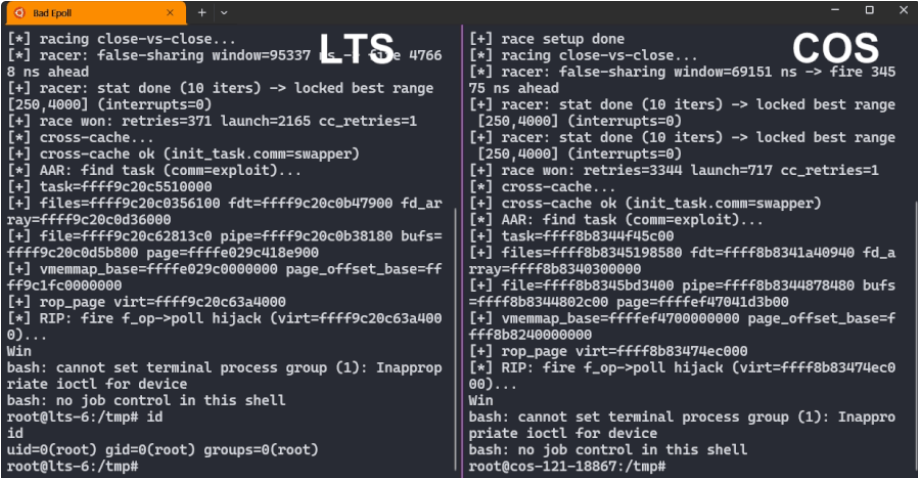
Bad Epoll (CVE-2026-46242) is a Linux kernel vulnerability affecting the epoll/eventpoll subsystem. It allows an unprivileged local user to escalate privileges to root by exploiting a race condition that leads to a use-after-free (UAF) memory corruption. The flaw impacts Linux desktops, servers, cloud environments, containers, and Android devices using vulnerable kernels.
Technical Specifications
| Attribute | Details |
|---|---|
| CVE ID | CVE-2026-46242 |
| Vulnerability Type | Local Privilege Escalation via Use-After-Free (UAF) in epoll/eventpoll |
| CVSS Score | Not finalized across all advisories at time of reporting |
| Attack Vector | Local |
| Authentication | Low privileges required (unprivileged local user/code execution context) |
| Complexity | Medium (race condition exploitation with reliable primitive) |
| User Interaction | Not required once local execution is achieved |
| Affected Versions | Linux kernels 6.4 and newer until patched |
| Affected Platforms | Linux desktops/servers, cloud hosts, containers, and Android devices using vulnerable kernels |
Affected Products
- Linux systems running vulnerable kernels (6.4+ unpatched)
- Android devices whose vendor kernels include the vulnerable epoll code
- Cloud and containerized workloads sharing affected host kernels
- Enterprise endpoints and developer workstations with local code execution exposure
Attack Scenario
- An attacker gains local code execution through malware, stolen credentials, or another vulnerability.
- The attacker executes a Bad Epoll exploit.
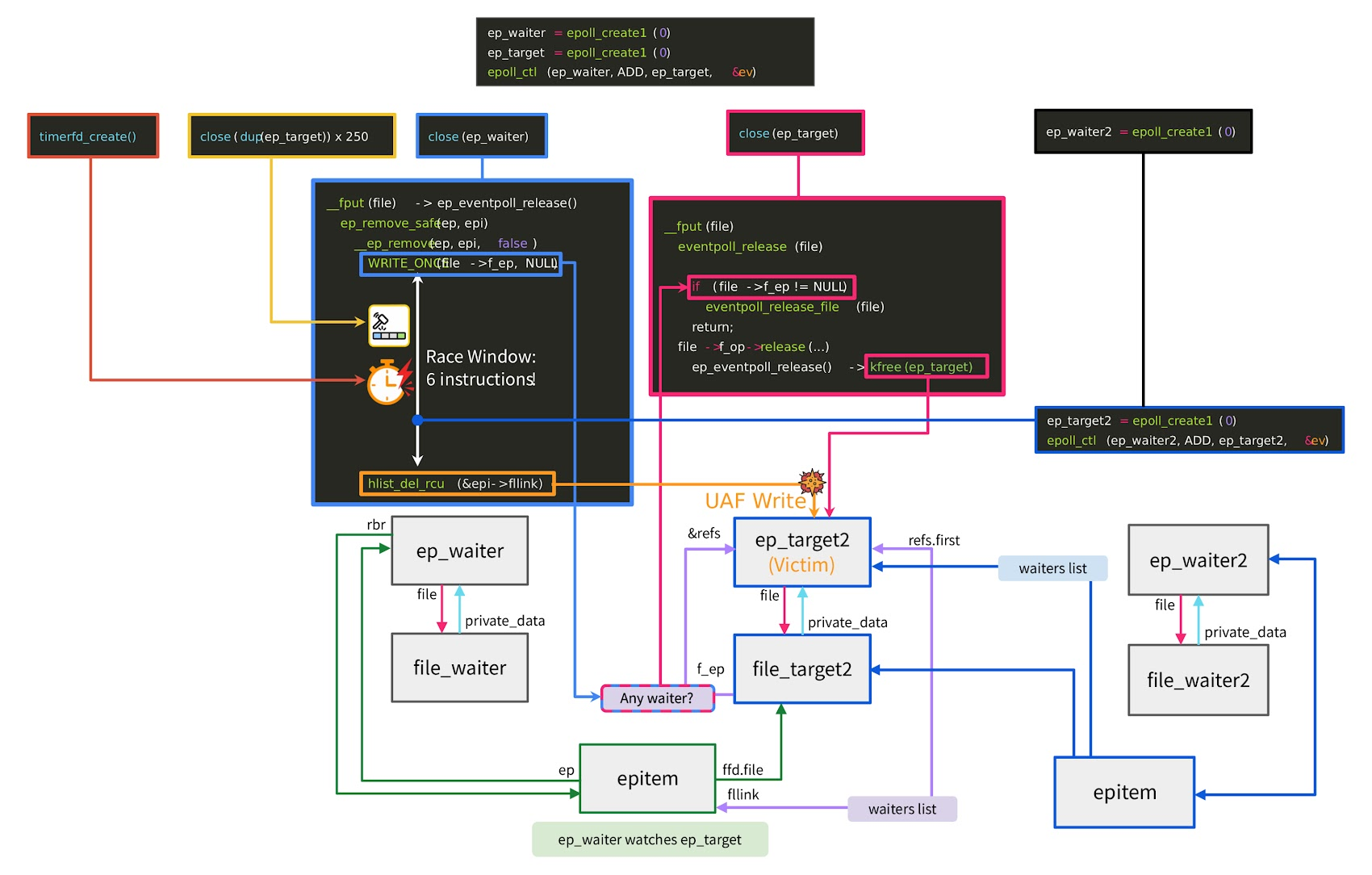
- The exploit repeatedly triggers the epoll race condition.
- Kernel memory is corrupted through the UAF vulnerability.
- Arbitrary code executes in kernel mode.
- The attacker obtains root privileges, allowing full system compromise.
Impact Assessment
- Attackers can modify system binaries, configurations, and security controls with root privileges
- Kernel-level execution enables stealthy tampering and persistent compromise
- Container and host integrity can be undermined when the shared kernel is affected
- Root access permits theft of credentials, tokens, and sensitive local or mounted data
- Attackers can access secrets used by applications, CI agents, and cloud tooling
- Privilege escalation increases lateral movement potential in enterprise environments
- Exploitation attempts can destabilize systems and trigger crashes
- Successful compromise enables destructive actions including service interruption
- Android and Linux endpoints may require emergency patching and reboot windows
Mitigation Strategies
Immediate Actions
- Immediately install vendor kernel updates containing the fix
- Upgrade to patched Linux kernel versions or vendor backports
- Apply Android security updates from device vendors
Short-term Measures
- Restrict local shell and SSH access to trusted users only
- Reduce local attack surface by limiting executable paths and hardening endpoint policies
- Prioritize patching internet-facing and multi-tenant systems first
Monitoring & Detection
- Monitor for privilege-escalation attempts and unusual local process behavior
- Alert on suspicious kernel crash patterns or exploit-like race-trigger loops
- Correlate endpoint detections with authentication anomalies indicating post-login abuse
Long-term Solutions
- Enforce principle of least privilege across users, services, and developer tooling
- Strengthen kernel vulnerability management and rapid patch rollout processes
- Since epoll cannot be disabled safely for normal operation, maintain aggressive patch governance
Resources and References
Public Reporting
Last Updated: July 5, 2026