Iran-Linked Group Handala Claims to Have Breached Three Major UAE Organizations
Iran-Linked Hacktivists Data Exfiltration Claim Destructive Attack Claim
Overview
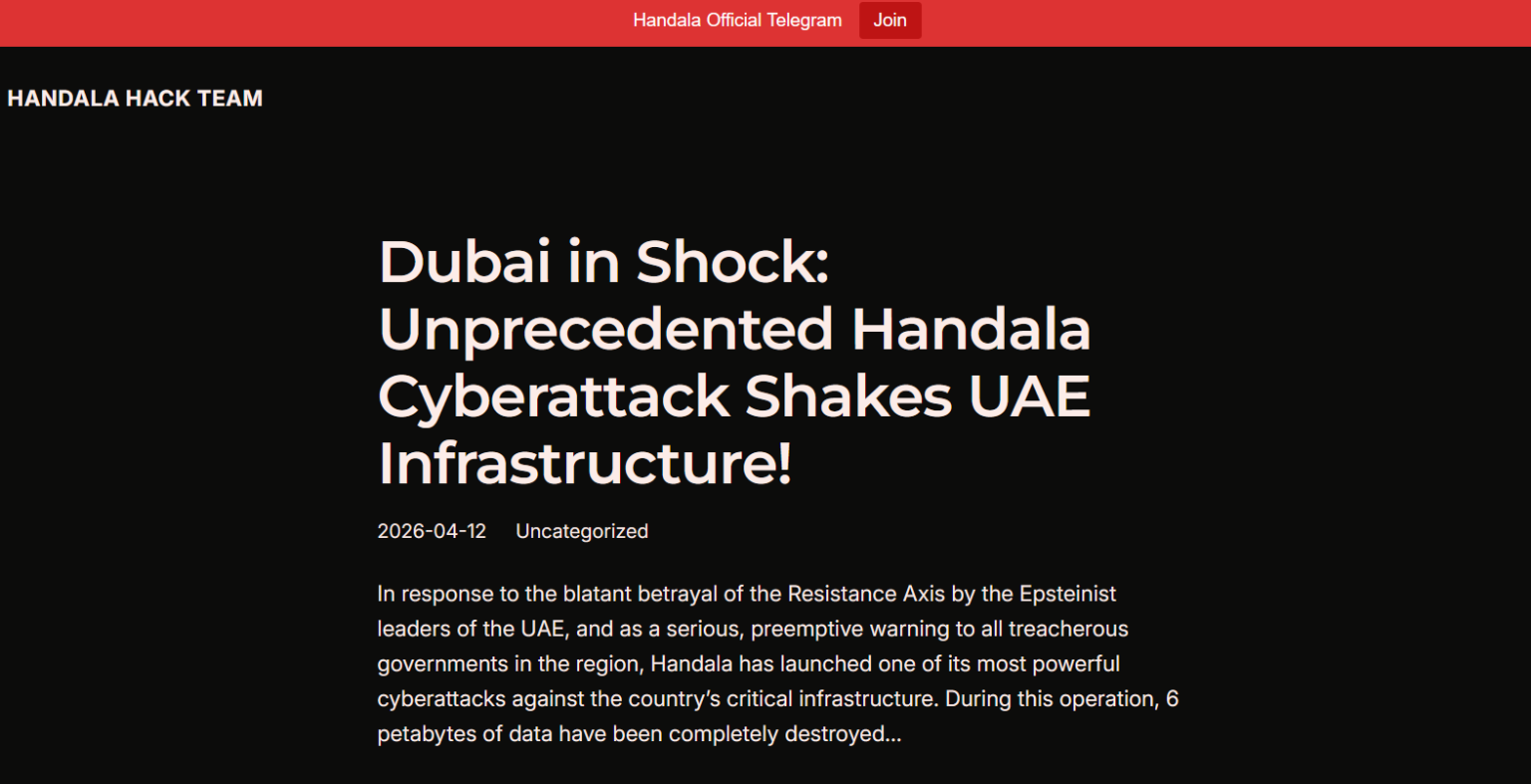
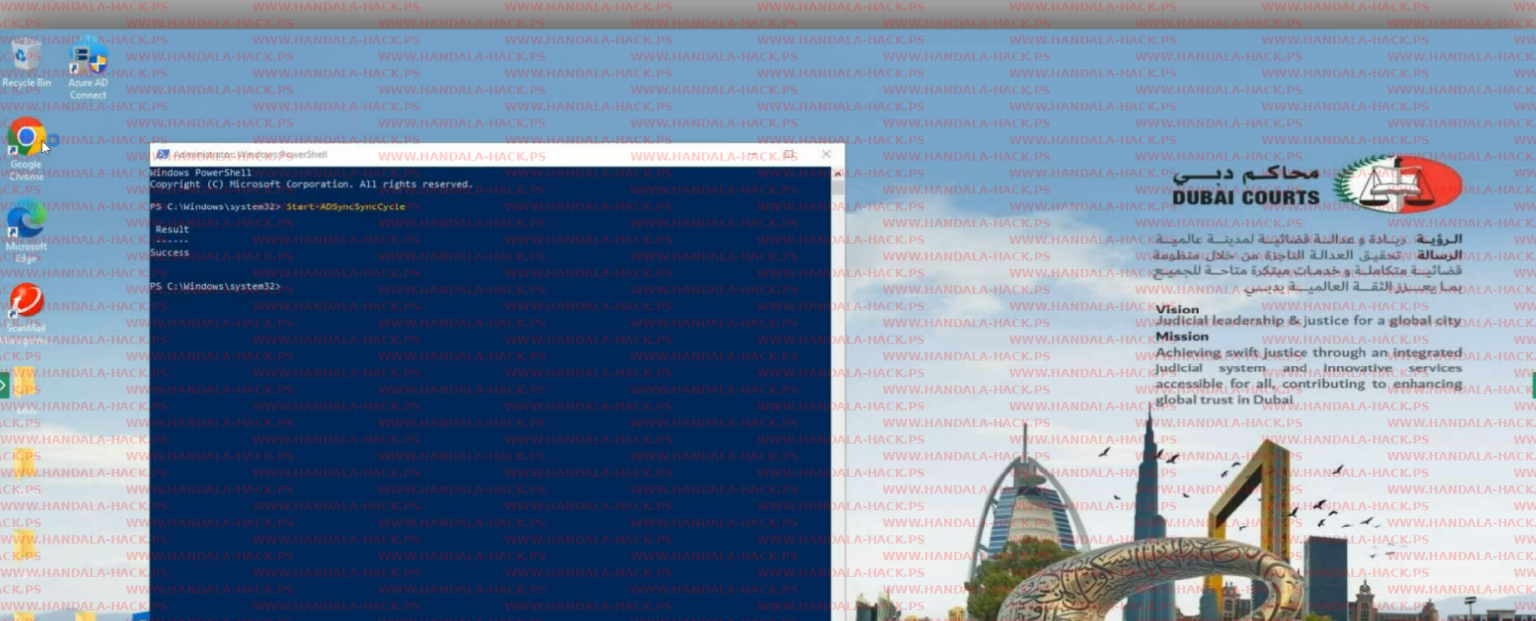
An Iran-linked hacktivist group known as Handala claimed responsibility for a large-scale cyberattack targeting three major UAE government organizations: Dubai Courts, Dubai Land Department, and Dubai Roads & Transport Authority. The group alleges it exfiltrated massive volumes of sensitive data and carried out destructive actions against internal systems. If true, the incident would represent a high-impact regional cyber operation affecting judicial, land administration, and transportation services. At the time of reporting, UAE authorities have not publicly confirmed the breach claims.
Technical Specifications
| Attribute | Details |
|---|---|
| Threat Actor | Handala (Iran-Linked Hacktivist Group) |
| Target Organizations | Dubai Courts, Dubai Land Department, Dubai Roads & Transport Authority |
| Claimed Exfiltration Volume | Approximately 149 TB |
| Claimed Destruction Volume | Approximately 6 PB |
| Attack Type | Claimed Data Theft and Destructive Intrusion |
| Motivation | Political / Regional Cyber Tensions |
| Initial Access (Likely) | Credential Compromise, Phishing, or Leaked Credentials |
| Post-Compromise Activity | Lateral Movement, Administrative Tool Abuse, Possible Wiper-Like Actions |
| Public Evidence | No confirmed malware samples or verified IOCs released publicly |
Affected Organizations
- Dubai Courts: Potential exposure of legal records, court workflows, case materials, and internal judicial communications
- Dubai Land Department: Potential compromise of land ownership records, property transaction data, cadastral systems, and citizen records
- Dubai Roads & Transport Authority: Potential disruption affecting transportation operations, internal systems, service coordination, and infrastructure management data
- Government Users & Citizens: Potential downstream impact to residents, legal entities, and public-service users whose data may reside in affected systems
Technical Details
- Claims indicate a large-scale intrusion involving both data exfiltration and destructive activity, though independent validation is not yet available
- Based on Handala's known tradecraft, likely initial access vectors include phishing, credential reuse, or abuse of leaked credentials obtained from prior compromise activity
- Operators likely relied on legitimate administrative tools and LOLBins to reduce malware footprint and blend with ordinary system administration activity
- Cloud management or device management platforms may have been abused to access distributed systems and accelerate post-compromise operations
- The reported exfiltration volume suggests access to centralized storage, backup repositories, or large internal data platforms rather than isolated endpoint theft alone
- Claimed destructive activity may indicate file deletion, system wiping, storage corruption, or deliberate sabotage of business-critical data stores
- No public malware samples, forensic indicators, or infrastructure IOCs had been released at the time of reporting, limiting definitive attribution and technical confirmation
- Public disclosure through online channels appears intended to amplify psychological pressure and geopolitical signaling, consistent with prior hacktivist information operations
Attack Scenario
- Initial Access: Attackers likely obtain entry using compromised credentials, phishing against government employees, or credentials leaked from prior intrusions
- Privilege Expansion: After gaining foothold access, the operators escalate privileges and enumerate identity systems, administrative consoles, file repositories, and cloud-connected environments
- Lateral Movement: Using legitimate administrative tools, remote management utilities, and built-in Windows features, the attackers move across internal government systems and possibly interconnected cloud platforms
- Data Collection: Sensitive datasets from judicial, land, and transportation systems are identified and aggregated for exfiltration, potentially including citizen data, internal records, and operational documents
- Data Exfiltration: Large volumes of data are transferred out through remote channels, likely using encrypted outbound sessions or trusted administrative pathways to avoid immediate detection
- Destructive Activity: Following exfiltration, the attackers may deploy destructive actions such as deleting files, corrupting repositories, or using wiper-like techniques to damage system availability and recovery capability
- Operational Impact: Affected organizations may experience service degradation, record access issues, disruption of internal workflows, or broader public-facing service interruptions if core platforms are impacted
- Public Claim & Psychological Effect: Handala publicly announces the operation through online channels to maximize political, psychological, and reputational impact regardless of the full technical scope actually achieved
Impact Assessment
- Judicial Disruption: Court operations, case handling, scheduling, and legal record access may be interrupted if Dubai Courts systems were genuinely affected
- Land Administration Risk: Compromise of ownership records or transaction systems could delay real estate processing and undermine trust in record integrity
- Transportation Service Interruption: Internal disruption at the Roads & Transport Authority could affect service coordination, planning systems, or supporting operational platforms
- Recovery Burden: If destructive actions occurred, recovery may require large-scale restoration from clean backups and extensive forensic validation
- Sensitive Government Data Exposure: Large-scale exfiltration could include legal records, citizen data, administrative documents, and operational datasets
- Public Trust Erosion: Claims involving major UAE institutions create immediate reputational damage even before technical confirmation is complete
- Secondary Abuse Risk: Stolen information may be leaked, sold, or used to support follow-on phishing, extortion, or influence operations
- Integrity Concerns: Even without public data release, uncertainty around record integrity can disrupt normal business and government processes
- Regional Cyber Tension Escalation: A successful or credibly claimed attack against major UAE organizations heightens existing geopolitical cyber tensions in the region
- Psychological Operations Value: Publicly claiming multi-agency compromise amplifies political messaging and fear, which may be part of the intended objective even if technical details remain incomplete
- Government Sector Targeting Trend: The incident underscores the attractiveness of public-sector institutions as symbolic and operational targets in regional cyber conflict
- Policy and Security Pressure: High-profile breach claims increase pressure on UAE institutions to strengthen identity controls, monitoring, segmentation, and backup resilience
Mitigation Strategies
Immediate Actions
- Verify System and Backup Integrity: Validate the integrity of critical systems, backup repositories, and recovery images before restoration activities begin
- Reset Potentially Compromised Credentials: Force password resets for privileged, service, and administrator accounts; enforce MFA across affected identity systems immediately
- Monitor for Data Leakage: Continuously monitor Telegram channels, leak sites, underground forums, and dark web sources for publication or sale of claimed stolen data
- Hunt for Administrative Abuse: Review logs for unusual use of PowerShell, PsExec, RDP, scheduled tasks, cloud admin actions, and other LOLBin-style post-compromise activity
Preventive Measures
- Implement Zero Trust Architecture: Apply continuous verification, least privilege, and conditional access across government systems and remote administration workflows
- Strengthen Identity and Access Management: Harden IAM processes, restrict privilege assignment, rotate secrets regularly, and review federation and cloud identity trust paths
- Monitor Privileged Activity: Deploy detections for abnormal administrator behavior, privilege escalation, unusual remote access patterns, and mass data access events
- Deploy EDR/XDR: Use endpoint and extended detection solutions capable of identifying credential misuse, lateral movement, and destructive post-exploitation behavior
- Network Segmentation: Isolate critical judicial, land, and transport environments to limit attacker movement between agencies and core systems
- Maintain Immutable Offline Backups: Keep regularly tested offline backups that cannot be modified from production environments; verify restoration procedures often
- Security Awareness Training: Train staff against phishing and credential theft, especially employees in high-value administrative or citizen-data roles
Resources
Open-Source Reporting
Last Updated: April 14, 2026