APT28 Exploiting Network Devices for Cyber Espionage
Russia-Linked APT Network Device Exploitation Cyber Espionage
Overview
APT28 (also known as Fancy Bear, Forest Blizzard, and STRONTIUM), a threat actor attributed to Russian military intelligence (GRU), has been actively exploiting vulnerabilities in internet-facing network devices — particularly SOHO routers and edge appliances. The group weaponizes these compromised devices to build covert proxy and command-and-control (C2) infrastructure, anonymize attack origins, and pivot into the internal networks of high-value targets for long-term espionage campaigns targeting government, military, and critical infrastructure organizations globally.
Technical Specifications
| Attribute | Details |
|---|---|
| Threat Actor | APT28 / Fancy Bear / Forest Blizzard (GRU Unit 26165) |
| Attribution | Russian Military Intelligence (GRU) |
| Attack Type | Network Device Exploitation, Cyber Espionage |
| Primary Target | Internet-Facing Routers & Edge Devices |
| Objective | Covert Access, C2 Infrastructure, Traffic Proxying, Espionage |
| Persistence Method | Firmware Implants, Modified Configurations |
| Lateral Movement | Credential Harvesting, Internal Network Pivoting |
| Infrastructure Abuse | Router-to-Proxy Conversion, DNS Hijacking |
Affected Products
- SOHO Routers: Ubiquiti, TP-Link, Asus, and other small-office/home-office router brands commonly used by SMBs and remote workers
- Edge Networking Devices: Firewalls, VPN concentrators, and network appliances with known unpatched vulnerabilities
- End-of-Life Hardware: Devices no longer receiving vendor security updates; primary selection criterion for APT28
- DNS Infrastructure: Targeted for hijacking to redirect traffic and intercept credentials
- Organizations Targeted: Government agencies, military institutions, defense contractors, think tanks, political organizations
Technical Details
- Exploits known, unpatched vulnerabilities in router firmware and management interfaces (CVEs affecting Ubiquiti EdgeRouter, Cisco RV series, TP-Link, and similar devices)
- Modifies device firmware or configuration to establish persistent backdoors surviving reboots
- Converts compromised routers into proxy nodes within a globally distributed anonymization network (similar to the Moobot/MASEPIE botnet infrastructure)
- Uses compromised devices as C2 relay infrastructure to obscure communications between APT28 operators and implants inside target networks
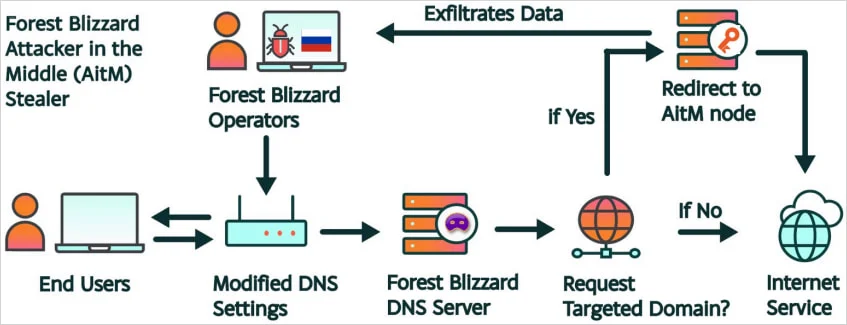
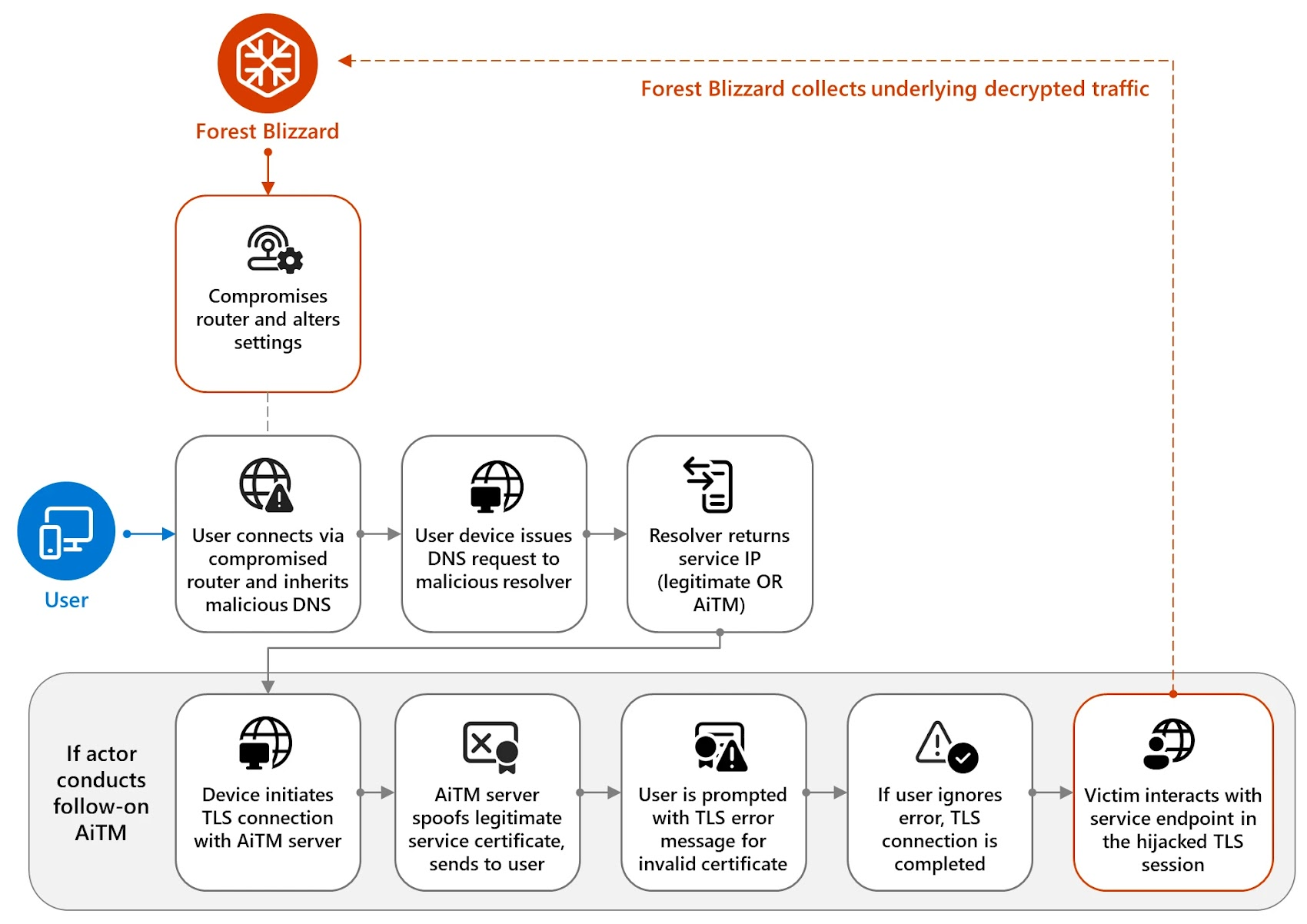
- Conducts DNS hijacking through compromised routers to redirect victim traffic to attacker-controlled servers for credential interception
- Harvests credentials stored in device configurations or intercepted from passing network traffic
- Uses legitimate administrative tools and living-off-the-land techniques to avoid detection on compromised network devices
- Performs lateral movement into target organization internal networks via VPN credentials or trust relationships with the compromised router
- Maintains persistent, long-term access for ongoing intelligence collection and traffic monitoring
- Targets specifically chosen to provide access to multiple downstream organizations through a single compromised network appliance
Attack Scenario
- Scanning & Reconnaissance: APT28 conducts large-scale internet scanning to identify routers and edge devices running vulnerable firmware versions or with management interfaces exposed to the internet
- Exploitation: Exploit known CVEs or default/weak credentials to gain initial access to target network devices without requiring physical access or user interaction
- Persistence Establishment: Modify device firmware, startup scripts, or configuration to persist through reboots; install backdoor accounts; disable logging to prevent detection
- Proxy Network Construction: Configure compromised device as a proxy node or C2 relay; route attacker traffic through the device to anonymize the true origin of subsequent attacks
- Credential Harvesting: Intercept authentication traffic passing through the compromised router; extract stored VPN credentials, admin passwords, and session tokens from device memory
- Lateral Movement: Use harvested credentials or network trust relationships to pivot from the compromised router into the internal networks of connected target organizations
- Espionage Operations: Monitor network traffic, intercept communications, and exfiltrate sensitive data (government communications, military plans, intellectual property, political intelligence)
- Long-Term Persistence: Maintain covert access for months to years; periodically update implants; use the infrastructure to support additional APT28 operations against new targets
Impact Assessment
- Unauthorized Network Access: Compromised routers provide persistent entry points into target organizations without triggering traditional endpoint security controls
- Traffic Interception: All traffic routed through a compromised device is visible to the attacker, enabling credential theft and communications monitoring
- Credential Compromise: VPN credentials, administrative passwords, and session tokens intercepted from device traffic enable deep network access
- DNS Manipulation: Hijacked DNS enables transparent traffic redirection to attacker infrastructure, bypassing HTTPS validation in some configurations
- Detection Difficulty: Network device implants are rarely visible to endpoint or application security tools; specialized network monitoring is required
- Government Intelligence Theft: Access to government and military networks enables collection of sensitive diplomatic, defense, and intelligence information
- Long-Term Persistent Access: Compromised network infrastructure provides years-long access windows for ongoing intelligence operations
- Multi-Target Leverage: A single compromised router serving multiple downstream organizations multiplies the espionage value of each initial compromise
- Geopolitical Operations: Collected intelligence supports Russian military and foreign policy decision-making; creates strategic information advantage
- Allied Network Exposure: Compromised devices in NATO member or partner nations create risks for allied intelligence-sharing networks
- Invisible Breach: Organizations may be compromised for extended periods without any visible indicators of intrusion in endpoint or application logs
- Supply Chain Risk: Compromise of an MSP or ISP router can cascade to dozens of dependent customer networks
- Regulatory & Compliance Exposure: Undetected data exfiltration may trigger notification obligations once discovered; failure to detect carries liability
- Remediation Complexity: Router firmware implants require specialized forensics; standard incident response procedures may miss device-level persistence
- Reputational Damage: Disclosure of long-term espionage compromise, particularly for government contractors, undermines public and partner trust
Mitigation Strategies
Immediate Actions
- Patch & Update Firmware: Apply all available firmware updates immediately to all internet-facing routers and edge devices; prioritize devices with known exploited CVEs
- Replace End-of-Life Hardware: Decommission and replace routers and network appliances that no longer receive vendor security updates; no mitigation can substitute vendor patch support
- Disable Unnecessary Remote Access: Disable WAN-side management interfaces (HTTP, HTTPS, SSH, Telnet) unless operationally required; restrict to internal management networks only
Security Hardening
- Change Default Credentials: Replace all default usernames and passwords with strong, unique credentials; enforce password rotation policies for all network device accounts
- Enforce Strong Authentication: Implement multi-factor authentication for all remote management access where supported; use certificate-based SSH authentication instead of passwords
- Restrict Admin Access: Limit management interface access to specific internal IP addresses or a dedicated out-of-band management network; block all external administrative access
- Review DNS Configuration: Audit DNS settings on all network devices and upstream resolvers; implement DNSSEC validation; monitor for unauthorized DNS changes
Monitoring & Detection
- Monitor Outbound Router Traffic: Alert on unusual outbound connections from network devices, especially to non-standard ports or unexpected geographic destinations
- Deploy IDS/IPS: Implement network intrusion detection capable of identifying anomalous router behavior, C2 patterns, and lateral movement indicators
- Log & Audit Configuration Changes: Enable syslog forwarding from all network devices to a centralized, tamper-resistant logging system; alert on unauthorized configuration changes
- Network Segmentation: Implement strict segmentation between IT and OT, external-facing, and internal networks to limit lateral movement from a compromised edge device
Resources
Open-Source Reporting
Last Updated: April 8, 2026