FCC Ban on Foreign-Made Consumer Routers (Covered List Expansion)
FCC Covered List Expansion Supply Chain Security Consumer Router Risk National Security
Overview
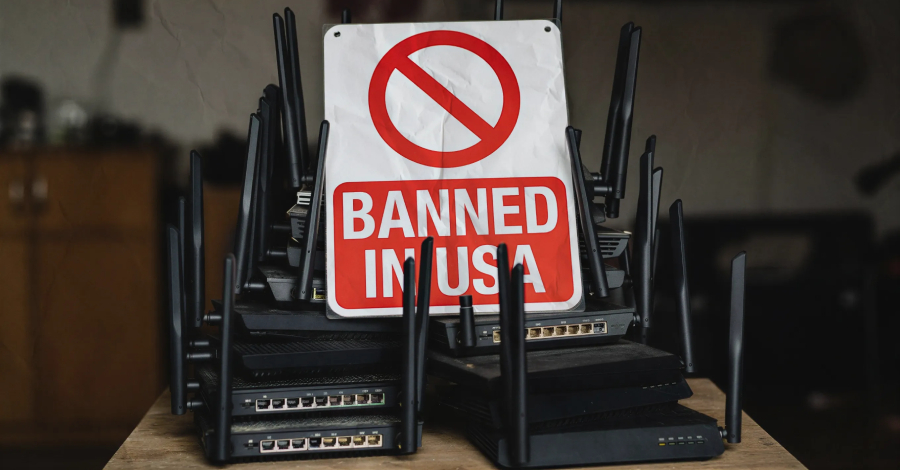
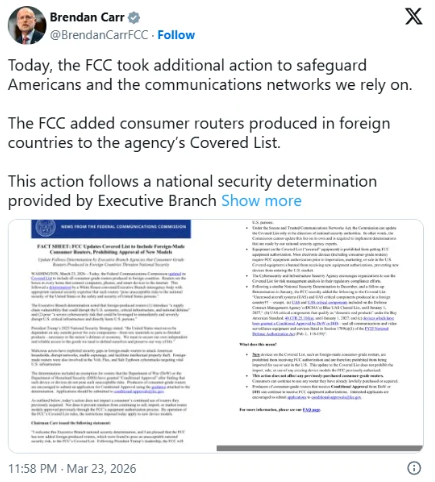
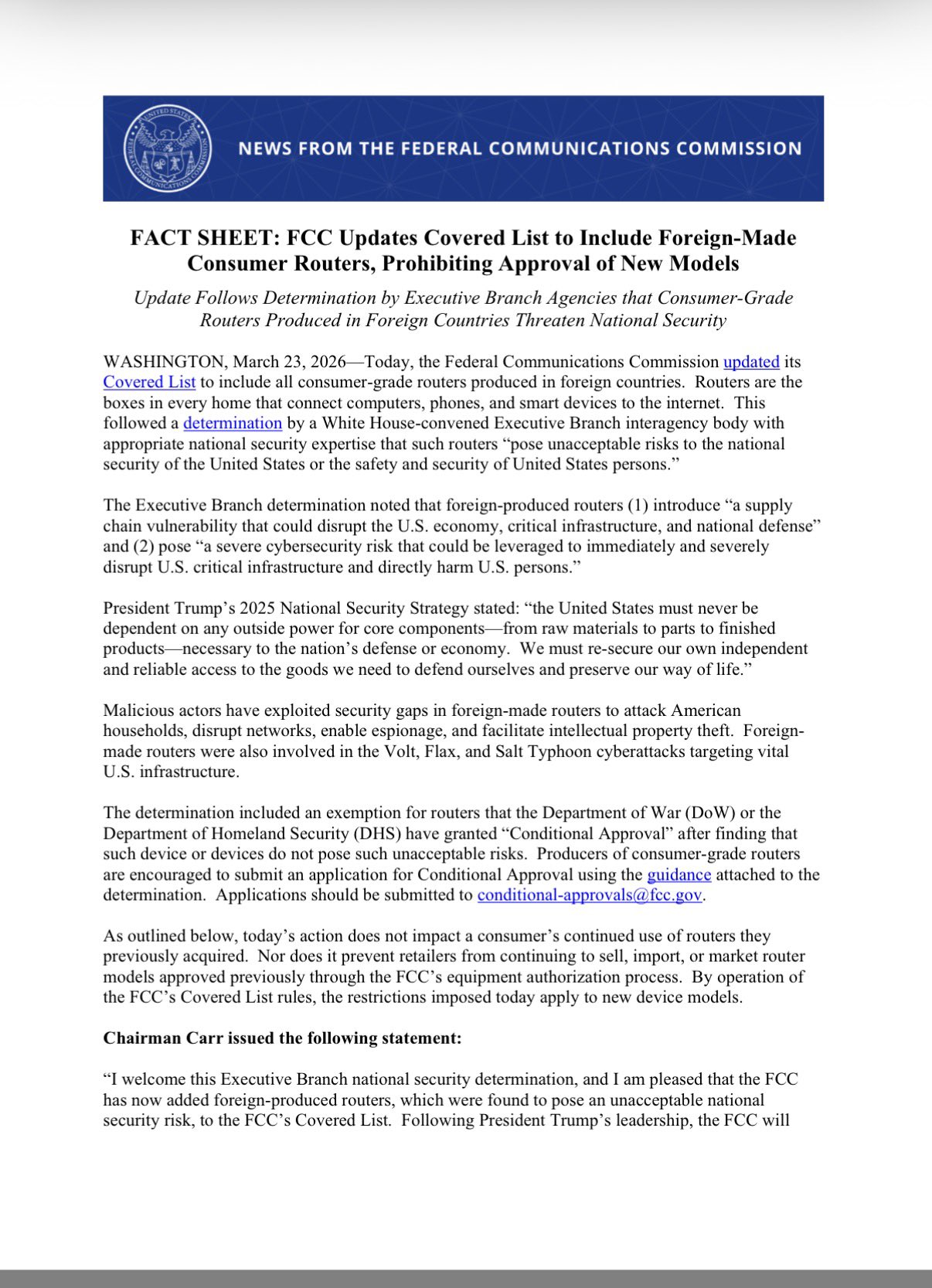
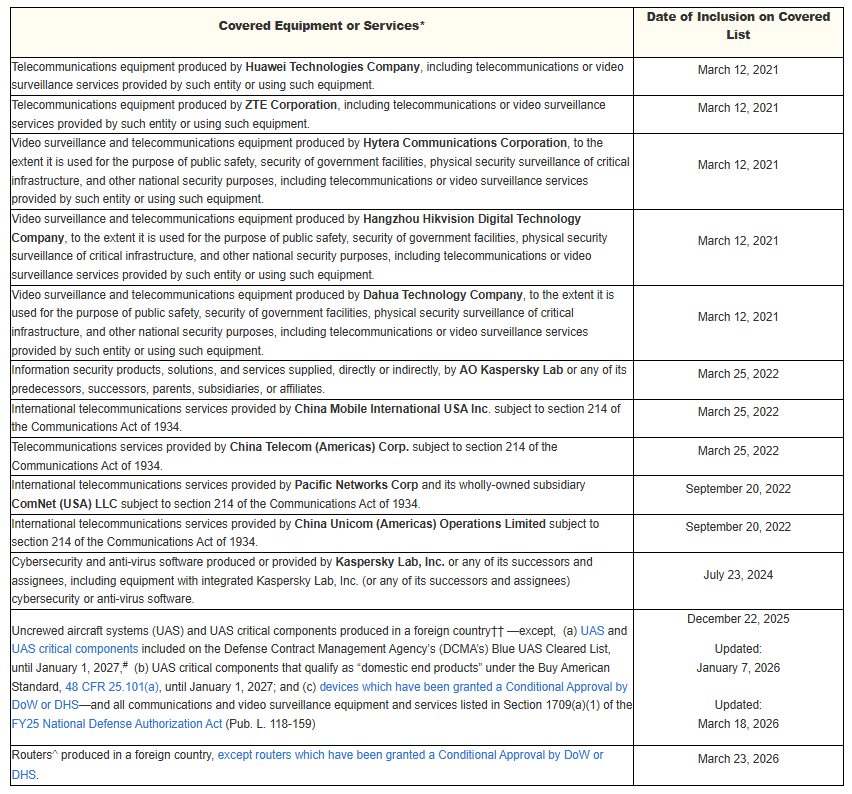
The U.S. Federal Communications Commission expanded its Covered List to restrict authorization of new foreign-manufactured consumer routers due to national security concerns.
Because FCC authorization is required for lawful import and sale in the United States, non-compliant devices are effectively blocked from market access.
 -
- 
Technical Specifications
| Attribute | Details |
|---|---|
| Incident | Regulatory restriction and market access control for consumer networking equipment |
| Attack Surface Concern | Home and small-office edge routers acting as trusted network chokepoints |
| Core Router Functions at Risk | NAT gateway, DNS forwarding, firewall policy enforcement |
| Key Security Risks | Firmware backdoors, hardcoded credentials, remote command execution flaws, weak or unsigned update paths |
| Observed Adversary Interest | Historical exploitation of SOHO routers and persistence via firmware-level implants |
| Supply Chain Concern | Limited ability to independently verify hardware/firmware integrity under untrusted manufacturing conditions |
| Regulatory Effect | Non-compliant new products cannot obtain required certification for U.S. import/sale |
Affected Products
- New foreign-manufactured consumer routers requiring FCC equipment authorization
- U.S. import and retail channels dependent on FCC certification approval
- Home and SOHO deployments relying on consumer edge routers as security boundaries
- ISP and enterprise environments that may inherit downstream risk from insecure consumer edge devices
Attack Scenario
-
Internet-Scale Discovery: Attackers scan for exposed consumer/SOHO routers and fingerprint vulnerable firmware builds.
-
Initial Exploitation: Adversaries exploit known CVEs or zero-day flaws in router management services.
-
Privilege Acquisition: Root or administrator-level access is obtained on the device.
-
Persistence Setup: Attackers establish persistence using startup scripts, cron jobs, or modified firmware images.
-
Operational Abuse: Compromised routers are used as covert proxy nodes, botnet participants, or internal network pivot points.
-
Lateral Expansion: Attackers move from router footholds into internal hosts, credentials, and enterprise services.
Impact Assessment
- Unauthorized manipulation of router configuration and routing/security policies
- Persistent tampering through firmware or startup-level modifications
- Use of trusted network edge infrastructure for stealth operations
- Credential theft and interception of network traffic metadata or content
- Data exfiltration via compromised edge devices and covert relay paths
- Exposure of internal network architecture and communication patterns
- Router instability, service outages, or degraded connectivity at scale
- Abuse in DDoS botnets affecting upstream providers and downstream users
- Operational disruption in ISP, enterprise, and critical infrastructure-linked networks
Mitigation Strategies
Immediate Actions
- Disable remote administration from WAN unless explicitly required.
- Change default credentials and enforce strong unique administrator passwords.
- Apply the latest firmware updates immediately upon release.
Short-term Measures
- Prefer routers that enforce signed firmware updates and secure boot validation.
- Segment IoT and untrusted devices into separate VLANs or isolated network zones.
- Validate that automatic update mechanisms are enabled and functioning.
Monitoring & Detection
- Monitor outbound traffic anomalies, unusual DNS patterns, and unexpected external connections.
- Alert on configuration drift, unauthorized admin logins, and repeated management interface probes.
- Review router logs regularly for suspicious process, persistence, or command-execution indicators.
Resources and References
Open-Source Reporting
- FCC Bans New Foreign-Made Routers Over Supply Chain and Cyber Risk Concerns
- FCC bans new routers made outside the USA over security risks
- Critics call FCC router rule a "big swing" that could create more supply chain uncertainty | CyberScoop
- What You Need to Know About the Foreign-Made Router Ban in the US | WIRED
- FCC bans import of new consumer routers made overseas, citing security risks | TechCrunch
- FCC bans import of consumer-grade routers amid national security concerns | Cybersecurity Dive
- FCC targets routers in sweeping foreign tech crackdown that could impact TP-Link
- US bans any new consumer-grade routers not made in America | The Register
- US bans new foreign-made consumer internet routers
Last Updated: March 25, 2026