Red Menshen APT - BPFdoor Telecom Espionage Campaign
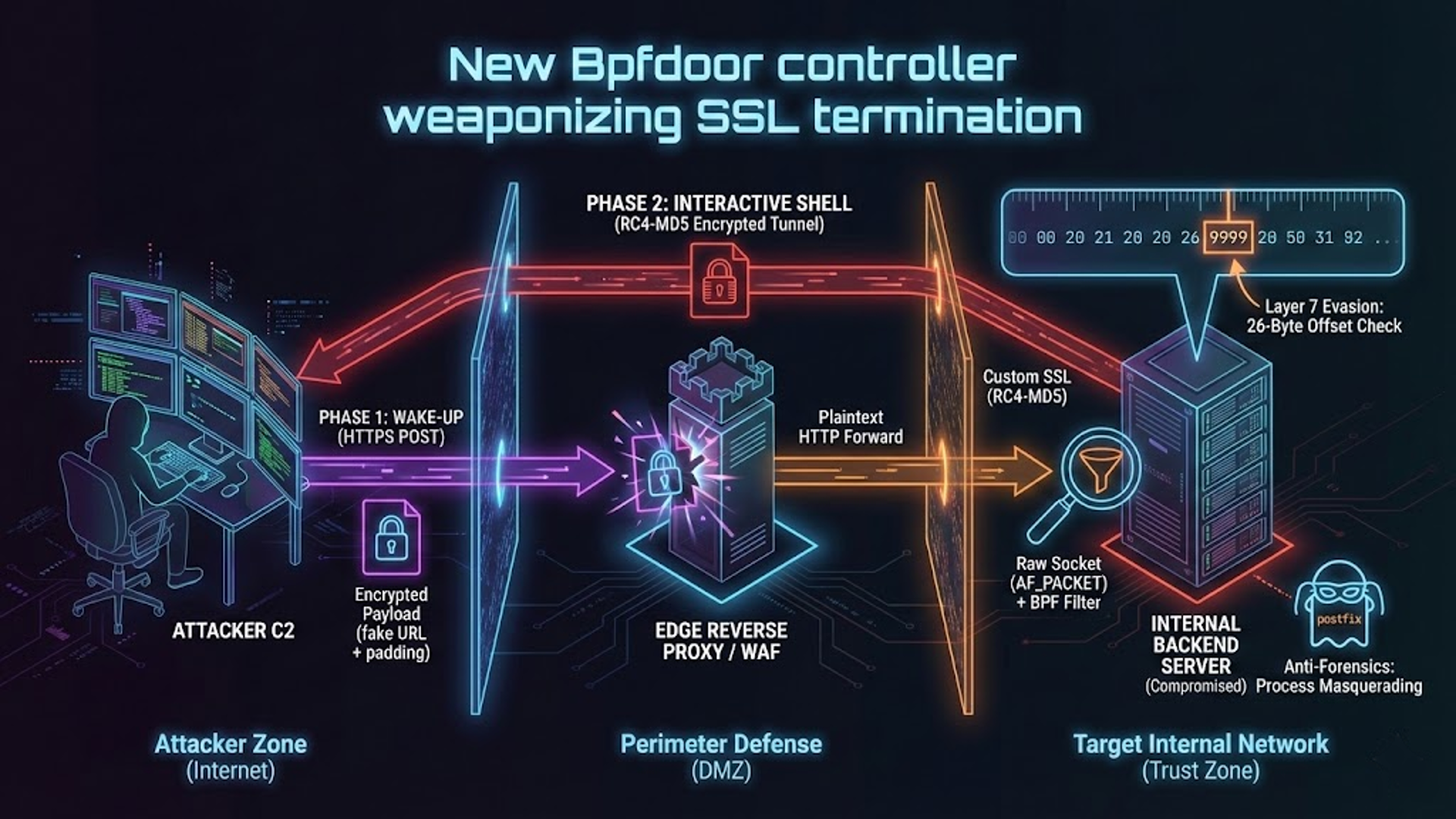
APT Activity Telecom Espionage Linux Backdoor
Overview
A China-linked threat group tracked as Red Menshen has been associated with a long-running cyber espionage campaign against telecommunications providers.
The operation relies on a stealth-focused Linux implant known as BPFdoor, designed to maintain covert persistence and remote access while minimizing conventional network-detection signals.
Technical Specifications
| Field | Details |
|---|---|
| Threat Group | Red Menshen (China-linked reporting) |
| Primary Malware | BPFdoor |
| Execution Context | Linux systems with packet-filter interaction |
| Stealth Characteristics | No persistent open ports, low/no periodic beaconing |
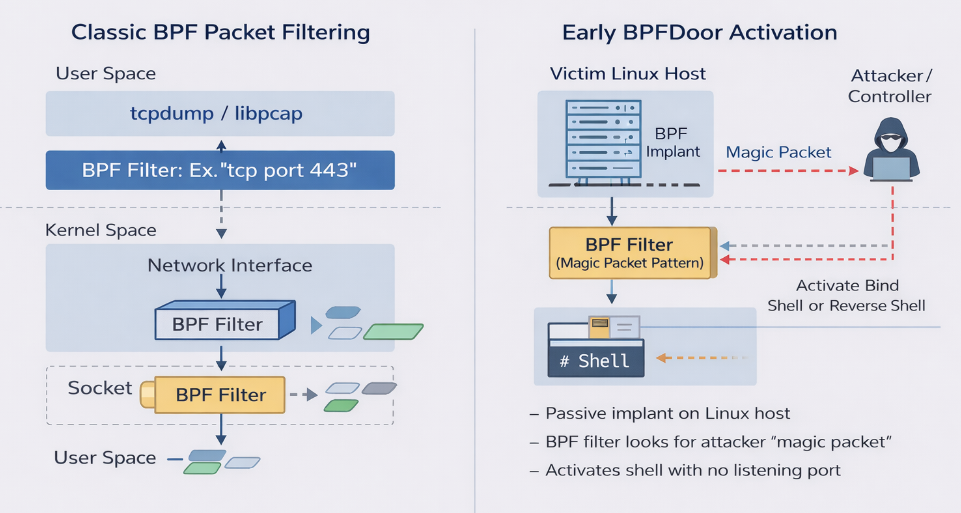
| Activation Method | Specially crafted trigger packets ("magic packets") |
| Associated Tooling | Sliver, CrossC2, credential and brute-force utilities |
Affected Products
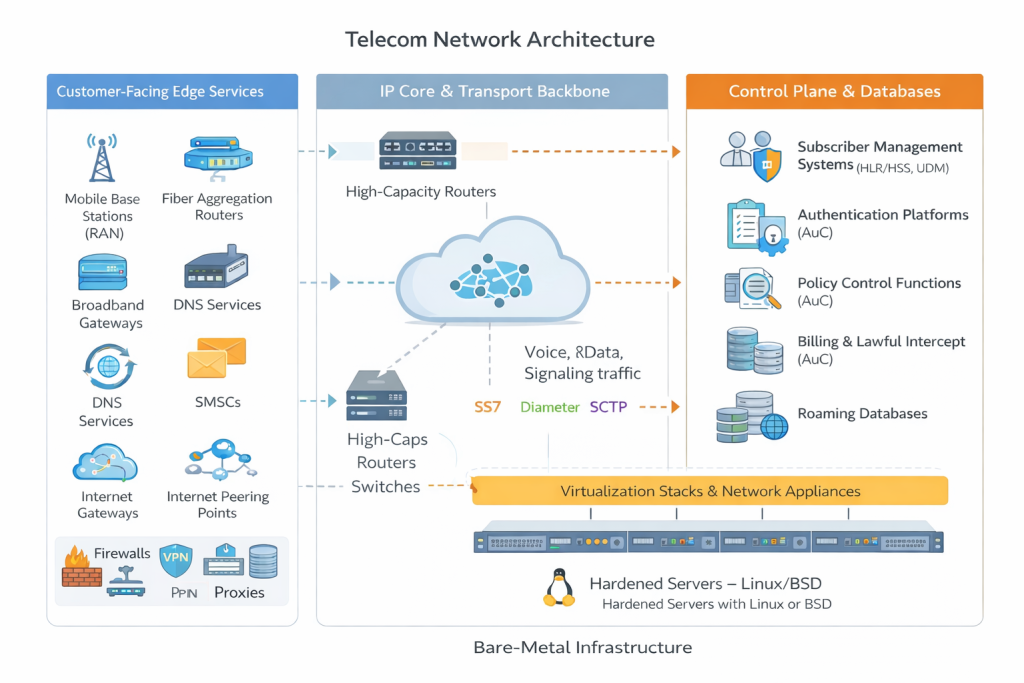
- Telecom infrastructure hosts running Linux-based services.
- Internet-facing operational assets such as VPN gateways, firewalls, and web-facing systems.
- Environments where long-term covert access can support strategic intelligence collection.
Technical Details
- BPFdoor is built for stealth and can inspect/handle traffic through low-level packet mechanisms.
- The implant may avoid traditional C2 noise by remaining dormant until triggered by crafted network packets.
- Attack operators reportedly combine BPFdoor with post-exploitation frameworks (for example Sliver/CrossC2).
- Supporting tradecraft includes credential theft, brute-force activity, and lateral movement.
- The overall objective appears to be persistent, covert access to telecom data paths and management environments.
Attack Scenario
- Attackers gain initial access through exposed or weak internet-facing services (for example VPN or public applications).
- Post-exploitation tooling is used to escalate privileges and pivot internally.
- BPFdoor is installed on selected Linux hosts to establish long-term footholds.
- The malware remains in dormant/sleeper state to reduce operational visibility.
- Operators transmit crafted trigger packets to activate covert access on demand.
- Remote control is re-established for espionage collection and sustained surveillance operations.
Impact Assessment
Adversaries can maintain long-term unauthorized access to telecom infrastructure and operational systems.
Compromise may enable interception or surveillance of communications metadata and traffic associated with high-value targets.
Persistent telecom intrusion increases national-security and privacy risk at population scale.
Mitigation Strategies
- Monitor kernel-adjacent telemetry and anomalous BPF-related behavior on Linux hosts.
- Use deep packet inspection and network analytics to identify suspicious trigger-pattern traffic.
- Patch and harden internet-facing assets, especially VPNs, firewalls, and exposed services.
- Restrict and audit raw socket capabilities and privileged process behavior.
- Deploy endpoint detection with behavioral techniques, not signature-only coverage.
- Conduct proactive threat hunting focused on dormant implants and covert C2 patterns in telecom environments.
Resources
Open-Source Reporting
- China-linked Red Menshen APT deploys stealthy BPFDoor implants in telecom networks
- China-Linked Red Menshen Uses Stealthy BPFDoor Implants to Spy via Telecom Networks
- China-linked Red Menshen hides inside telecoms networks
- China Upgrades the Backdoor It Uses to Spy on Telcos Globally
- Espionage campaign targets telecom with stealthy Linux-based backdoor | Cybersecurity Dive
Last Updated: March 30, 2026