North Korea's APT37 Uses Facebook Social Engineering to Deliver RokRAT Malware
North Korea-Linked APT Social Engineering RokRAT Malware
Overview
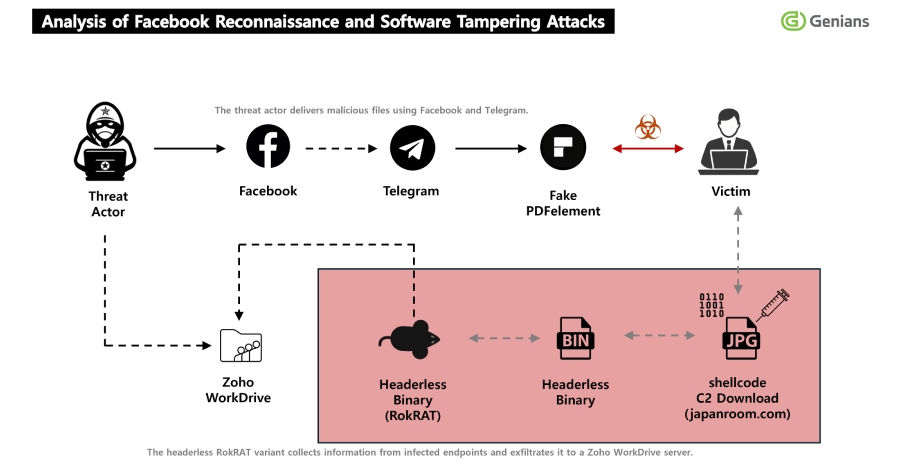
APT37, a North Korea-linked cyber espionage group also known as ScarCruft, conducted a targeted campaign using Facebook social engineering to approach victims and persuade them to install a trojanized PDF viewer. The fake application delivered RokRAT malware, a long-running espionage tool associated with North Korean operations, enabling persistent remote access, surveillance, and data exfiltration. By leveraging a trusted social platform and disguising the malicious application as legitimate software, the attackers reduced suspicion and improved the likelihood of successful victim compromise.
Technical Specifications
| Attribute | Details |
|---|---|
| Threat Actor | APT37 / ScarCruft |
| Attribution | North Korea-Linked |
| Initial Vector | Facebook Messenger Social Engineering |
| Delivery Mechanism | Trojanized PDF Viewer |
| Malware | RokRAT |
| Execution Method | Embedded Shellcode Triggered on Open/Launch |
| Persistence | Remote Access Trojan Installed with Persistent Control Features |
| C2 Communication | Compromised Legitimate Websites |
| Evasion Technique | Payload Disguised as JPG/Image Files |
| Primary Goal | Cyber Espionage, Surveillance, Data Exfiltration |
Affected Targets and Systems
- Social Media Users Targeted by APT37: Individuals approached through fake Facebook profiles and long-form trust-building conversations
- Windows Endpoints: Systems where victims downloaded and installed the trojanized PDF viewer
- Sensitive User Data: Documents, credentials, communications, and files accessible from infected systems
- Organizations with Exposed Staff: Government, policy, media, NGO, and research personnel susceptible to targeted social engineering on consumer platforms
- Compromised Websites Used for C2: Legitimate sites abused as staging or communications relays to reduce detection
Technical Details
- Attackers created convincing fake Facebook profiles and initiated social contact with selected victims through Messenger
- Rather than sending an obvious malware attachment immediately, the operators built trust over time before introducing a lure document requiring a special PDF viewer
- The delivered application was a trojanized version of legitimate-looking PDF viewing software, lowering suspicion and bypassing users who expect documents to require supporting applications
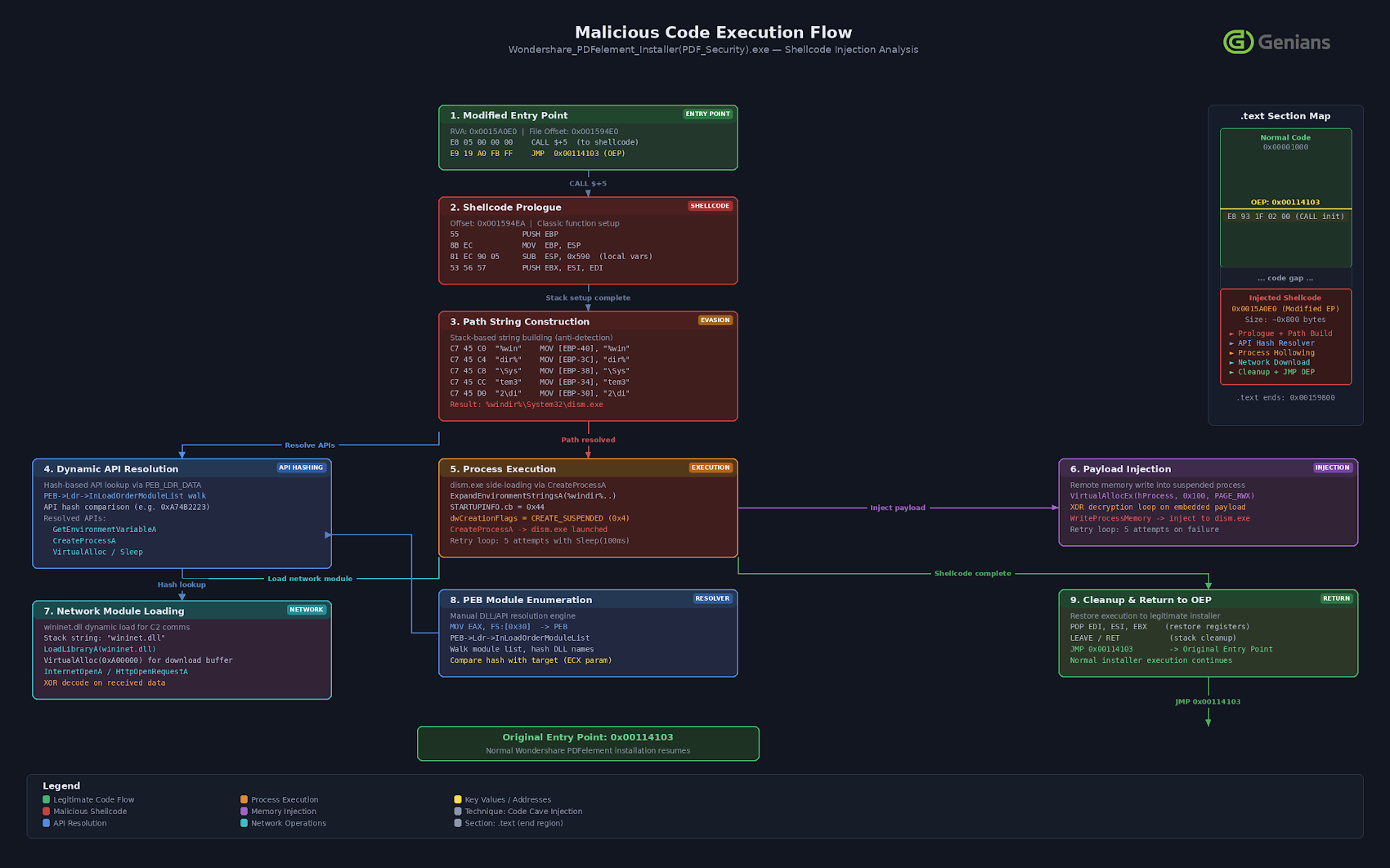
- Upon installation or launch, embedded shellcode executed and deployed RokRAT silently in the background
- RokRAT established remote access functionality, allowing operators to issue commands, surveil victim activity, and extract files or credentials from the compromised host
- Command-and-control traffic used compromised legitimate websites as intermediaries, blending malicious traffic into otherwise normal browsing patterns and frustrating simple domain-based blocking
- Malicious payloads or components were disguised as JPG or other image files to evade manual scrutiny and signature-based scanning
- The use of Facebook as the initial contact platform provided social legitimacy and reduced the effectiveness of traditional email-focused phishing defenses
- The campaign reflects a broader pattern of North Korean espionage operations using social networking, fake personas, and lightweight malware delivery chains to target specific individuals
Attack Scenario
- Persona Creation: The attacker creates a fake Facebook profile crafted to appear credible and relevant to the intended victim's professional or personal interests
- Initial Contact: A friend request or message is sent to the target through Facebook, often framed as a networking, media, academic, or policy-related outreach
- Trust Building: Over a period of conversation, the attacker establishes rapport and lowers the target's suspicion through believable exchanges and social proof
- Malicious Lure Delivery: The attacker shares a document or message claiming that a special PDF viewer is required to access the content properly
- Trojanized Application Install: The victim downloads and installs the fake PDF viewer, believing it to be a legitimate requirement for viewing the shared file
- Silent Malware Execution: Embedded shellcode executes and installs RokRAT without obvious user-facing indicators of compromise
- Remote Access Established: RokRAT connects to attacker infrastructure through compromised legitimate websites, enabling surveillance, command execution, and data collection
- Espionage and Follow-On Activity: The attacker steals sensitive data, monitors activity, and may use the compromised host for long-term surveillance or lateral movement into connected organizational systems
Impact Assessment
- Unauthorized Remote Access: Victim systems become remotely accessible to the attacker through RokRAT
- Data Theft: Sensitive files, credentials, communications, and stored information can be collected from the compromised endpoint
- Persistent Surveillance: Attackers can monitor user activity over extended periods, including document handling and operational workflows
- Potential Lateral Movement: If the infected device is connected to an organizational environment, the foothold may support movement into additional systems
- Long-Term Espionage Exposure: Compromised users may be monitored for months without detection, exposing strategic or organizational information over time
- Targeted Social Engineering Follow-On: Data harvested from the victim can support more effective impersonation and secondary compromise attempts against colleagues or partners
- Organizational Risk via Personal Platforms: Social media-origin compromise bypasses many enterprise email controls and creates an external path into sensitive environments
- Investigation Complexity: Trust-based social engineering combined with staged malware delivery complicates forensic reconstruction and user reporting timelines
- North Korean Intelligence Collection: The campaign supports long-term collection of political, policy, media, or operational intelligence aligned with DPRK priorities
- Trusted Platform Abuse: Leveraging Facebook demonstrates how mainstream platforms can be weaponized for highly targeted state-sponsored intrusion activity
- Broader Ecosystem Risk: Contacts, partners, and affiliated organizations can be indirectly exposed through information stolen from the initial victim
- Low-Noise Access Model: Trojanized utilities and covert C2 channels make this type of espionage campaign durable and difficult to identify early
Mitigation Strategies
User-Level
- Avoid Unknown Contacts on Facebook: Do not accept friend requests or engage with unknown profiles without independent identity verification
- Do Not Download Software from Chat Links: Treat any application delivered through Messenger or other chat platforms as untrusted unless verified through official vendor sources
- Verify Identities Independently: Confirm that the person contacting you is legitimate through known channels outside the social platform before opening files or installing software
- Be Wary of Special Viewer Requests: Legitimate documents rarely require custom viewers provided directly through chat conversations; treat such requests as suspicious by default
Organization-Level
- Security Awareness Training: Train staff on social engineering through social media, not just email phishing; include fake persona tactics and chat-based lure scenarios
- Application Allowlisting: Restrict execution to approved software so untrusted PDF viewers and similarly trojanized applications cannot run freely on enterprise endpoints
- Deploy EDR: Use endpoint detection and response solutions that can detect shellcode execution, anomalous child processes, RAT behavior, and unusual outbound connections
- Monitor Suspicious Outbound Traffic: Alert on abnormal connections to compromised legitimate websites, suspicious image-file retrieval patterns, and covert C2 behavior
- Restrict Software Installation Privileges: Remove local admin rights where possible and require approval for installing new applications on managed systems
- Threat Hunt for RokRAT TTPs: Search for image-disguised payload artifacts, unusual PDF-viewer installations, persistence mechanisms, and known RokRAT behavior patterns
Resources
Open-Source Reporting
Last Updated: April 14, 2026