MongoBleed: MongoDB Memory Disclosure (CVE-2025-14847)
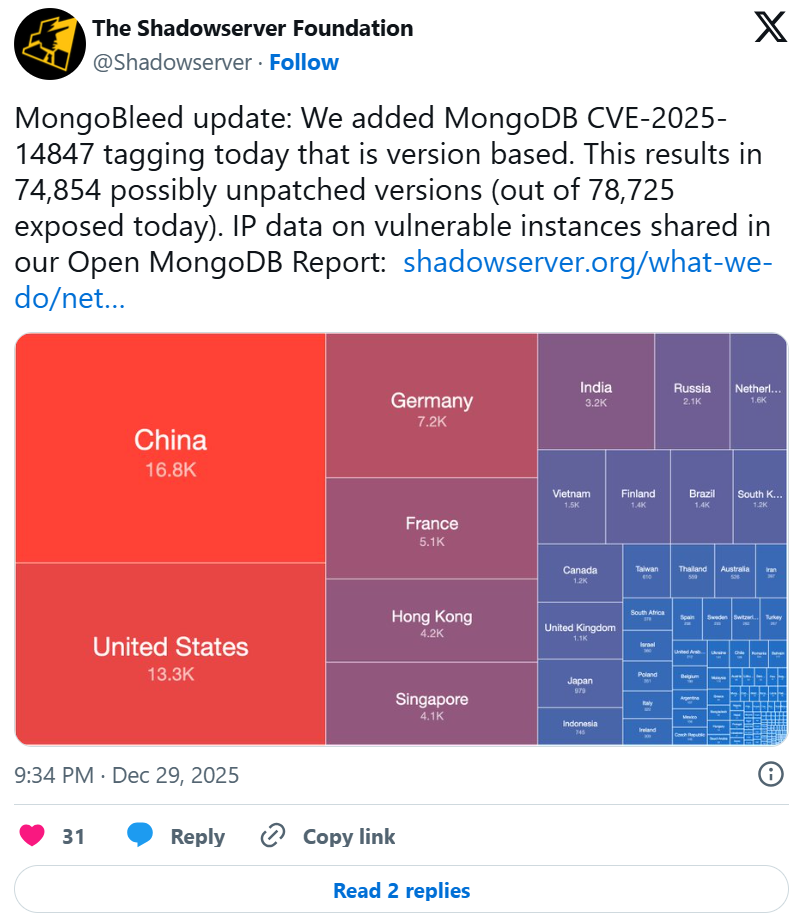
CVE-2025-14847
Memory Disclosure / Use of Uninitialized Memory
Network Pre-auth Disclosure
Overview
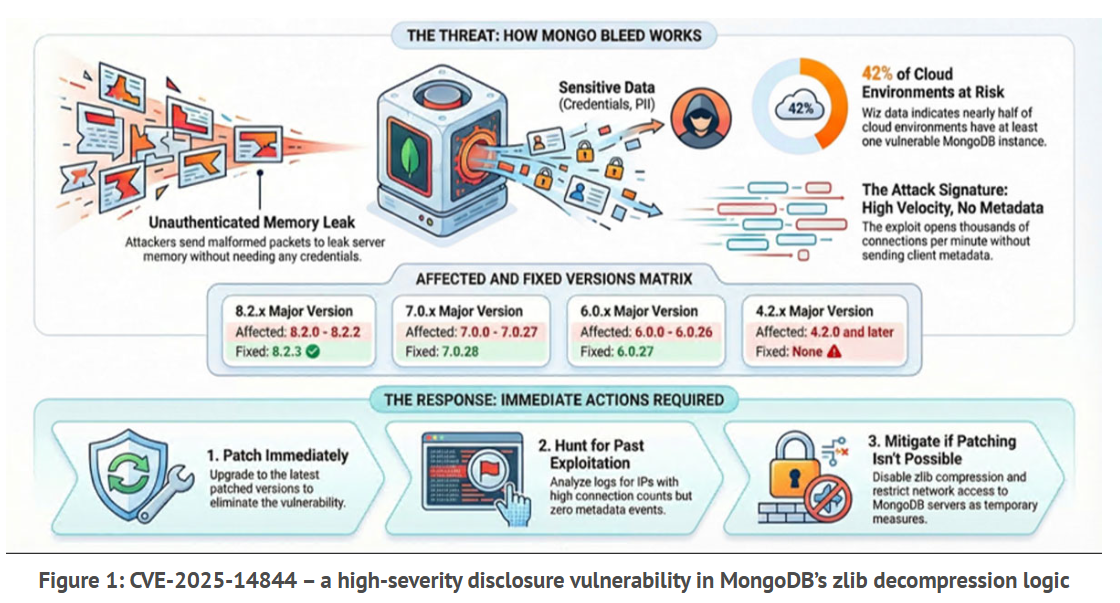
MongoBleed is a critical vulnerability in MongoDB that allows unauthenticated attackers to leak sensitive server memory. By sending specially crafted zlib-compressed network messages, attackers can extract fragments of memory containing credentials, secrets, or internal data — all before authentication occurs.
Technical Specifications
| Attribute | Details |
|---|---|
| Vulnerability ID | CVE-2025-14847 |
| Root Cause | Improper handling of zlib-compressed network messages; use of uninitialized memory |
| Issue Type | Use of uninitialized memory (memory disclosure) |
| Attack Vector | Network (TCP, typically port 27017) |
| Authentication | None (pre-auth) |
| User Interaction | Not required |
| Affected Versions | Multiple major releases prior to patched updates |
Affected Products
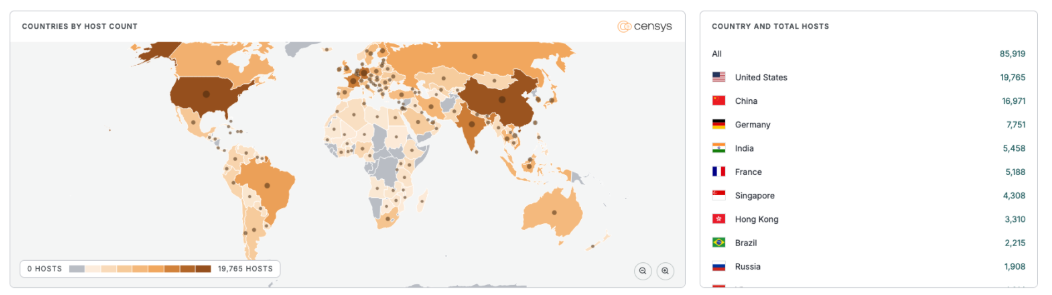
- MongoDB server instances exposed to the network (default port 27017)
Attack Scenario
- Attacker scans the internet for exposed MongoDB servers.
- Attacker sends a crafted zlib-compressed packet to the MongoDB service.
- MongoDB processes decompression before authentication and returns data containing leaked heap memory.
- Attacker repeats requests, collecting additional memory fragments.
- Leaked fragments are reconstructed to reveal credentials, API keys, tokens, or other sensitive data.
Potential Access Points
- Publicly reachable MongoDB instances
- Misconfigured hosts with open port 27017
- Services reachable via improperly configured network rules or VPNs
Impact Assessment
- Potential tampering with in-transit or cached database responses
- Risk of altered configurations if credentials are obtained
- Exposure of database credentials, API keys, and authentication tokens
- Leakage of internal data and sensitive application secrets
- Indirect service disruption from subsequent exploitation (credential misuse, ransomware)
- Operational impact due to incident response and containment
Mitigation Strategies
🔄 Immediate Actions
- Patch immediately to fixed versions: 8.2.3+, 8.0.17+, 7.0.28+, 6.0.27+, 5.0.32+, 4.4.30+
- Restrict network access to MongoDB instances; do not expose to public internet.
🛡️ Short-term Measures
- Disable zlib compression (
networkMessageCompressors) as a temporary workaround. - Harden firewall rules, allowlist management IPs, and require VPN access.
🔍 Monitoring & Detection
- Monitor logs for malformed or repeated compressed requests and unusual connection patterns.
- Enable file integrity and credential monitoring for services that use MongoDB secrets.
🔒 Long-term Solutions
- Adopt network segmentation and zero-trust access controls for database tiers.
- Implement secrets rotation and minimize long-lived credentials.
- Maintain a vulnerability management program and apply vendor patches promptly.
Resources and References
Threat Intelligence Reports
- 70,000+ MongoDB Servers Vulnerable to MongoBleed Exploit - PoC Released
- MongoBleed flaw actively exploited in attacks in the wild
- MongoDB Memory Disclosure Vulnerability Under Active Exploitation (CVE-2025-14847) (MongoBleed) – Qualys ThreatPROTECT
- MongoBleed vulnerability - extracting sensitive data from the MongoDB server memory without authenti
- NVD - CVE-2025-14847